FEMA Hazard Mitigation Grant in MA

FEMA grant
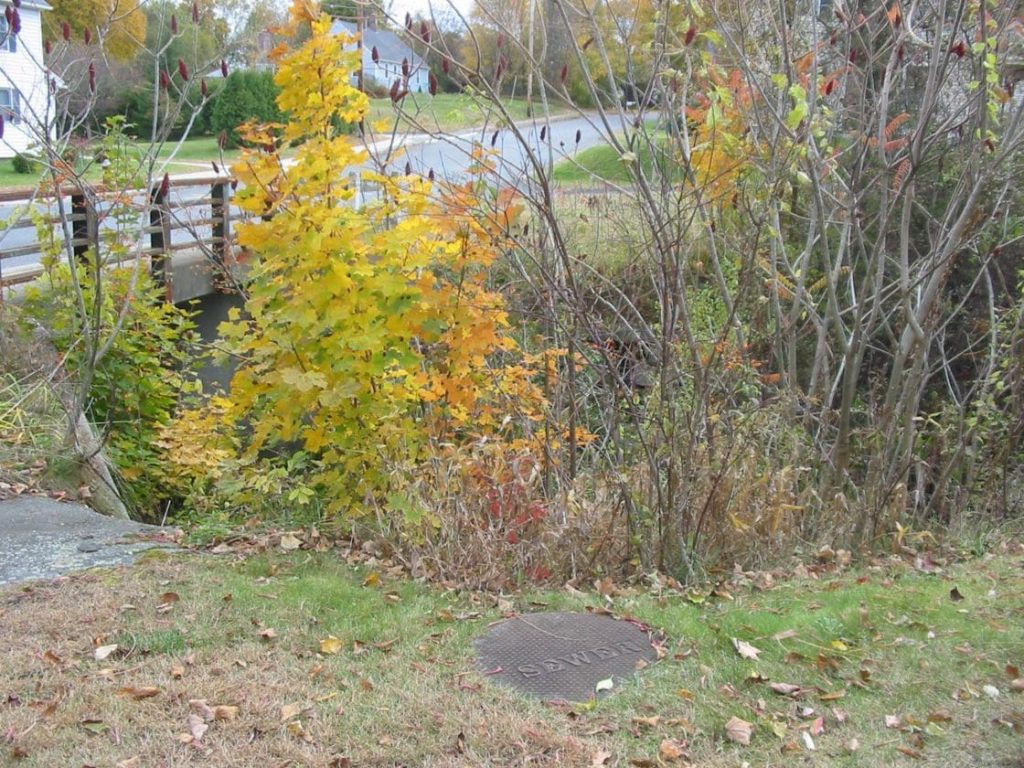
The exposed water main ran under the bridge on Mechanic Street

Tata & Howard provided engineering consulting services to the Town of Monson, Massachusetts for the relocation of the 8-inch diameter water main on Mechanic Street.

The main was originally constructed in 1897 under the streambed; however, after 117 years in this location, the decrease in surface water elevation had exposed the water main. The water level averaged about one inch below the top of pipe, exposing the top portion of the entire section of main that crossed the brook, approximately 15 linear feet of main. Exposure of the water main made it susceptible to freezing during the winter months, which could have resulted in a break and subsequent lost water or contamination from the brook to the Town’s entire water system, potentially resulting in significant costs to residents and to repair, clean, and disinfect the system. The main provides potable water to approximately fifty residents. There were only two gate valves located at the ends of Mechanic Street. As a result, if the main were to fail at the bridge, the entire street would have to be shut down in order to repair the damage, disrupting water service for the 50 serviced residents.

The Mechanic Street Bridge has a history of failure. As a result of a major flood event in 1955, the bridge failed and was completely replaced in 1956. The bridge ran directly over the water main, which posed an additional threat to the main should the failure reoccur. Although the main was unaffected during the previous failure, its weakened condition made it more susceptible to failure in a similar event.

Tata & Howard provided funding assistance and the project qualified for and received a FEMA Hazard Mitigation Grant for 75% of the cost of the project. The work included the preparation of design plans and specifications for the relocation of the 8-inch water main to a self-supporting beam structure attached to the bridge abutments on Mechanic Street. The project also included bidding, permitting, construction administration, and resident observation.
Water System Improvements and Funding Assistance, VT

150K-gal-storage-tank-and-house

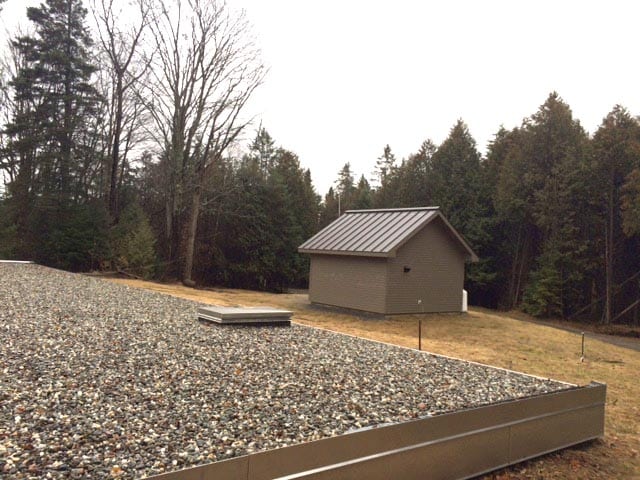
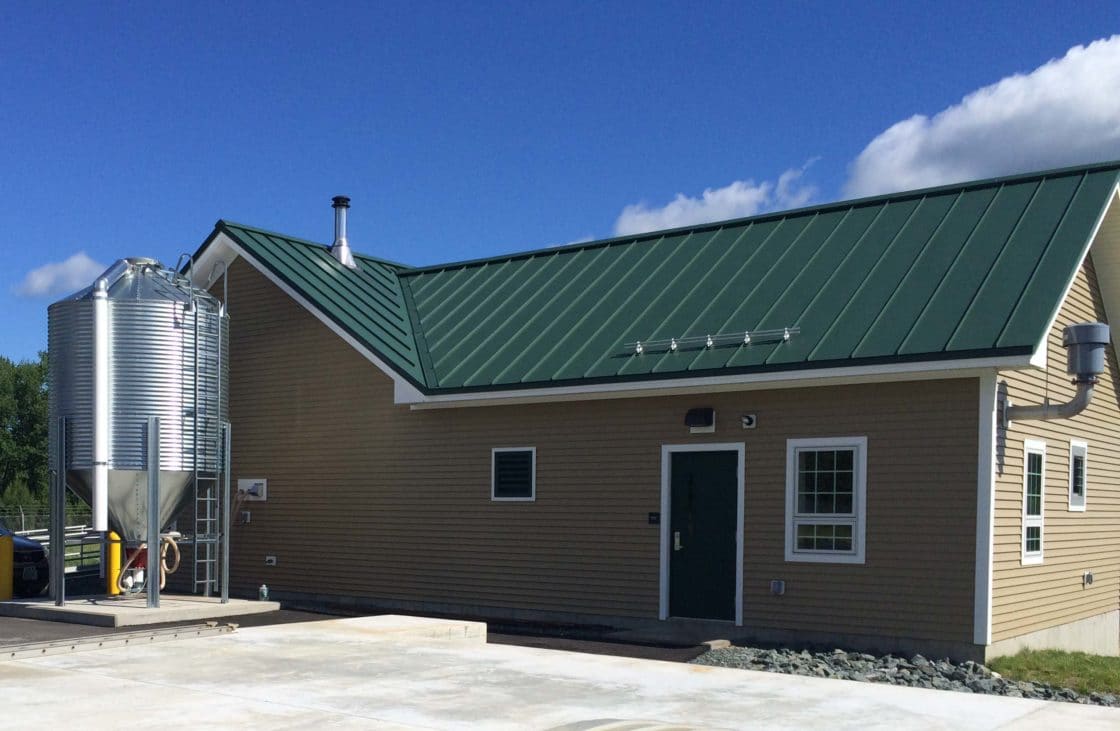
Greensboro Fire District No. 1 (GFD#1), situated on the Northern portion of the Green Mountains in Vermont, requested assistance with their water distribution and treatment systems due to deficiencies identified in a sanitary survey conducted by the State of Vermont. This contract addresses these deficiencies and provides the District a more robust covered water storage tank, secure buildings that house controls and chemicals and related equipment, emergency power generation, and water metering.

As part of the project, Tata & Howard helped GFD#1 secure funding that included a 45% USDA Grant for the originally planned project with an estimated budget of $2,900,000. During the design phase, the District lost their primary well source due to an extended drought. Tata & Howard engineers worked with the District to secure a 100% USDA grant for the cost of constructing a new municipal well source and associated emergency generator and related appurtenances.

Tata & Howard provided design, construction administration, and resident observation for the water system improvements project. Construction began in the spring of 2015 with the setup of a temporary water storage system and demolition of the existing water storage tank roof structure. Precast planks and a ballasted membrane roof were then installed, providing safe, quality water. Two new small buildings were constructed to house chemicals and water well piping and controls, along with an emergency generator to provide continuous water in case of interruption to electrical power.

Shared Wastewater Treatment Facility, VT

CLIENT: The Towns of Canaan, VT and Stewartstown, NH

PROJECT: Shared Wastewater Treatment Facility

Wastewater treatment plant that serves the Towns of Canaan, VT and Stewartstown, NH

THE CHALLENGE: The existing wastewater treatment facility was 40 years old, costly to operate, and did not meet state and federal water quality standards. In addition, the Towns had very limited funds with which to upgrade the treatment facility.

THE SOLUTION: Tata & Howard helped the Towns secure a $2.412 million low-interest, long-term loan and $1.69 million in grant funds from the U.S. Department of Agriculture (USDA) Rural Development in order to build the new facility.

Tata & Howard, Inc. provided complete consulting engineering services for the construction of the wastewater treatment facility project which included the complete upgrade of four pump stations as well as the upgraded 0.185 mgd, 3-cell lagoon wastewater treatment facility. In addition, Tata & Howard’s St. Johnsbury, Vermont office, formerly Leach Engineering Consultants, provided full design services for all of the upgrades.

The Towns now enjoy a state-of-the-art, reliable wastewater treatment facility that meets the Effluent Discharge limits to the Connecticut River and provides for a more efficient treatment process. The new influent screening and grit removal processes extend the life of the treatment facility components. In addition, septage receiving provides for additional income and also provides service to the residents of the Towns that are not on public sewer.

The design included numerous energy-efficient features such as variable-frequency drives (VFDs) on aeration blowers, solar-powered lagoon mixers, a wood pellet boiler for heat, energy-efficient windows, and insulated concrete form (ICF) walls, resulting in a reduction in annual operation and maintenance costs. The pump stations were upgraded to eliminate operators entering below grade structures and to allow for future pump replacement that would be lower cost with it would be with the original centrifugal pumps.

PROGRESS: The project is complete, and the Towns celebrated the completion of their shared $4.12 million wastewater treatment facility with a ribbon-cutting ceremony in Canaan, VT.

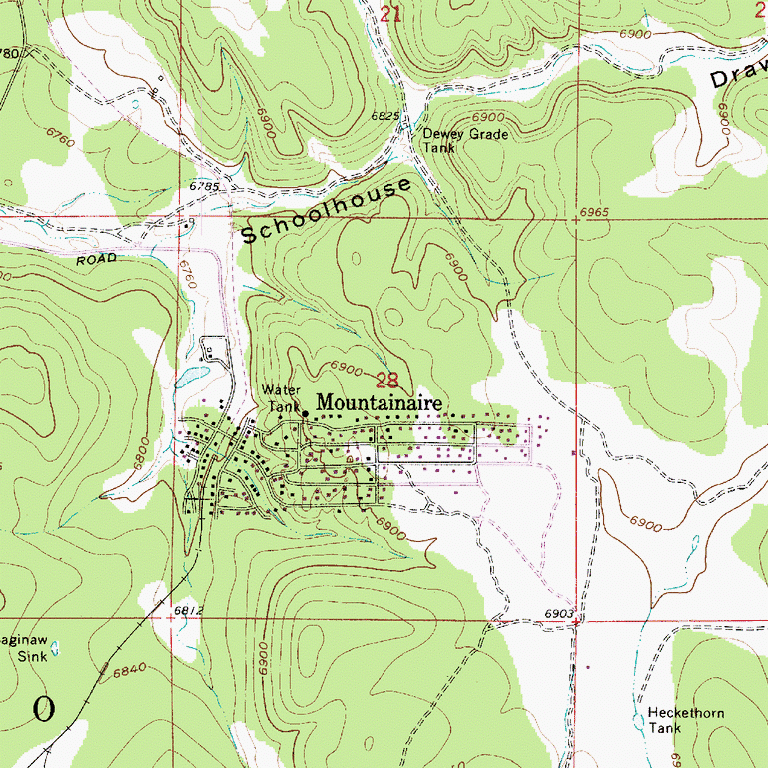
Asset Management-based Water Distribution System Study, Mountainaire, AZ

CLIENT: Ponderosa Utility Corporation, Arizona

PROJECT: Mountainaire asset management based water distribution system study to assist with prioritizing water system improvements

THE CHALLENGE: Mountainaire is a small water distribution system with limited manpower and revenue resources, and the operation and maintenance of the system is often reactive rather than proactive.

THE SOLUTION:
Tata & Howard successfully helped secure WIFA funding for the completion of the study which provides guidance to the PUC on how the system operates, what improvements are needed for efficient operation and continued maintenance of the system, and a prioritized approach to assist in funding and implementation of projects. This asset management based water distribution system study addresses undersized deteriorating water mains, above grade assets, and the energy efficiency of the pumping system. The study evaluates the system as a whole, based on above grade and below grade assets. Above grade assets are evaluated based on remaining useful life expectancy. Water mains are based on hydraulic capacity, criticality, and risk of failure. A hydraulic model was created for the study.

PROGRESS: Using the findings of the study, we are currently providing engineering services to evaluate flow and pressure requirements for the existing Kiowa Site booster pump station in order to construct a constant pressure pumping system to replace the existing booster pump and hydropnematic tank system that is old and failing.

Water Mains, DWSRF, Uxbridge, MA

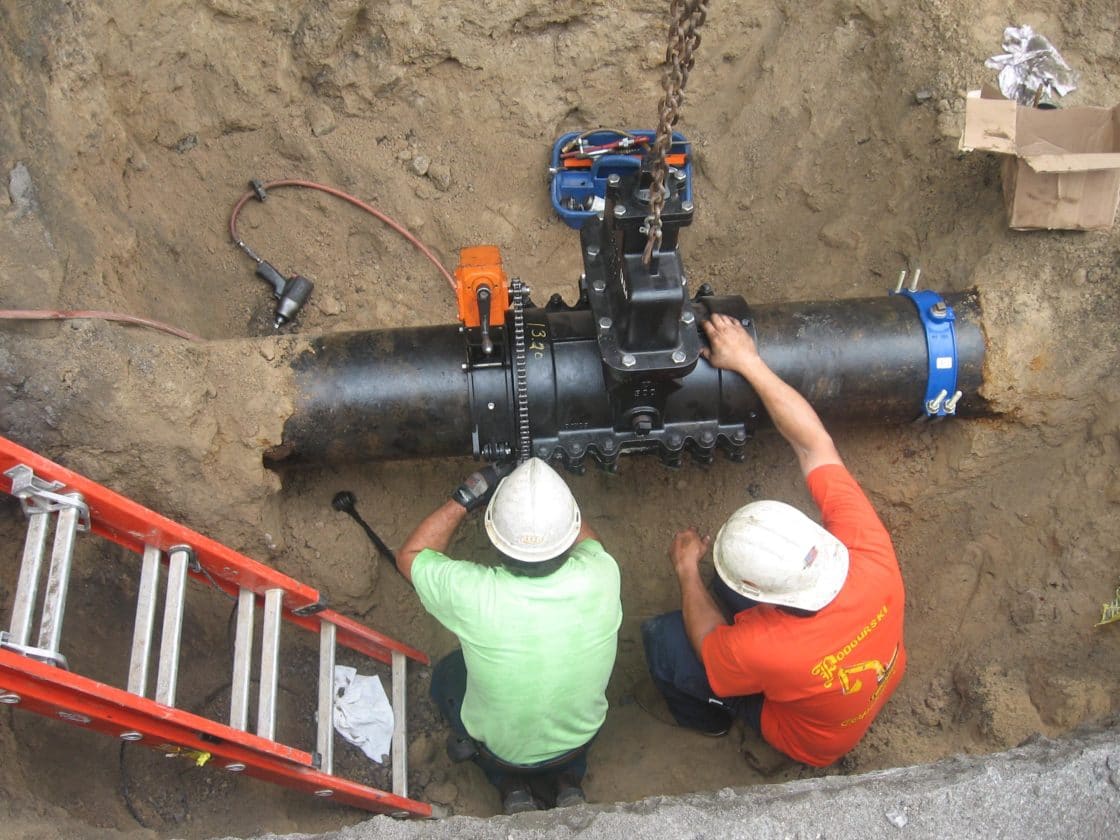
Water_Mains_Construction hats

Tata & Howard is assisting the Town of Uxbridge with the design of 18,200 linear feet of 12-inch diameter water main on Route 122 from the Blackstone River to the Northbridge Town boundary. Work includes the preparation of design plans and specifications, permitting with the local Conservation Commission, MESA, and MassDOT, and the preparation of the Drinking Water State Revolving Fund (DWSRF) application, plans, and specifications checklist for the Route 122 water main design.

In addition, Tata & Howard provided design, permitting, and construction administration services for approximately 4,750 and 1,560 linear feet of 20-inch and 12-inch diameter water main, respectively, on Quaker Highway.

District Water Treatment Facility, Transmission Mains, and Metering Station, Mattapoisett, MA

MRVWD_water treatment facility

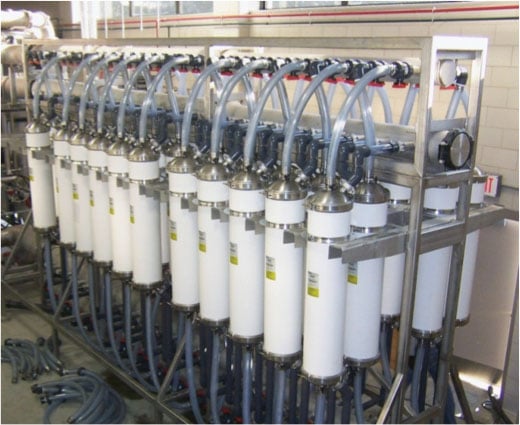
The MRVWD water treatment facility project was designed to treat water from eight wells belonging to the Towns of Fairhaven, Marion and Mattapoisett.  The MRVWD facilities also include approximately 5 miles of raw water transmission mains between the wells and the water treatment facility, finished water transmission mains from the water treatment facility to the existing town transmission mains, six new 100 HP high lift pumps and control/metering stations. The existing pump stations were upgraded to pump water to the water treatment facility but operation of the pump stations will remain the responsibility of the individual towns.

The total cost of all project components was approximately $16.5 million, which was partially funded with a low interest SRF loan. By constructing a regional facility, the towns were able to save over $4.9 million in design and construction costs in comparison to individual treatment facilities.

On-Call Water Engineering Services, Franklin, NH

FranklinNH_water treatment facility

Tata & Howard has been assisting the City of Franklin, New Hampshire with general water engineering services since 2009. The Tata & Howard team has managed several phases of work, including the design and construction of the water treatment plant and distribution system improvements.

The first phase was the design and construction of 2,500 linear feet of water main on Hill Road to connect a new water treatment plant to the City’s distribution system.  This project also involved use of four bioretention systems to treat and manage stormwater from the roadway, and was constructed in 2010.

The second phase of our work with the City included the design and construction of two parallel 2,500 LF sections of 12-inch diameter HDPE crossings beneath the Pemigewasset River using horizontal directional drilling to transport water from the City’s Franklin Falls Well to the water treatment plant site.

Tata & Howard managed the survey and geophysical studies and prepared a Preliminary Design Report and Environmental Review documents for several phases of work.  The City’s wells are surrounded by lands controlled by the US Army Corps of Engineers, which required that we complete an extensive permitting process to secure permissions for the final design of the project.

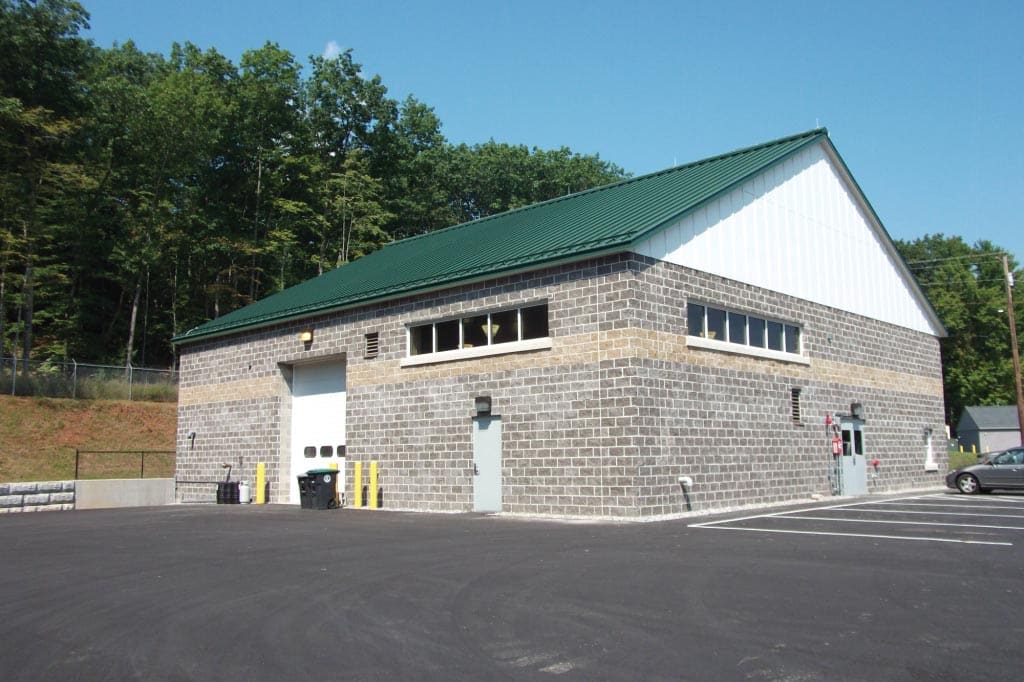
Tata & Howard completed design, construction, permitting, and funding applications for a 1,000 gallons per minute groundwater treatment plant to remove iron and manganese from three of the City’s wells. The plant has four pressure filters containing Greensand Plus media and using sodium hypochlorite for oxidation and sodium carbonate (soda ash) for pH adjustment. This plant went online July 9, 2012.

Tata & Howard provided design services for the construction of a new prestressed concrete tank at the site of an existing tank. The existing tank was in poor condition and due to the site characteristics, it was determined that construction of the new tank on the existing foundation of the old tank would be the best option.  A second tank on the site was demolished in 2013 and a new prestressed concrete tank will be constructed in its place.

Tata & Howard also conducted a full water system analysis for the City of Franklin, New Hampshire by utilizing our proprietary Capital Efficiency Plan™ methodology.  Our CEP involved creating a model of all water infrastructure in the City including sources, pump stations, treatment facilities, storage facilities, transmission, and distribution lines. Using our GIS modeling software, the system was calibrated based on fire flows in an attempt to accurately replicate the existing system. We then pinpointed deficiencies within the system based on a custom rating scale given to multiple criteria such as age, break history, material type, criticality and size. Recommendations were made for improvements in order of need. The study renewed both above ground and below ground assets. Funding for this study was in part from an Asset Management Planning Grant from NHDES.

SaveSave

Water Main and Drainage Pipe, Monson, MA

MonsonMA_watermain_drainage_pipe

This project included installation of 850 linear feet of 8-inch diameter water main, installation of 450 linear feet of new drainage, sidewalks, and roadway reconstruction on Park Avenue. The work included temporary bypass piping for the duration of the project. The project was funded by a CDBG grant.

Tata & Howard also provided engineering services for the installation of new 8-inch diameter water mains on Green Street, Lincoln Street, and Squier Avenue.  The project included the installation of drainage pipe and catch basins as well as roadway reconstruction and new sidewalks. The project was funded by a CDBG Grant.

Water Main Replacement, Auburn, MA

Phase I services included engineering services for bid, award, construction administration and resident observation services for approximately 6,500 linear feet of 12-inch water main and 750 linear feet of 8-inch diameter water main for a water main replacement project on Packachoag Street.

Phase II services included engineering design, bid and award, and construction administration and resident observation services for approximately 5,000 linear feet of 8-inch water main. Both phases are funded by the USDA Rural Development program.

Water Storage Tank, Booster Pump Station, New Water Main, and Distribution System Upgrades, Spencer, MA

Town of Spencer, MA

SpencerMA water main

Tata & Howard provided construction administration services for a new 0.5 million gallon cast-in-place concrete water storage tank, booster pump station, approximately 12,600 linear feet of new 12-inch diameter water main, and miscellaneous distribution system upgrades. Construction of in-line isolation valves, removal of existing pressure-reducing valve (PRV) vaults, a new system wide SCADA system and new high lift pumps at the water treatment facility and well site were also included in Tata & Howard’s design. The purpose of this project is to separate the current single zone system into two pressure zones as required by an Administrative Consent Order from the MassDEP.

The creation of a two pressure zone system requires the replacement of the existing 200 horsepower (hp) pump at the Meadow Road Water Treatment Facility and 150 hp pump at the Cranberry Brook Well with lower head, high efficiency pumps and motors. The Meadow Road facility is the Town’s primary water supply source; therefore, changing of this pump requires coordination with the Department of Utilities and Facilities and the overall two pressure zone project construction sequencing to minimize the time this source is off-line.

Tata & Howard also verified the Town’s hydraulic model, which was used to select the best location for the new tank and select water main size for transmission and fire protection.  The model was also used to determine the boundary line between the two pressure zones.  A Capital Efficiency Plan™ is currently being prepared.  Assistance will be provided, as needed, for public education of the project and during Town meetings.  This project is being funded by the American Recovery and Reinvestment Act through the Massachusetts State Revolving Fund (SRF).  Due to an aggressive schedule required under the funding requirements, all design; permitting associated with planning, zoning, and wetlands; and project bidding were completed and approved within a six-month period.