Have you thought lately about the overall health of your business? In today’s economy, it’s important to not only deliver your service, but to operate effectively and efficiently. An excellent way to gain insight into this is through conducting a Business Practice Evaluation (BPE). A BPE assesses the health of a utility by developing the framework for a structured approach to managing, operating, and maintaining assets in a more business-like manner. The goal would be to minimize the total cost of operating, managing and maintaining utility assets while still delivering exceptional service to customers. This is accomplished by providing more effective preventive maintenance to reduce capital investment.
The evaluation process will ultimately enable utility managers to assess the efficiency and effectiveness of their business practices in comparison to industry standards. Developing system specific plans, programmatic approaches, and realistic timelines to optimize utility programs are included in this process.
Similar to management consulting services, a BPE has potential to bring incredible value to your utility. While the list of benefits is copious, here are a few of the major advantages of conducting a Business Practice Evaluation.
Next Level Growth
Firstly, conducting a BPE will provide a baseline of exactly where a utility or company’s business practices currently are. Through a rating criterion, findings report, and subsequent scoresheet, the opportunities for improvement will become clear. A company can then make modifications to their business practices to reach the next level of efficiency and effectiveness.
Objectivity
As a manager, it may be hard to focus on the cause of an issue when you are immersed in it every day. Conducting a BPE will allow for an industry expert to look at a situation objectively and make the best-informed recommendations based on the BPE’s proven history of success.
Cost Reductions
A successful Business Practice Evaluation will help companies cut costs by simplifying and refocusing existing business practices. Expert BPE consultants can look at costs from a different lens and offer insights based on data and effective-practice knowledge.

Improved Communication and Relationships
In big and small companies alike, communication is key. An open line of communication is particularly critical between management and field personnel in water and wastewater utilities. Through field observations of current business practices, valuable insights in reference to efficiency and effectiveness will be provided. Management and field personnel can then identify and prioritize opportunities for improvement, as well as come to a consensus in all business practices. A successful BPE will help to eliminate the fissure between management and field staff, eliminating the ‘us versus them’ mentality.
Staff Accountability
A Business Practice Evaluation is completed through a series of interviews within a diagonal slice of utility staff. Recommendations from the BPE findings report will aid in staff accountability by identifying and implementing realistic performance measures. For example, the report may show within the Administration category that an Emergency Response Plan (ERP) is not in place. Subsequently, a Public Water Supplier could then take the necessary steps to implement an ERP and provide staff with the required ERP training.
A Way Forward
One of the most valuable pieces of information obtained from conducting a BPE is knowing where a business stands from a micro-level view. Once the scoresheet is complete, a company can determine if their primary business functions are being efficiently and effectively managed (or not). Moreover, the risks and consequences of not moving forward with proposed recommendations are identified. Having this information allows management the ability to prioritize business practices and supporting attributes, and sets the business on the right path going forward.
Improved Quality of Life
Changes resulting from the completed Business Practice Evaluation have the potential to improve quality of life and staff morale by communicating and providing a clear management plan to move forward. While improvements may not always be evident prior to the BPE, management and staff alike will be happy when positive changes are made. With more efficient and effective business practices and improved communication, the business continues to thrive.

Interested in the full scope of the Business Practice Evaluation? See the step-by-step process below.
- Review utility documents and documentation of business practices
- Develop rating criteria to determine level of performance of business practices
- Develop business practice categories and supporting attributes scoresheet with the assistance of your utility staff
- Conduct kick-off, consensus, and findings workshops
- Conduct interviews within a diagonal slice of the organization
- Conduct field observations of current business practices (not people)
- Develop a BPE findings report
- Develop a BPE scoresheet from the findings report
In conclusion, it is critical to stay on top of internal functionality regardless of the type of business you operate. Keep in mind, no matter how well-oiled a machine is, there is always room for growth and improvements. Organizations that have conducted a BPE significantly improve the management, operations and maintenance efficiency of their utility.
 The term “Lean” has become widely used in the manufacturing sector since the late 1980s when it was first used by James P. Womack, Ph.D. of MIT’s International Motor Vehicle Program to describe Toyota’s highly successful manufacturing process and business model. While its core premise of eliminating waste is quite simple, identification of waste and implementation of best practices takes effort. Waste can be defined as any process or activity without value — such as overproduction, defects, and waiting — and accounts for up to 60% of a typical manufacturing company’s production activities.
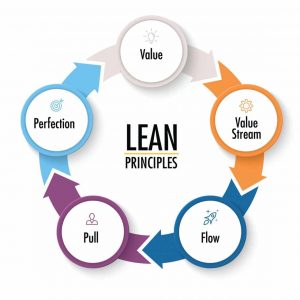 The Lean Enterprise Institute (LEI), long considered the premier resource for lean theory and training, identifies the five key Lean principles as value, value stream, flow, pull, and perfection. Value is always defined through the customer, and addresses such issues as price point, delivery timelines, requirements, and expectations. Value to a water or wastewater utility may include price, quality of water or effluent, reliability of service, and meeting regulatory requirements.
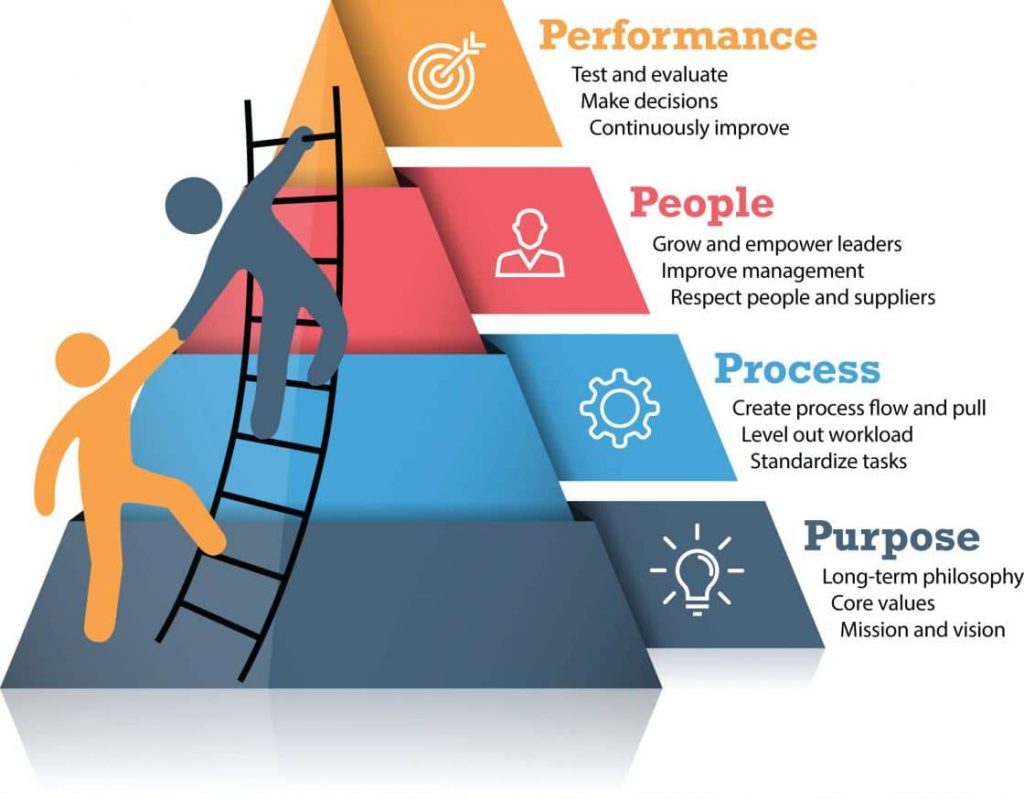 Purpose
 Because it is often referred to as lean manufacturing, there is a misconception that Lean is strictly for manufacturing organizations. In fact, Lean is not a set of tactics or a simple method of cost reduction; rather, Lean is a completely different way of thinking and operating on an organization-wide basis.
 Water systems today face a set of problems that are unique to this generation. While our nation’s buried infrastructure is crumbling beneath our feet as it reaches the end of its useful life, supplies are dwindling, budgets are shrinking, and federal and state funding is drying up. At the same time, regulatory requirements continue to increase as emerging contaminants are identified. Water systems often find themselves in the quandary of whether to upgrade treatment systems to comply with these new regulations or update assets that are long overdue for replacement or rehabilitation.
 In addition to addressing capital efficiency, water utilities of today must also address operational efficiency. Because water systems are required to do so much with so little, efficiency in all aspects of water system management is critical. Tata & Howard appreciates the unique set of challenges faced by water systems today, and we have experts on staff who understand the inner workings of a water utility – and how to improve them.
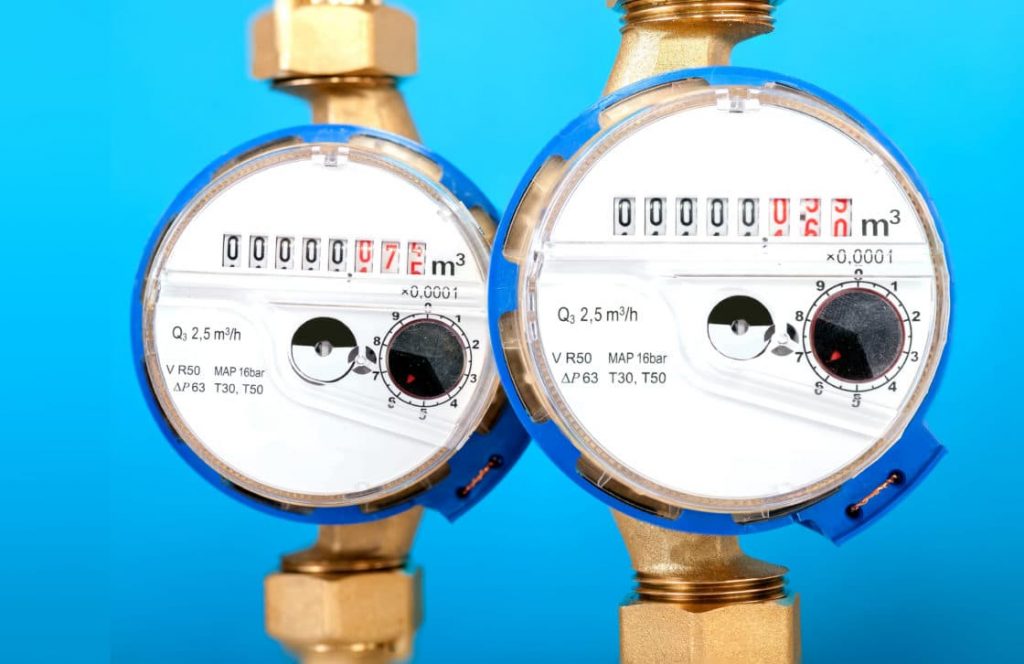 Besides improving operational and capital efficiency, water systems of today must reduce non-revenue water. Non-revenue water is treated drinking water that has been pumped but is lost before it ever reaches the customer, either through real losses such as leaks, or through apparent losses such as theft or metering issues. In the United States, water utilities lose about 20% of their supply to non-revenue water. Non-revenue water not only affects the financial health of water systems, but also contributes to our nation’s decreasing water supply. In fact, the amount of water “lost” over the course of a year is enough to supply the entire State of California for that same year. Therefore, the AWWA recommends that every water system conduct an annual water audit using M36: Water Audits and Loss Control methodology to accurately account for real and apparent losses.
 Water and wastewater utilities across the country face common challenges. These include rising costs, aging infrastructure, increasingly stringent regulatory requirements, population changes, and a rapidly changing workforce. While many utilities find themselves turning from one urgent priority to the next, others have implemented effective operational efficiency initiatives that have helped them enhance the stewardship of their infrastructure, improve performance in many critical areas, and respond to current and future demands. Improved efficiency is not just beneficial to a utility’s bottom line – it benefits everyone in a community.
 A common problem facing many utilities today is a retiring work force. By implementing operational efficiency now, utilities can recruit and retain a workforce that is competent, adaptive, and correctly trained to take on leadership roles of their own. Through communication and effective training, utility owners and operators can create an organization focused on continual learning and improvement. This ensures employee knowledge is retained and improved upon. Over time, senior knowledge and best practices will be passed along to promote a well-coordinated senior leadership team who understands their system and the needs of its customers.
 Some practices that utilities are implementing greatly help to improve resiliency and reduce vulnerability to an ever changing climate. Internal practices and initiatives such as energy conservation, solar energy, and utilizing heat transformed into energy from sewage and digestion have helped utilities rely less on the grid and more on their own operations. This is especially beneficial considering the ever-increasing price of energy. Reducing energy use significantly lowers operational costs for utilities – freeing up dollars for future initiatives or infrastructure improvements. Utilities who practice operational efficiency understand that making internal practices more efficient results in the entire distribution system becoming more efficient.