
It’s safe to say that today’s water and wastewater utilities have their work cut out for them: daily, they face a complex mix of aging infrastructure, limited funding, climate-related risks, and rising public expectations. And meeting these challenges requires more than reactive fixes — it demands a shift toward strategic and proactive planning and management. That’s where the power of capital planning, comprehensive asset management, and Capital Efficiency Plans comes into focus for smarter utility management.
Together, these three approaches form a closed loop of insight, decision-making, and action, creating a smarter system that allows utilities to do more with less while building sustainable, resilient infrastructure. At Tata & Howard (T&H), we believe that the very future of utility management lies in integrating these strategies into a unified approach, transforming the way utilities operate.
 Planning for Performance: Strategic Capital Planning
To start, smart capital planning lays the foundation for utility intelligence. Utility intelligence is a utility’s ability to make informed, data-driven decisions that align operations, maintenance, and investment with long-term goals. It isn’t just about having access to data; it’s about using that data strategically to drive smarter outcomes across an entire system.
T&H’s capital planning framework starts with a deep understanding of a utility’s existing infrastructure, system conditions, and future needs. From there, utilities can identify and prioritize capital projects that align with long-term goals, regulatory requirements, and funding constraints. It’s a holistic process that considers not just engineering data but also demographic trends, risk profiles, and community feedback.
But the real value of strategic capital planning lies in how it connects the big picture to everyday reality. A well-crafted capital plan doesn’t sit on a shelf; rather, it becomes the north star that guides decision-making, funding requests, and operational choices for years to come. It sets utilities on a course toward sustainability, resilience, and fiscal responsibility.

Managing with Insight: Utility Asset Management
If capital planning is the blueprint, asset management is the engine that drives day-to-day performance. It ensures that every pump, pipe, and plant is accounted for, monitored, and maintained to support long-term service delivery.
T&H’s asset management approach empowers utilities to track infrastructure in real time, assess condition and criticality, and make informed maintenance or replacement decisions. Rather than relying on age or guesswork, utilities gain clarity on which assets are most at risk and which offer the best value when upgraded or repaired.
This insight not only improves reliability and reduces unplanned failures, but it also makes budgeting more predictable and defensible. With comprehensive asset data, utilities can align their investments with true need, support regulatory compliance, and extend the life of their critical systems.
In essence, asset management turns raw data into decision-making power, and in doing so, strengthens the backbone of utility operations.
Investing Where It Matters: Capital Efficiency Plans
Capital Efficiency Plans (CEPs) represent the synthesis of smart planning and asset insight, and where strategy and systems intersect to deliver high-impact results. A proprietary methodology developed here at T&H, our CEPs blend hydraulic modeling, condition assessment, and risk analysis into one prioritized, actionable improvement plan.
Unlike traditional capital planning efforts which can be broad and resource-intensive, our CEPs use targeted data collection and modeling to pinpoint exactly where an investment will have the greatest benefit, allowing municipalities the most bang for their budget. The process starts with utility-led workshops to validate data and understand operational challenges. From there, advanced modeling and field assessments inform a ranked list of infrastructure projects.
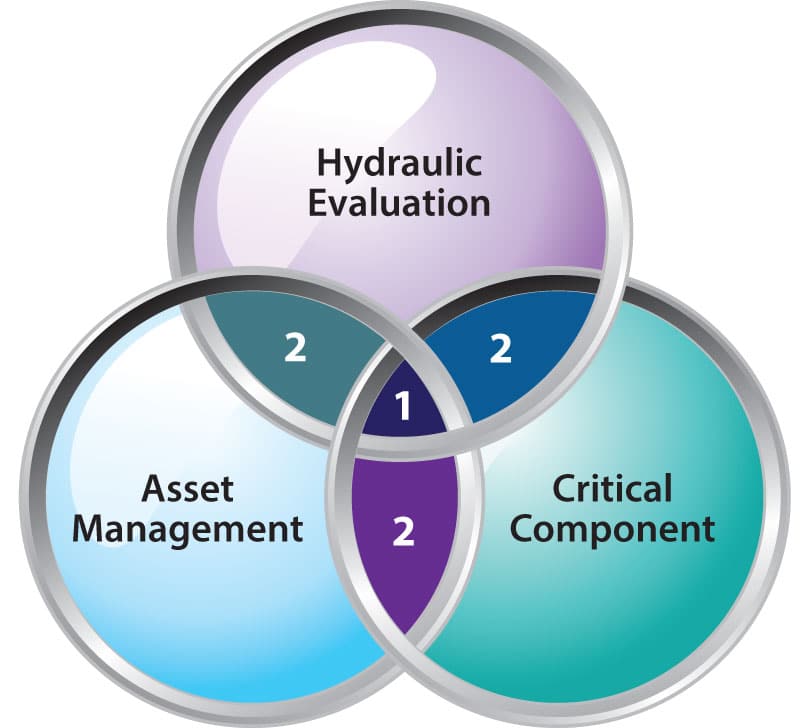
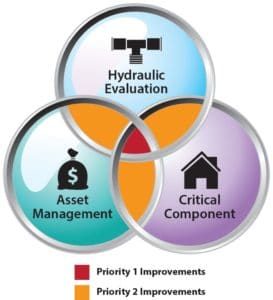
Our CEP also incorporates innovative methodologies, such as the “Three Circles Approach,” which intersect and overlay physical condition, hydraulic performance, and criticality to identify the most cost-effective upgrades. By aligning capital spending with real-world performance and risk, our CEPs help utilities stretch their budgets further and justify their decisions with confidence.
For many clients, the payoff is almost immediate, with prioritized improvements that reduce emergency repairs, lower lifecycle costs, and improve service reliability.
 One Strategy, Three Dimensions
While each of these approaches offers standalone value, their greatest power lies in integration. Together, they form a feedback loop that brings informed decision-making to every level of utility operations.
Let’s break it down:
- Capital Planning identifies where you’re going;
- Asset Management keeps your systems aligned with that vision; and
- Capital Efficiency Planning accelerates progress by directing resources where they’ll do the most good.
This is the foundation of smarter utility systems. It’s not just about spending less or reacting faster — it’s about building an adaptive, data-rich environment where decisions are clear, investments are strategic, and infrastructure is built to last.
Tomorrow’s Utilities Start Today
As infrastructure ages and demands intensify, utilities that invest in strategic utility management today will be best equipped to navigate tomorrow. T&H’s integrated approach, rooted in planning, powered by data, and refined through efficiency, helps municipalities take control of their future.
Whether you’re a small-town system manager or a large regional utility, the principles remain the same: know your system, plan with purpose, and invest with precision. Smarter systems build stronger communities. And with the right strategies in place, every utility can rise to the challenge.
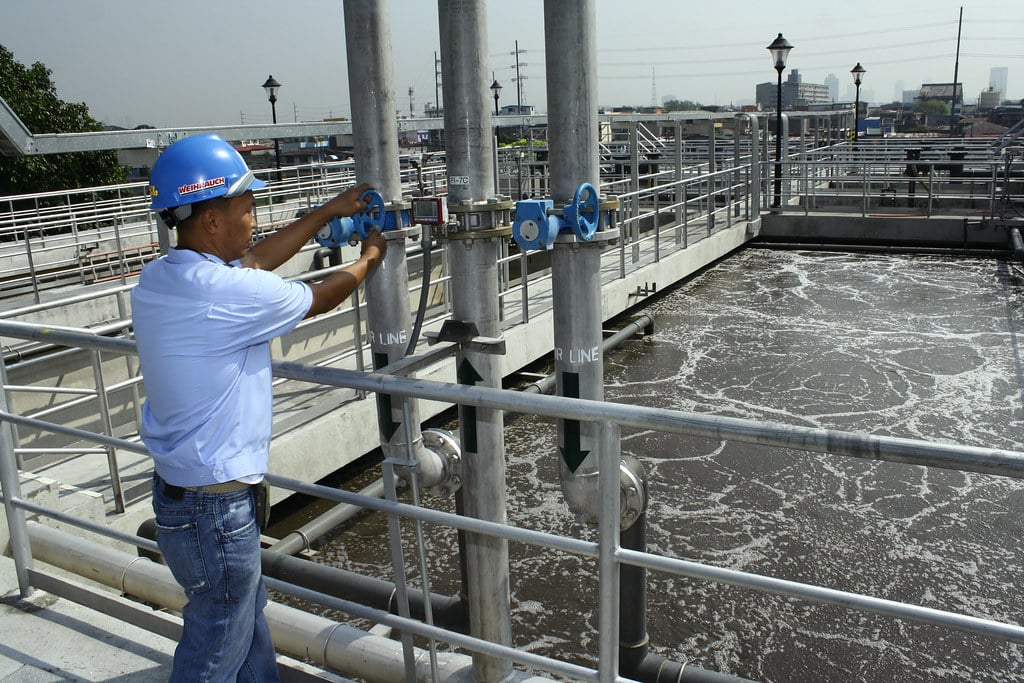 The Tata & Howard Capital Efficiency Plan (CEP) helps you do just that. Our CEP method is an accelerated and progressive approach to asset management. Our program allows municipalities, with the assistance and guidance of expert field staff and project managers, to do the following: (1) identify areas of their water, stormwater, and wastewater systems that are in need of repair, replacement, and/or rehabilitation; and (2) create a prioritized plan of action that is easily justified. In addition, the entire plan is conducted and completed in a way that makes the most bang out of municipalities’ limited infrastructure bucks.
 Once the plan is completed, systems receive their CEP report, complete with Geographic Information System (GIS) representation for each pipe segment within their individual underground piping system, along with a database. Each report will detail what issues are critical and should be prioritized, and includes estimated costs for the repairs, replacements, or rehabilitations that need to be made, so critical and less-critical projects alike can be part of the conversation when preparing annual budgets.
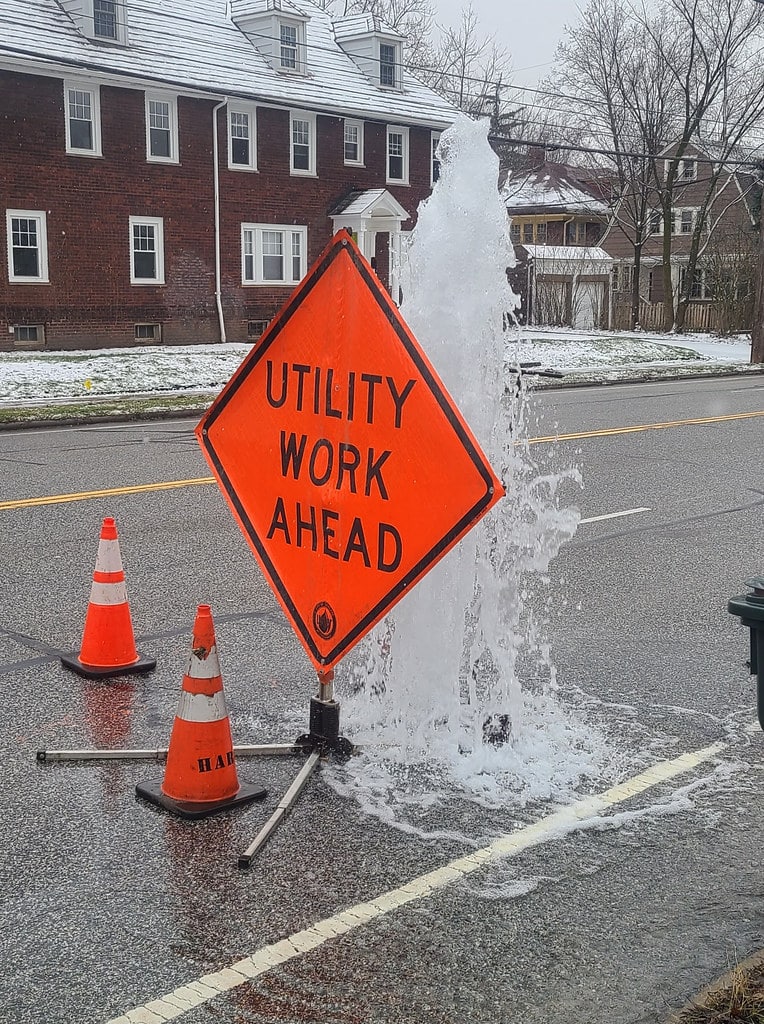 It has been no secret that federal and state funding has been on a steady decline for several decades now, starting in the mid-1970s. With already limited funding, state and local governments are unable to meet full capital expenditures and to prioritize projects, and are frankly falling behind, leaving their residents to bear the burden of crumbling infrastructure.
 Asset management planning is absolutely critical to the current and future health and maintenance of our water supplies. This highly structured, three-circle approach to capital planning is one of the most effective ways for systems to conclusively prioritize those that are in most need of repair, replacement, or rehabilitation. Each CEP approach is specifically tailored to each project, as each system and project have varying needs.
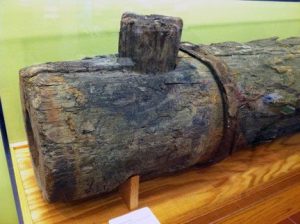
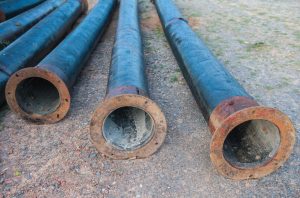 In recent years, water systems have been faced with challenges that are unique to modern times. Our nation’s buried infrastructure is reaching a critical juncture in that it is nearing or has reached the end of its useful life, or is in dire need of replacement due to the presence of lead. At the same time, climate change is affecting supplies, while a burgeoning population is creating a larger demand. And as we increase our knowledge about the dangers of additional contaminants in our drinking water, utilities are saddled with increased regulations that require strict compliance by specific deadlines. Obtaining compliance often requires extensive upgrades or completely new infrastructure, all of which come with a high price tag.
 The proposed 2018 budget also budget cuts the Environmental Protection Agency (EPA) by 31%, or $5.7 billion. The EPA provides funding to water systems through its Drinking Water State Revolving Fund (DWSRF) and Clean Water State Revolving Fund (CWSRF) programs, both of which “provide communities a permanent, independent source of low-cost financing for a wide range of water quality infrastructure projects.”2 Considering that almost all spending on critical infrastructure such as drinking water, wastewater, and transportation is provided by the public sector, these cuts are expected to make a huge impact on available funding for critical water infrastructure projects.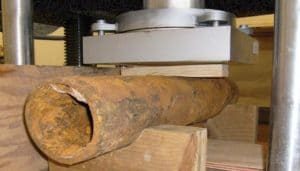

 Wastewater. It’s something that will always exist, and will always require collection and treatment. Just like improved water, improved sanitation is one of the key contributing factors to a developed nation, significantly improving public health, educational opportunity, and workforce viability. And while the United States boasts nearly 100% improved water and sanitation, there is still cause for concern.
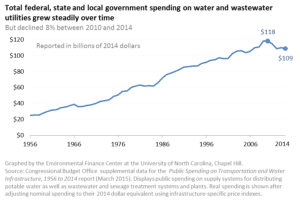 In March of 2015, the Congressional Budget Office (CBO) published a report on annual government expenditures on infrastructure, titled
 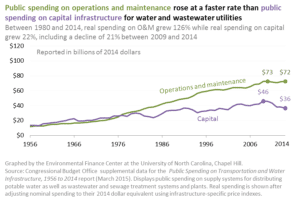 To further complicate matters, capital expenditure has decreased at a faster rate than O&M expenditure. From 1956 to 1980, public spending was basically split between capital expenditures — to build or replace water and wastewater systems — and O&M of the systems. However, since 1980, O&M spending continued to grow at an annual rate of 4%-6% to the 1990s, and then at an annual rate of 1%-3% through 2009, since when it has remained flat. In contrast, capital spending grew at an annual rate of only about 1%-2% since 1980, and has declined at an average annual rate of 4% since 2009. Governments now spend twice as much on O&M of their existing systems than on capital expenditures to repair, rehabilitate, or replace existing assets or for the installation of new infrastructure. In addition, state and local government is now saddled with nearly the full burden of capital expenditure, as federal spending has been steadily on the decline since 1976.
 Hydraulic modeling
 To continue as a leading industrialized nation, our wastewater utilities must not only remain safe and functional, but also progressive and up to date with current and future regulations. Because funding is declining while costs and population are increasing, it is more important than ever for wastewater utilities to methodically prioritize and plan all repairs and improvements. Only through the implementation of a well-researched and systematic course of action will utilities be prepared to provide safe and dependable wastewater services both now and in the future.