
The Three Pillars of Smarter Utility Management

It’s safe to say that today’s water and wastewater utilities have their work cut out for them: daily, they face a complex mix of aging infrastructure, limited funding, climate-related risks, and rising public expectations. And meeting these challenges requires more than reactive fixes — it demands a shift toward strategic and proactive planning and management. That’s where the power of capital planning, comprehensive asset management, and Capital Efficiency Plans comes into focus for smarter utility management.

Together, these three approaches form a closed loop of insight, decision-making, and action, creating a smarter system that allows utilities to do more with less while building sustainable, resilient infrastructure. At Tata & Howard (T&H), we believe that the very future of utility management lies in integrating these strategies into a unified approach, transforming the way utilities operate.
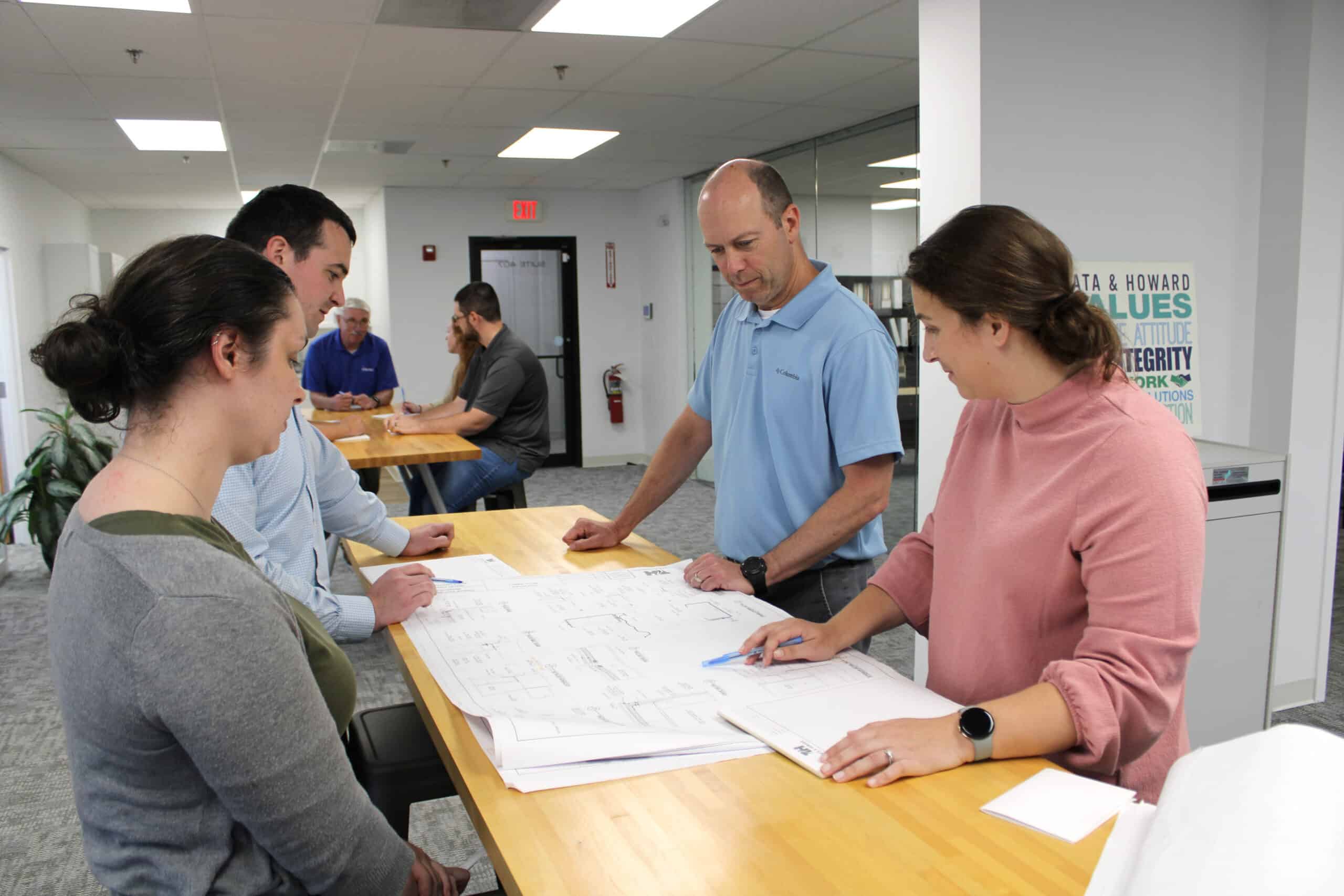
Planning for Performance: Strategic Capital Planning

To start, smart capital planning lays the foundation for utility intelligence. Utility intelligence is a utility’s ability to make informed, data-driven decisions that align operations, maintenance, and investment with long-term goals. It isn’t just about having access to data; it’s about using that data strategically to drive smarter outcomes across an entire system.

T&H’s capital planning framework starts with a deep understanding of a utility’s existing infrastructure, system conditions, and future needs. From there, utilities can identify and prioritize capital projects that align with long-term goals, regulatory requirements, and funding constraints. It’s a holistic process that considers not just engineering data but also demographic trends, risk profiles, and community feedback.

But the real value of strategic capital planning lies in how it connects the big picture to everyday reality. A well-crafted capital plan doesn’t sit on a shelf; rather, it becomes the north star that guides decision-making, funding requests, and operational choices for years to come. It sets utilities on a course toward sustainability, resilience, and fiscal responsibility.

Managing with Insight: Utility Asset Management

If capital planning is the blueprint, asset management is the engine that drives day-to-day performance. It ensures that every pump, pipe, and plant is accounted for, monitored, and maintained to support long-term service delivery.

T&H’s asset management approach empowers utilities to track infrastructure in real time, assess condition and criticality, and make informed maintenance or replacement decisions. Rather than relying on age or guesswork, utilities gain clarity on which assets are most at risk and which offer the best value when upgraded or repaired.

This insight not only improves reliability and reduces unplanned failures, but it also makes budgeting more predictable and defensible. With comprehensive asset data, utilities can align their investments with true need, support regulatory compliance, and extend the life of their critical systems.

In essence, asset management turns raw data into decision-making power, and in doing so, strengthens the backbone of utility operations.

Investing Where It Matters: Capital Efficiency Plans

Capital Efficiency Plans (CEPs) represent the synthesis of smart planning and asset insight, and where strategy and systems intersect to deliver high-impact results. A proprietary methodology developed here at T&H, our CEPs blend hydraulic modeling, condition assessment, and risk analysis into one prioritized, actionable improvement plan.

Unlike traditional capital planning efforts which can be broad and resource-intensive, our CEPs use targeted data collection and modeling to pinpoint exactly where an investment will have the greatest benefit, allowing municipalities the most bang for their budget. The process starts with utility-led workshops to validate data and understand operational challenges. From there, advanced modeling and field assessments inform a ranked list of infrastructure projects.

Our CEP also incorporates innovative methodologies, such as the “Three Circles Approach,” which intersect and overlay physical condition, hydraulic performance, and criticality to identify the most cost-effective upgrades. By aligning capital spending with real-world performance and risk, our CEPs help utilities stretch their budgets further and justify their decisions with confidence.

For many clients, the payoff is almost immediate, with prioritized improvements that reduce emergency repairs, lower lifecycle costs, and improve service reliability.

One Strategy, Three Dimensions

While each of these approaches offers standalone value, their greatest power lies in integration. Together, they form a feedback loop that brings informed decision-making to every level of utility operations.

Let’s break it down:

  • Capital Planning identifies where you’re going;
  • Asset Management keeps your systems aligned with that vision; and
  • Capital Efficiency Planning accelerates progress by directing resources where they’ll do the most good.

This is the foundation of smarter utility systems. It’s not just about spending less or reacting faster — it’s about building an adaptive, data-rich environment where decisions are clear, investments are strategic, and infrastructure is built to last.

Tomorrow’s Utilities Start Today

As infrastructure ages and demands intensify, utilities that invest in strategic utility management today will be best equipped to navigate tomorrow. T&H’s integrated approach, rooted in planning, powered by data, and refined through efficiency, helps municipalities take control of their future.

Whether you’re a small-town system manager or a large regional utility, the principles remain the same: know your system, plan with purpose, and invest with precision. Smarter systems build stronger communities. And with the right strategies in place, every utility can rise to the challenge.
Smart Capital Planning for Water and Wastewater Utilities

For a waterworks system to ensure reliable, long-lasting services, it’s critical that a fundamental component be efficient resource allocation. By incorporating capital efficiency plans, master plans, and a methodical capital planning process, utilities are able to navigate the complexities of their industry, not only by enabling them to strategically allocate resources and address dire infrastructure needs but also by meeting the persistent demands of evolving environmental regulations.

As we forge ahead, smart capital planning remains the compass that guides utilities towards a future where access to clean water is not just a necessity but a sustainable and well-managed reality.

Capital Efficiency Plans (CEPs): The Blueprint for Resource Organization

Capital Efficiency Plans (CEPs) at T&H follow a standard Venn diagram method. For every water main segment, there are three sets of evaluation criteria: key components, asset management, and hydraulic modeling.

With each set comes its own set of unique drawbacks, and it’s where the three overlap that the system’s weak points are put on display. If it seems that the weaknesses meet more than one set of criteria, then they are swiftly prioritized above the others as they require the most attention. By choosing this type of visual method, CEPs can quickly and justifiably pinpoint areas of criticality, allowing utilities to make a targeted plan of attack.

To put it simply, CEPs are a vital element of smart capital planning because they provide utilities with a strategic roadmap leading them towards the treasure trove of resource optimization. CEPs prioritize resource allocation by identifying the projects that will offer the greatest impact on efficiency (in other words, the ones that require the most attention), while also evaluating any potential risks such as regulatory changes and environmental challenges.

By streamlining capital investments, utilities can ensure cost-efficiency while also maintaining and improving their service standards and mitigating any potential, unforeseen issues.

Master Plans: The “What, When, and How” for Sustainable Development

A water master plan is essentially what it sounds like: a blueprint for sustainably managing and using water resources within a specific region. Diving deeper, a water master plan is a detailed framework that takes a variety of factors into account, like evaluating the current water supply, demand forecasts, infrastructure development, conservation tactics, financial planning, and environmental impact evaluations, to name a few.

Water, after all, is our lifeblood; without it, we could not sustain ourselves, our ecosystems, or our industries. It’s no secret that water utilities are often the ones on the front lines battling mitigation efforts, a lack of funding, and a complex web of other responsibilities. This juggling act often means that they need to know the “what, when, and how” as soon as possible: what do they need to do? When do they need to do it? How are they going to pay for it?

A water master plan has three main components: infrastructure assessment, data collection and analysis, and long-term goals. The first step is an infrastructure assessment that will evaluate the current water systems and infrastructure, including a review of pipelines, treatment plants, distribution networks, storage facilities, etc. This comprehensive evaluation will also be able to identify any infrastructure needs, such as maintenance, upgrades, or expansions.

The second step in any effective master plan is data collection and analysis. The master plan is constructed by using the initial assessment’s findings as its foundation—everything from demographic trends to industry developments can provide crucial information that can lead the plan down the path of success or failure. This step is important because it will influence the master plan. After all, bad data equals bad resource allocation. Thirdly, water master planning needs to extend far beyond the immediate needs; long-term goals are absolutely critical in ensuring the future of sustainable water management and utilization.

The heart of a water master plan is straightforward: ensure that water resources are allocated fairly, address critical issues like population growth and climate change, and establish a robust, accessible, and dependable water delivery system. Because at the end of the day, a water master plan promotes long-term water security, the health of people and ecosystems, and effective water management by integrating technical, economic, and environmental concerns.

Capital Planning

Utilities use the capital planning process, a structured methodology, to identify, prioritize, and allocate resources for capital projects. By addressing present demands and preparing for upcoming obstacles, this strategy helps utilities to align investments with strategic objectives. It starts with a thorough evaluation of the state of the infrastructure, which paves the way for the identification of priority projects that solve short-term issues and support long-term objectives.

An essential part of the planning process is estimating the price of proposed capital projects. Utilities use financial analysis to evaluate project viability and pinpoint possible funding sources, and a detailed risk assessment is carried out in order to identify and minimize any issues that could affect the success of capital projects. Investment resilience is increased by proactive risk management.

A financial analysis can help utilities determine just how feasible their projects are and aid in the search for funding by assessing their weaknesses in order to foresee any challenges that could impact the project’s success. Important stakeholders are then consulted to ensure the process takes into account a variety of viewpoints and community requirements. This cooperative and collaborative strategy not only promotes transparency, but it also has the power to greatly increase stakeholder trust.

Conclusion

In the face of a constantly evolving environment while meeting complex regulatory and social dynamics, there is no denying that smart capital planning is essential for the sustainable development of water and wastewater utilities. To put it succinctly, in order to have sustainable development, management, protection, and distribution of water and wastewater utilities, extensive planning is non-negotiable. Combined with ever-changing technology, utilities are further empowered to adapt and thrive.

By incorporating capital efficiency plans, master plans, and a methodical capital planning process, utilities can navigate the complexities with far more ease and effectively meet the needs of their communities.