A Holistic Approach to Water System Engineering

At Tata & Howard, we believe that successful water system projects aren’t defined by individual milestones, but that they’re shaped by how seamlessly each phase connects with each other. That’s why we take a holistic approach to engineering services, ensuring that every step —design, funding assistance, permitting, bidding, construction administration, start-up, and sustainability — functions as part of a fully integrated process.

This approach leads to more efficient projects, better long-term performance, and fewer surprises along the way. Here’s how each element of our process supports the bigger picture and why it works best when everything works together.
Design

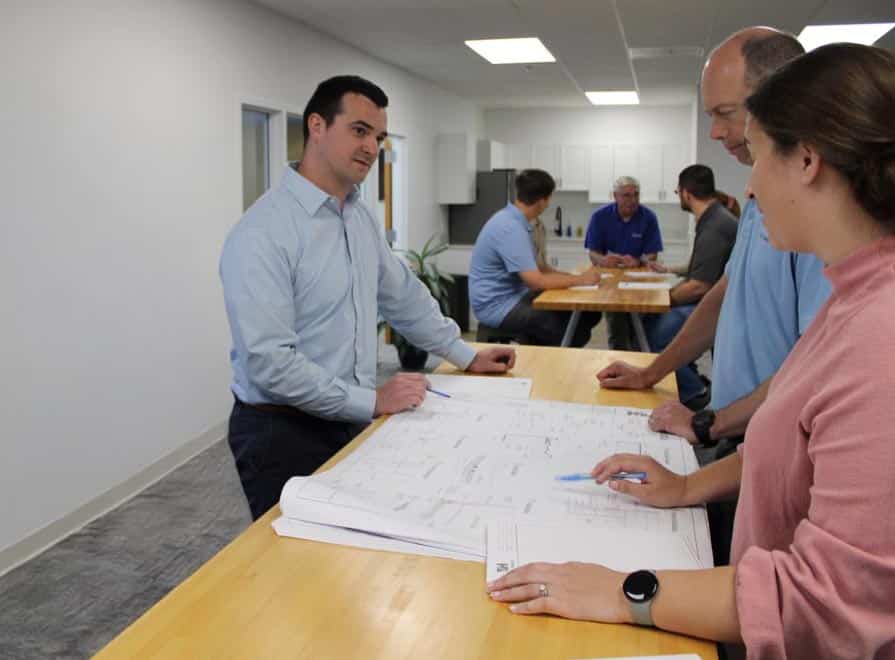
Design is at the heart of what we do here at T&H. For us, design is never just about meeting technical specs; it’s about creating solutions that are affordable, highly efficient, and that work seamlessly with the utility as a whole. Our engineers collaborate as partners with our clients to better understand their system needs, operational preferences, and budgets.

Each design includes value engineering to ensure that we’re not just solving today’s problem but setting the stage for long-term performance and resilience. Whether it’s upgrading aging assets or building something entirely new, our goal is always to deliver the most efficient, cost-effective solution possible.

Funding Assistance

Securing funding is one of the most important — and often most challenging — parts of any project. Our team works with clients to identify and apply for funding opportunities such as State Revolving Fund (SRF) loans, USDA Rural Development programs, Emerging Contaminants Grants, and Community One-Stop for Growth applications (to name few).

We know firsthand how to align technical documentation with agency expectations, increasing the likelihood of successful applications. By getting involved early, we can also shape project scopes and timelines to fit available funding, saving time and reducing financial risk.

Permitting

Permitting is more than a regulatory checkbox; it’s a critical link between planning and doing. Our permitting team works closely with local, state, and federal agencies to make sure everything is in order before construction begins.

From the EPA and Army Corps of Engineers to state environmental departments and local conservation commissions, we’ve built relationships that help keep the process moving. And because we understand both the technical side and the regulatory side, we know how to design with permitting in mind to avoid any surprises, and to align with timelines for funding and construction.

Bidding

Bidding isn’t just paperwork; it’s strategy. Our holistic approach ensures that bid packages capture the full intent of the design, comply with permitting constraints, and reflect available funding opportunities. The result is clear: comprehensive documentation that not only protects owners but gives contractors the confidence to submit competitive, well-informed proposals.

Accurate and transparent documents are essential, not only to attract qualified contractors but to maintain scope and budget discipline throughout the project. At T&H, our bid packages are shaped by procurement requirements, regulatory conditions, and design objectives. With clear expectations, detailed scopes, and comprehensive technical details, we give clients a solid foundation on which to build (literally and figuratively).

holistic-approach-water-system-engineeringConstruction Administration

Once shovels hit the ground, things can move fast. Our construction administration team is there to make sure everything stays on track.

We provide on-site resident observation and regular job progress meetings to keep everyone —clients, contractors, and engineers — informed and accountable. We work directly with contractors and clients to answer questions, resolve issues, and avoid any unnecessary delays. Our change order rate is less than one percent and is most often for scope additions requested by the client, not design errors.

Since our project team has been there from the start, we know the project inside and out. That means faster answers, better coordination, and smoother delivery.

Start-Up

Contrary to popular belief, when construction is done, the work isn’t over. Our start-up services help utility staff get comfortable with their new system before it officially goes online.

We stay on-site through commissioning and training to make sure everything works as intended. Operators are shown exactly how to run each part of the system, with documentation and support to back them up. This hands-on approach helps utilities avoid early hiccups and ensures long-term success.

We don’t walk away until everything’s working and everyone’s confident.

Sustainability

The last aspect of our holistic approach is sustainability and it’s a large part of how we design and build. Whether we’re integrating solar panels, optimizing pump performance, or pursuing water conservation goals, we’re always thinking about how to reduce environmental impact and improve long-term efficiency.

We also help clients pursue sustainability grants and funding to make these green choices more affordable. Our team has experience with everything from green building initiatives to source protection and energy efficiency.

These sustainable principles guide our work from the very beginning, so our clients get smarter systems that last longer and cost less to operate.
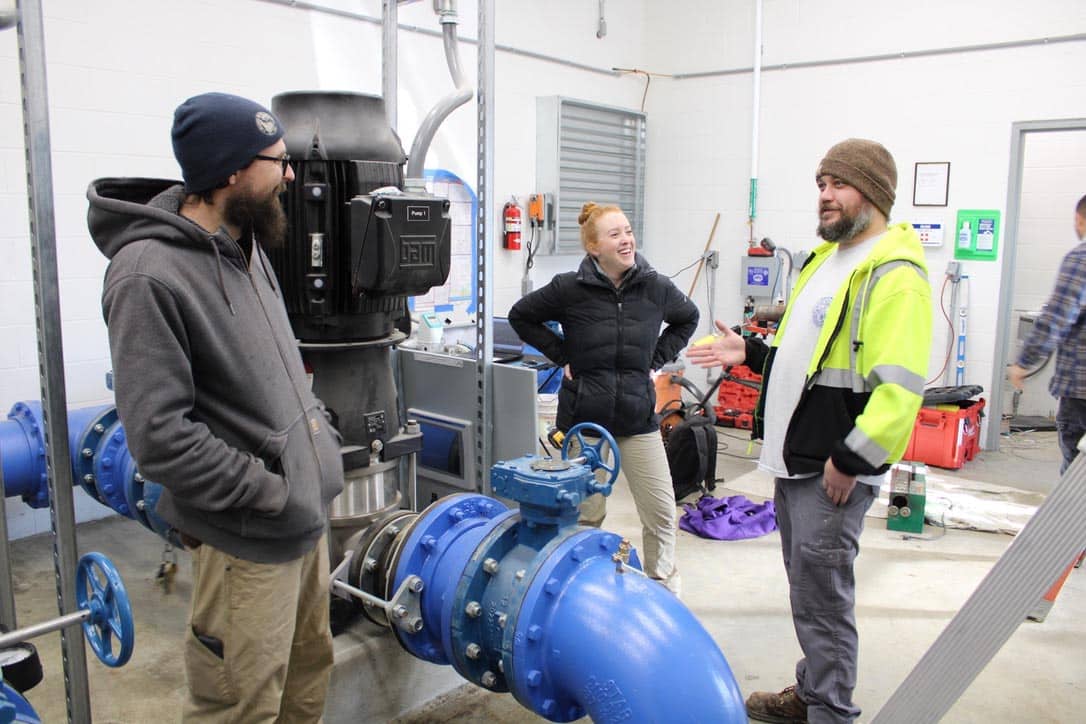
startup Delivering Synergy from Start to Finish

Each of these services is valuable on its own. But when they’re all part of one connected process, the benefits multiply. Permitting supports design. Design sets up funding. Funding aligns with bidding. Bidding prepares the way for smooth construction. And construction leads directly into successful start-up and sustainable operations.

This kind of integration is what makes Tata & Howard’s holistic approach different. It reduces risk, increases efficiency, and creates better outcomes for our clients and their communities.

The Bottom Line

At Tata & Howard, we see the whole picture. Our holistic approach to water system engineering is about more than just checking boxes; it’s about making sure every step supports the next. The result? Projects that stay on track, within budget, and are built to last.

Whether you’re facing regulatory deadlines, financial constraints, or aging infrastructure, we’re here to help guide you from start to finish with one team, one process, and one shared goal: building smart, sustainable systems for the future.

To see what our comprehensive holistic approach looks like, check out the Falmouth, MA 8.4mgd Long Pond Water Treatment Plant project.
Funding Assistance to Meet Water and Wastewater Infrastructure Needs


Water and Wastewater Infrastructure

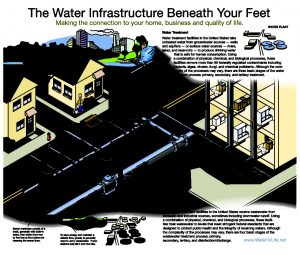
Water and Wastewater Infrastructure Infographic courtesy of WaterIsLife.net

The vast and intricate network of pipes buried beneath our feet is one of the key contributors to the economic success of our nation. Unfortunately, much of our water infrastructure was installed prior to WWII, with some east coast pipes dating back to the late 1800s. Also, many of our nation’s wastewater treatment plants were built in response to the passage of the 1974 Clean Water Act and are now 30-40 years old. Therefore, much of our nation’s water and wastewater infrastructure has reached the end of its useful life and requires repair or replacement.

The ASCE gave both Drinking Water and Wastewater a “D” grade in its 2013 Report Card for America’s Infrastructure; and because water has been so historically undervalued in America, municipalities simply do not have the funds to make the required improvements. In fact, a 2002 US EPA study titled Clean Water and Drinking Gap Analysis Report compared America’s drinking water and wastewater infrastructure needs to the available revenues of utilities. Without including exacerbating factors such as population growth or climate change, the report showed a projected gap in funding over the next 20 years of over $500 billion.

Certainly, our nation must find a way to bridge the funding gap, which will require rate increases and, therefore, community education on conservation practices as well as the value of water. And while these rate increases will provide a portion of the necessary funding, utilities and consumers alone cannot carry the full burden of the funding gap. Thankfully, there are myriad funding opportunities available to assist communities with critical water and wastewater improvements, some of which are listed below:

USDA Rural Development Water & Waste Disposal Loan & Grant Program

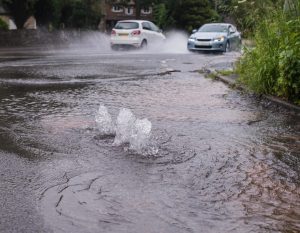
Burst water main
Burst water main

The USDA Rural Development (RD) Water & Waste Disposal Loan & Grant Program provides funding for clean and reliable drinking water systems, sanitary sewage disposal, sanitary solid waste disposal, and stormwater drainage to households and businesses in eligible rural areas. This program assists qualified applicants that are not otherwise able to obtain commercial credit on reasonable terms. Areas that may be served include rural areas and towns with fewer than 10,000 people, tribal lands in rural areas, and colonias.

USDA RD funding provides long-term, low-interest loans which may be combined with grants if necessary to keep user costs reasonable. Funds may be used to finance the acquisition, construction, or improvement of drinking water sourcing, treatment, storage and distribution; sewer collection, transmission, treatment, and disposal; solid waste collection, disposal and closure; and stormwater collection, transmission, and disposal.

Clean Water State Revolving Fund (CWSRF) Program

stormwater drainEstablished by the 1987 amendments to the Clean Water Act, the CWSRF Program is a federal-state partnership that provides a permanent, independent source of low-cost financing to communities for a wide range of water quality infrastructure projects. The program is a powerful partnership between EPA and the states that gives states the flexibility to fund a range of projects that address their highest priority water quality needs.

Using a combination of federal and state funds, state CWSRF programs provide loans to eligible recipients for many types of water infrastructure projects, including construction of publicly owned treatment works; nonpoint source; national estuary program projects; decentralized wastewater treatment systems; stormwater; water conservation, efficiency, and reuse; watershed pilot projects; energy efficiency; water reuse; security measures at publicly owned treatment works; and technical assistance.

Drinking Water State Revolving Fund (DWSRF) Program

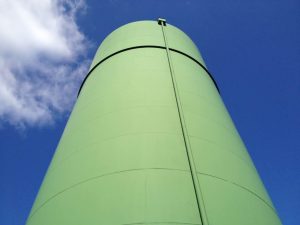
Water storage tank in Somersworth, NH

The DWSRF Program is a federal-state partnership to help ensure safe drinking water. Created by the 1996 Amendments to the Safe Drinking Water Act (SDWA), the DWSRF is a financial assistance program to help water systems and states achieve the health protection objectives of the SDWA. The program is a powerful partnership between EPA and the states. Building on a federal investment of over $17.3 billion, the state DWSRFs have provided more than $27.9 billion to water systems through 2014. This assistance was provided through over 11,400 assistance agreements for improving drinking water treatment; fixing leaky or old pipes (water distribution); improving source of water supply; replacing or constructing finished water storage tanks; and other infrastructure projects needed to protect public health.

The DWSRF Program funds a wide range of drinking water infrastructure projects, including treatment projects to install or upgrade facilities to improve drinking water quality to comply with SDWA regulations; transmission and distribution rehabilitation, replacement, or installation to improve water pressure to safe levels or to prevent contamination caused by leaky or broken pipes; rehabilitation of wells or development of eligible sources to replace contaminated sources; installation or upgrade of finished water storage tanks to prevent microbiological contamination from entering the distribution system; interconnecting two or more water systems; constructing a new system to serve homes with contaminated individual wells; and consolidating existing systems into a new regional water system.

Water Infrastructure Finance and Innovation Act (WIFIA)

Business concepts - ship from dollar money on water

Enacted in 2014 as part of the Water Resources and Reform Development Act, WIFIA establishes a financing mechanism for water and wastewater infrastructure projects to be managed by EPA Headquarters. The WIFIA program provides low interest rate financing for the construction of water and wastewater infrastructure. Funded projects must be nationally or regionally significant, and individual projects must be anticipated to cost no less than $20 million.

WIFIA works separately from, but in coordination with, the State Revolving Fund (SRF) programs to provide subsidized financing for large dollar-value projects. Eligible projects include CWSRF eligible projects; DWSRF eligible projects; projects for enhanced energy efficiency at drinking water and wastewater facilities; acquisition of property if it is integral to the project or will mitigate the environmental impact of a project; bundled SRF projects submitted under one application by an SRF program; and combinations of projects secured by a common security pledge.

Northern Border Regional Commission (NBRC)

Troy-Jay, VT received $250,000 from NBRC for upgrades to the community's wastewater treatment plant pump station
Troy-Jay, VT received $250,000 from NBRC for upgrades to the community’s wastewater treatment plant pump station

The NBRC was formed by Congress in 2008 in order to help fund economic and community development projects in Maine, New Hampshire, Vermont, and New York. NBRC was formed to help alleviate distress in the hard-hit northern counties of each state.  Bordering Canada, these counties generally have higher levels of unemployment,  population loss, and lower incomes.

Eligible projects include those that develop the transportation, telecommunication, and basic public infrastructure within the region; assist the region in obtaining job skills and employment related education, as well as entrepreneurship, technology, and business development; provide basic health care and other public services for those areas that are severely economically distressed and underdeveloped; encourage resource conservation, tourism, recreation, and preservation of open spaces in a manner consistent with economic development goals; or support the development of renewable and alternative energy sources.

Other Funding Sources

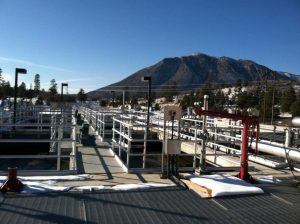
Wastewater treatment plant in Flagstaff, AZ

In addition to those listed above, there are many other funding sources. Some of these include SWMI Grants, Water Infrastructure Assessment and Planning Grants, Community Block Development Grants (CBDG), and Watersheds & Water Quality in Massachusetts; Water Infrastructure Finance Authority of Arizona (WIFA) and Water and Wastewater Energy Efficiency Rebates through Arizona Public Service (APS) in Arizona; State Aid Grant Program (SAG) in New Hampshire; and Texas Water Development Fund (TWDF)Economically Distressed Areas Program (EDAP)Rural Water Assistance Fund (RWAF), and the State Participation Program (SPP) in Texas.

In Conclusion

Investing in water and wastewater infrastructure now is critical to the sustainability of our economy and the health of our nation. By implementing necessary rate increases and conservation techniques along with community education and robust funding assistance, our nation will have the ability to successfully to bridge the infrastructure funding gap and ensure the economic and environmental viability of our nation for both present and future generations.