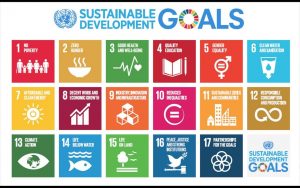
 World Water Week is an annual event organized by the Stockholm International Water Institute (SIWI) that focuses on global water issues, and this year’s theme is “Water and Waste: Reduce and Reuse.” The main event takes place in Stockholm, Sweden where experts, innovators, stakeholders, and young professionals from various sectors around the globe will come together to share ideas, foster relationships, and develop innovative solutions to the world’s most urgent water-related problems. In 2016, over 3,300 individuals and over 330 organizations from 130 countries around the world participated in World Water Week, and the expectation is that 2017 will see at least those numbers. Through this year’s theme, World Water Week is focusing on two targets addressed by the Sustainable Development Goals (SDGs) of the UN’s 2030 Agenda for Sustainable Development including improving water quality and reducing waste by 2030 in order to help achieve sustainable development in a rapidly changing world.
Sustainable Development
 Sustainable development is most commonly defined as development that meets the needs of the present without compromising the ability of future generations to meet their own needs. This means that we cannot meet our current needs at the expense or depletion of our natural resources. Degradation of water quality not only has a negative environmental effect, but also limits the water supply available for human usage. Therefore, we must develop and implement innovative solutions to improving water quality if we are to plan for a sustainable future. Fortunately, there exist easily implementable methodologies for improving water quality throughout the water environment.
Utilize mores sustainable water treatment technologies that limit environmental impact
Chemical additives have a significant impact on the health of the environment and its inhabitants. Implementing alternative treatment methodologies such as ozonation, ultraviolet radiation, and biological media helps to minimize the impact that water treatment has on our natural world, and protect our water supply for the future.
Minimize, and eventually eliminate, using drinking quality water for non-potable purposes
Producing drinking quality water utilizes a significant amount of energy, resources, and treatment chemicals, all of which have a negative impact on the environment. Minimizing the use of potable drinking water for other functions, including agricultural, industrial, and non-potable residential, helps to ease the burden placed on resources, the environment, and budgets.
Reduce lost water in municipal distribution systems
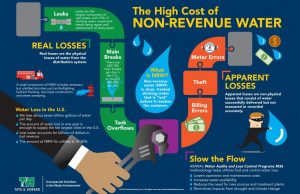 Communities lose millions of gallons of water each year to leaks in the distribution system. While replacing compromised pipes seems like an easy solution, the problem is actually much more complicated. Municipalities do not have sufficient funds to implement large-scale replacement projects; therefore, many compromised pipes remain in use, contributing to distribution system water loss. This loss results in reduced supply, which in turn forces some systems to seek alternate sources at a cost to both the environment and their budgets.
Conducting water audits and pipe condition assessments should be the first step towards efficient, cost-effective pipe replacement programs. Water audits help to identify the causes of water loss while developing strategies to reduce this loss, while pipe condition assessments provide insight into the quality and reliability of water distribution systems. Drinking water infrastructure in the United States, particularly in the northeast, is typically many decades-old, and deteriorating distribution systems can be a significant source of water loss through leakage. Effective water loss control programs reduce the need for facility upgrades and expansions, and in many instances, can reduce the need to find additional sources. In addition, a water loss control program can help protect public health by reducing the number of entry points for disease‐causing pathogens.
Incorporate stormwater best management practices into the built environment
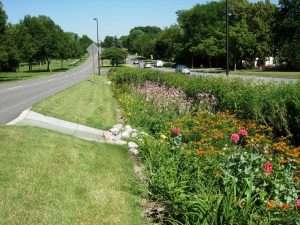
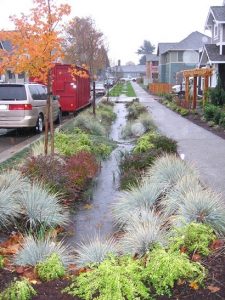
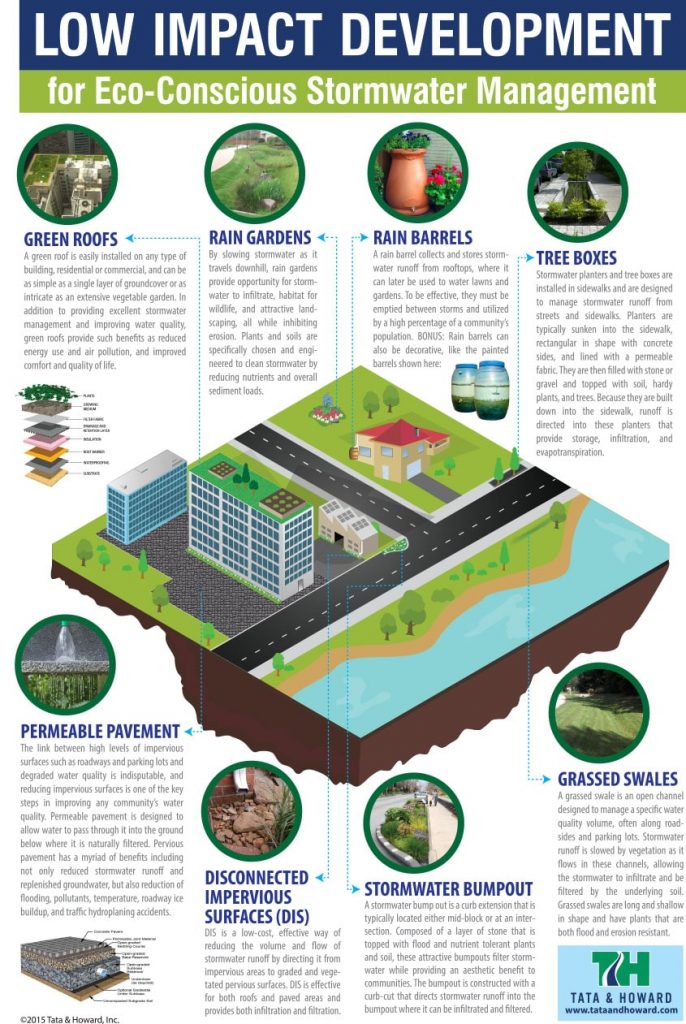
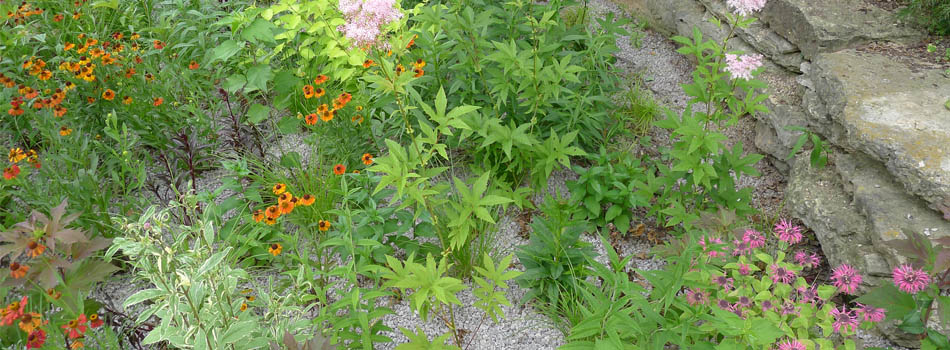
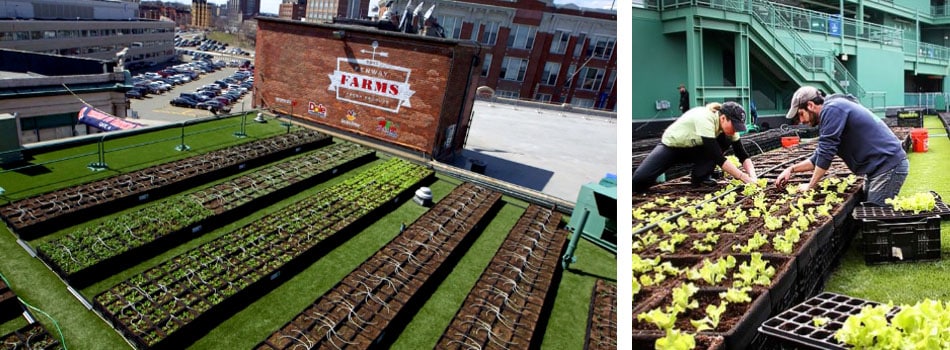
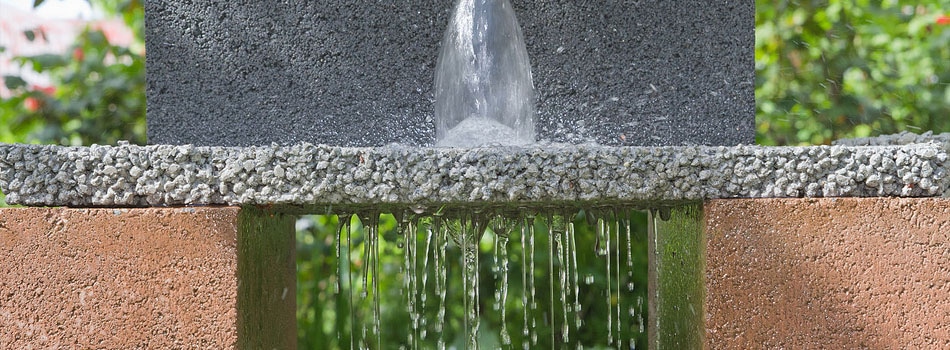
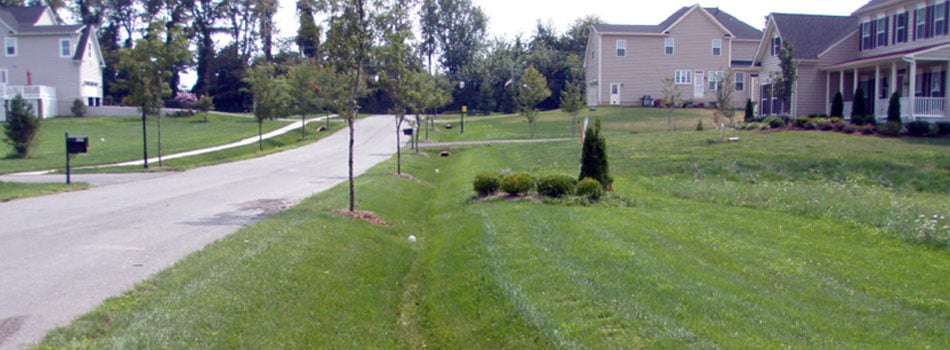
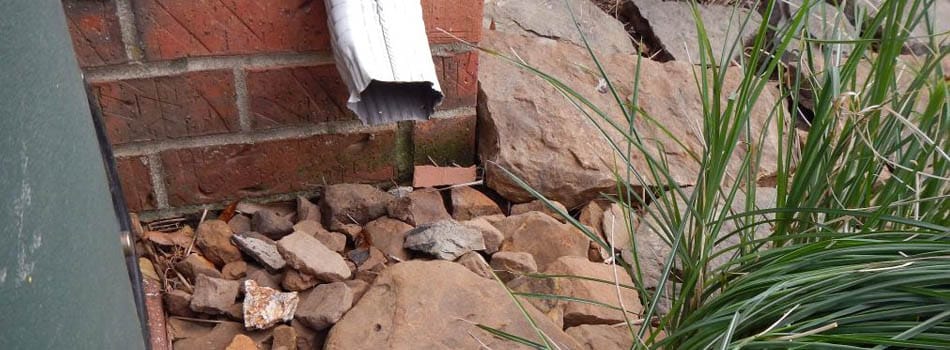
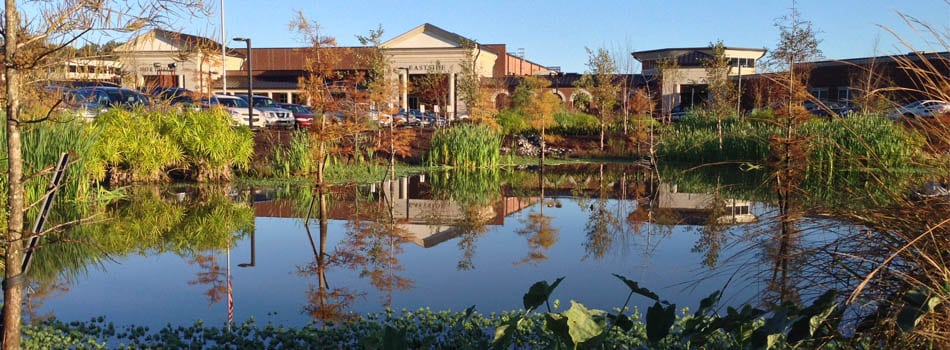
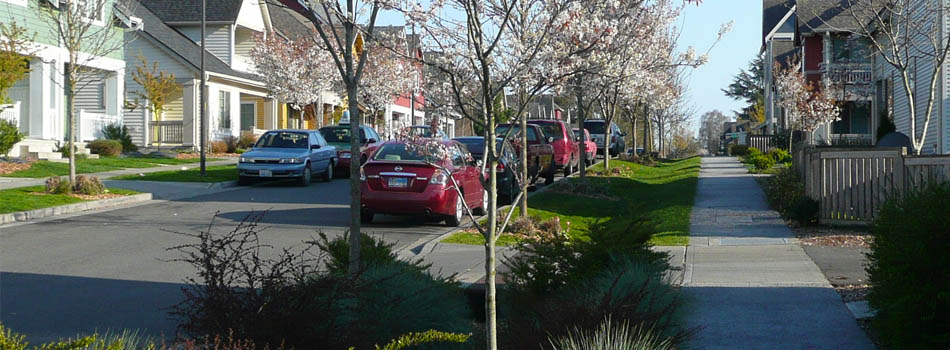
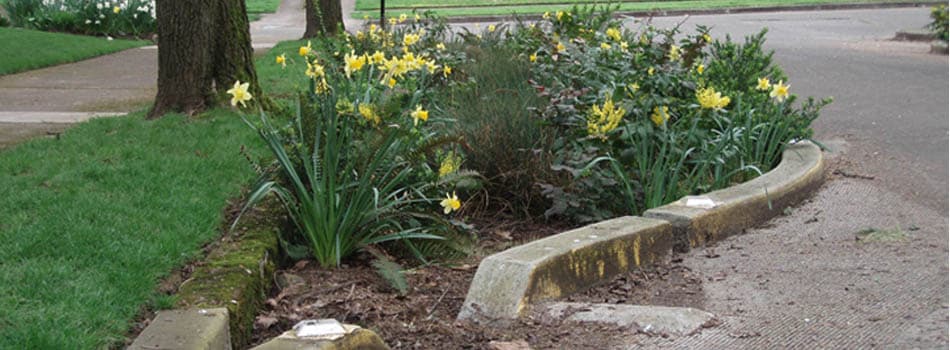
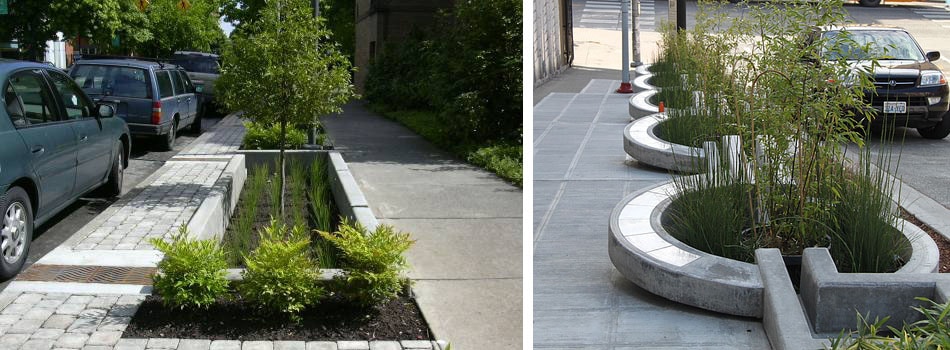
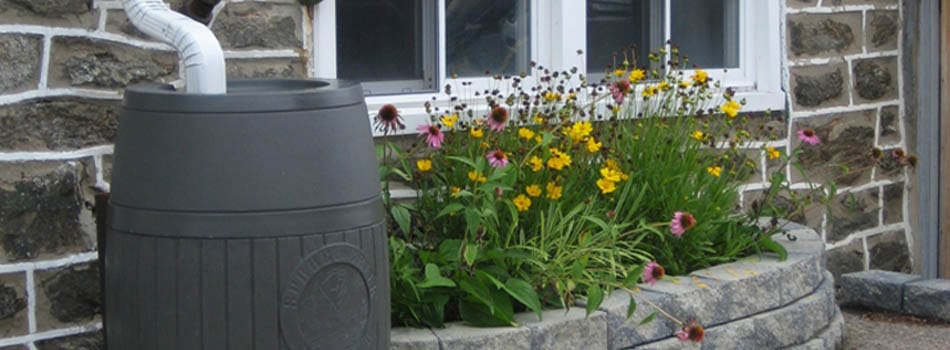
Stormwater management traditionally meant infrastructure such as catch basins. Modern day stormwater management takes a much more holistic approach and maximizes the use of both the natural and engineered landscape. Some examples include onsite catchment and use, reduction of impervious surfaces, stormwater engineering such as bumpouts and tree boxes, and stormwater landscaping such as rain gardens and grassed swales.
Minimize stormwater pollution
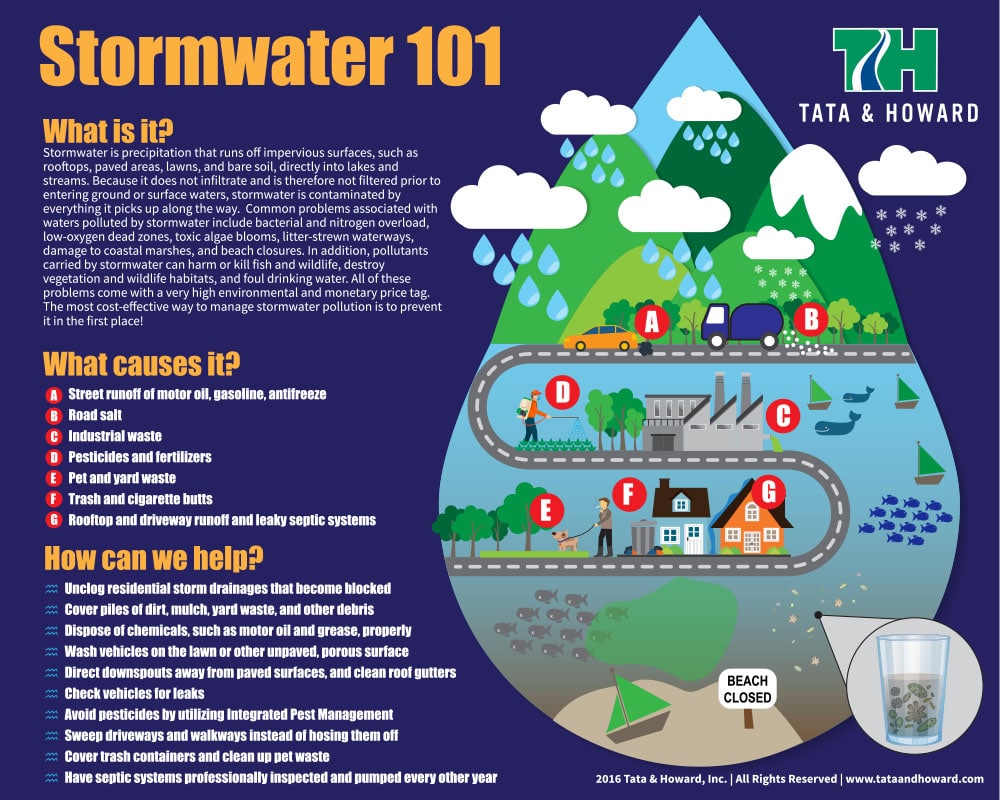
Stormwater pollution occurs when precipitation picks up debris, trash, fertilizers, animal waste, pesticides, and improperly discarded chemicals as it moves over the ground. Reducing fertilizer and pesticide usage, cleaning up after pets, and ensuring that trash and chemicals are disposed of properly help to reduce the amount of contamination entering our waterways.
Reuse wastewater
After adequate treatment of wastewater to remove all pollutants and pathogens, it should be reused as much as possible. Treated byproducts can be used for fertilizer and methane fuel, and highly treated water can be reused for aquifer recharging, and even for drinking water.
And of course – educate!
Promote conservation, efficiency, and innovation in water use by incentivizing water conservation, implementing public outreach and education, and encouraging the adoption of methodologies and the usage of products that utilize the latest in water-efficient technologies.
In Conclusion
Achieving sustainable development is only achievable if we focus on the protection of our natural resources at every level. From improving treatment plant efficiency to installing WaterSense fixtures in our homes, creating a truly water wise future requires involvement from governments to individuals on a global level. Since 1991, World Water Week has served as a forum for legislators, scientists, experts, and interested parties to form partnerships and alliances, and to collaboratively find solutions to today’s most urgent water-related issues.
 Earth Day is celebrated by over one billion people globally on April 22 each year. Credited as being the catalyst for the modern environmental movement, Earth Day was first celebrated in the United States in 1970. The Clean Air Act was passed later in 1970, the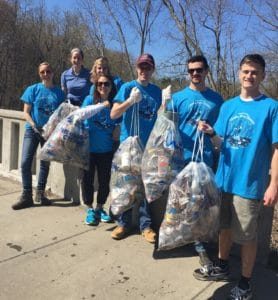
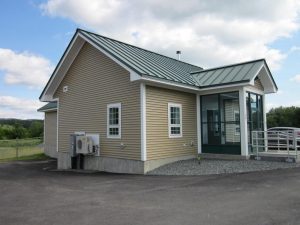
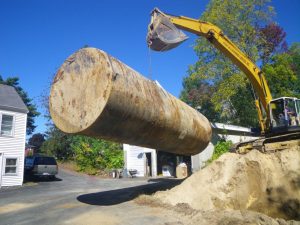
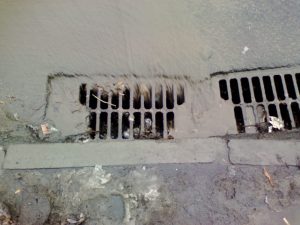 Stormwater runoff is a concern year-round, but even more so in the spring when snow is melting and rain is abundant, particularly in humid continental climates. Stormwater starts as precipitation such as snow, sleet, and rain, which lands on natural ground cover such as forests, grass, or gardens. In a natural environment, stormwater soaks into the ground and is filtered by layers of dirt and rock, then finds its way to our groundwater and drinking water supply. Due to urbanization, stormwater in developed areas does not land on natural ground cover but instead washes off roads, driveways, parking lots, rooftops, and other impervious surfaces, becoming stormwater runoff. Stormwater runoff picks up road salt, chemicals, oil, bacteria, sewage, sediment, and garbage, then washes these pollutants into ditches and storm drains, contaminating our streams, rivers, ponds, and lakes. To make matters worse, climate change exacerbates stormwater runoff and contributes greatly to the impairment of surface water supplies.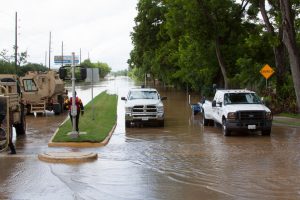
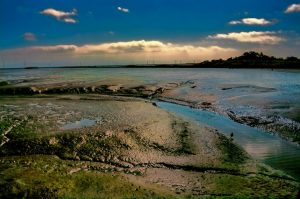
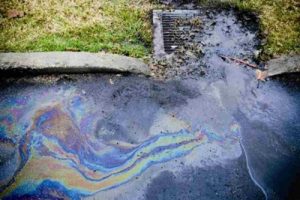 Unfortunately, the above-mentioned factors will likely lead to an increase in stormwater runoff and its accompanying problems. Municipal stormwater systems, already faced with increased nutrient regulations, will likely become overwhelmed, resulting in backups, localized flooding, and increased runoff of contaminants such as bacteria and nutrients into waterways. Also, combined stormwater and wastewater systems overwhelmed by extreme precipitation will release more combined sewer overflows (CSOs) into our rivers, lakes, and streams, degrading water quality and affecting aquatic life. At the same time, drought exacerbates the problem by lowering water levels, leading to more concentrated levels of pollutants in our waterways. These combined factors cause water quality deterioration and create major problems for water treatment plants. Already facing dwindling budgets, municipalities will have difficulty meeting water quality standards if stormwater runoff continues to increase unabated.