Funding Programs for Lead Service Line Replacement
In our line of work, we take pride in working to improve our drinking water and provide cost-effective, informative, and innovative project solutions when it comes to water. This pride and passion runs especially deep when it comes to lead exposure.
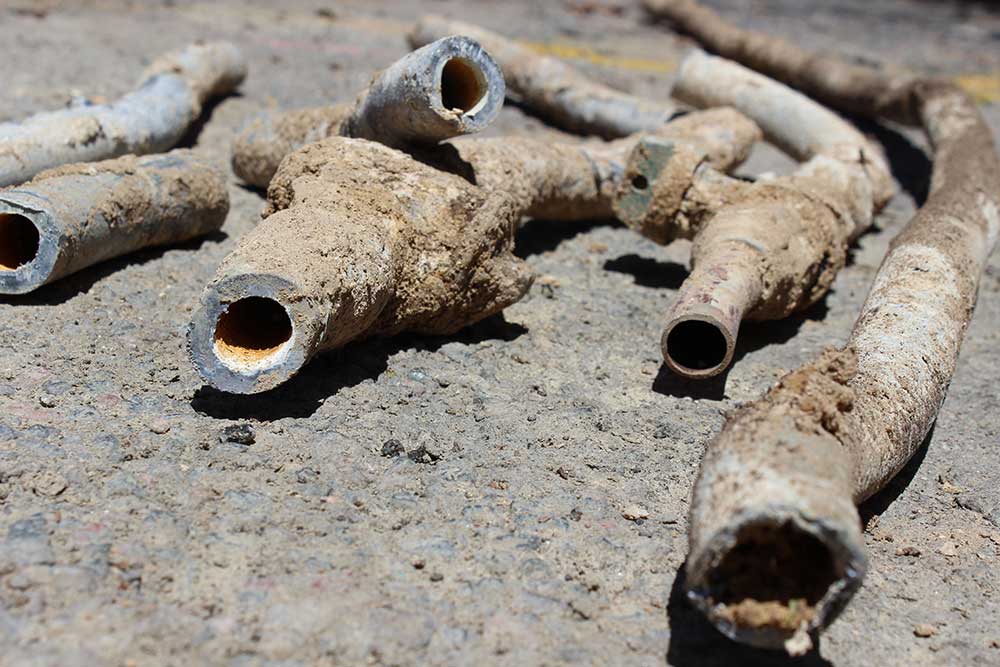 For example, in an effort to help remove lead pipes from Massachusetts turf, in the past we have partnered with the city of Marlborough, MA and replaced lead pipes with copper ones in approximately 250 homes, and have helped with the replacement of 427 services for the city of Newton, MA, among other cities and towns as well.
Like we said, this passion runs deep. And it is from this passion that we want to take a moment to discuss the Massachusetts Clean Water Trust (also known as “the Trust”) and the Massachusetts Department of Environmental Protection (MassDEP) joining forces to drive municipal participation in the Environmental Protection Agency’s (EPA) Lead and Copper Rule Revision (LCRR) to determine if public or private lead service lines (LSLs) contain lead. Their efforts have resulted in a $20 million grant for public water suppliers to complete their LSL inventory plan or design a LSL replacement program.
This is great news. But what makes it so great?
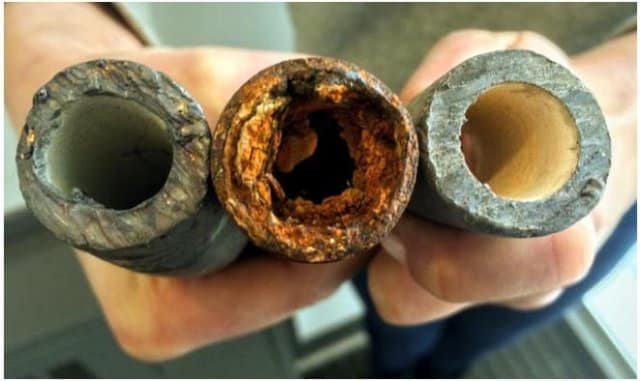 For starters, let’s start with why lead is bad for us. Exposing one to lead, whether by contaminated drinking water or ingestion, can lead to severe brain and nervous system damage, kidney damage, can drastically affect children and those who are pregnant, and can cause death.
Prior to 1944, lead was commonly used in service lines, home pipes and paints, coins, and even dishes and cosmetics (yikes!). And in 1978, lead-based paints were banned for residential use; but it wasn’t until 1986 that Congress amended the Safe Drinking Water Act, prohibiting the use of pipes, solder, or flux that were not lead-free. Even so, it is reported that even today, 29.4% of all US homes contain lead hazards.
The World Health Organization (WHO) estimates that every year, one million people die of lead poisoning. What’s worse is that the EPA estimates that there are between six and ten million lead service lines in this country. And of course, we can’t bring up drinking water pollution without bringing up Flint, MI, a city that went without safe drinking water from April 2014 to 2019, exposing between 6,000-12,000 children to severe lead poisoning and killing twelve people.
The gist is that lead is not our friend.
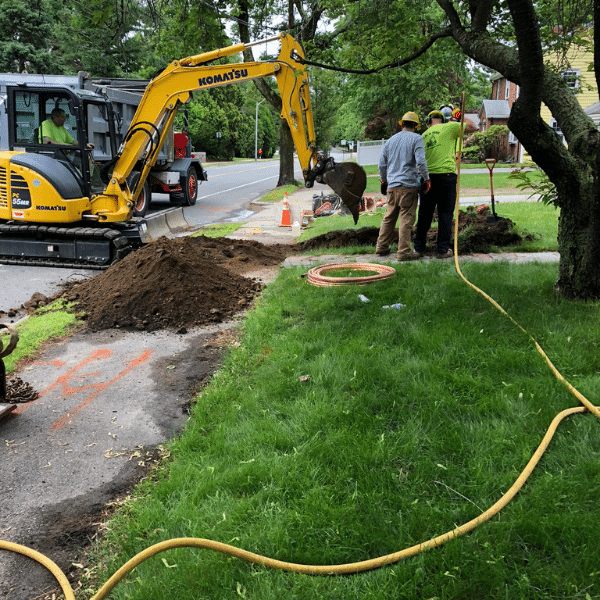
Now, what exactly is LSL replacement? It’s exactly how it sounds: it is a service line replacement for lead pipes where they are replaced with copper ones. All in all, LSL replacement is the only long-term solution to protecting the public from lead pipes.
Back to the main message: The Massachusetts Clean Water Trust (the Trust) and the Massachusetts Department of Environmental Protection (MassDEP) are offering $20 million in grants for assisting public water suppliers with completing planning projects for lead service line inventories and replacement programs.
Need help constructing your LSL inventory plan? Our Vice President, Justine Carroll, shared a brief planning structure you can use when creating your application. Want more assistance? You can reach out at to us via phone or email. We are happy to help!
The deadline for the LSL inventory plans is October 16, 2024. MassDEP requires a submission of every municipality Public Water System’s (PWS) plan of action on prioritizing, funding, and fully removing any LSLs that are connected to their distribution system. In addition, municipalities that serve 50,000+ people must post their inventories on their website, allowing full transparency for both residents and businesses to access this information.
An excellent alternative if your PWS serves a population with less than 10,000 people is that MassDEP will “use $1.3 million of the set-asides from the DWSRF Lead Service Line Grant to contract with a qualified technical assistance provider to work with the PWS,” according to Mass.Gov. This means that small communities will be able to have access to a free consultant, paid for by MassDEP to help with the LSL planning.
You can read more about the LSL planning grant agreement here. And again, if you have any questions on this program or need help with applying for this funding, reach out to us today. We are just a phone call or email away.

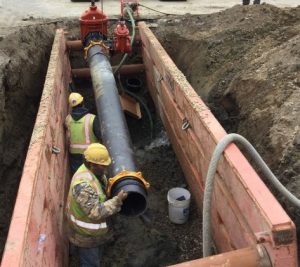 Financing for The Clean Water SRF Program helps municipalities with federal and state compliance water-quality requirements, focusing on stormwater and watershed management priorities, and green infrastructure. The Drinking Water SRF Program, provides low-interest loans to communities to improve their drinking water safety and water supply infrastructure.
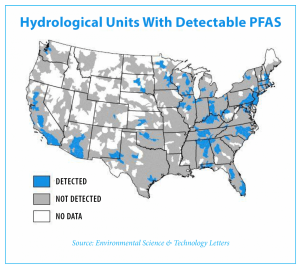 According the Environmental Protection Agency (EPA), all these UCMR 3 PFAS compounds have been detected in public water supplies across the US. Since PFAS are considered emerging contaminants, there are currently no established regulatory limits for levels in drinking water. However, in 2016, the EPA set Health Advisory levels (HA) of 0.07 micrograms per liter (µg/L) or 70 parts per trillion (ppt) for the combined concentrations of two PFAS compounds, PFOS and PFOA.
 The EPA also recommends that treatment be implemented for all five PFAS when one or more of these compounds are present.
 Most research on the effects of PFAS on human health is based on animal studies. And, although there is no conclusive evidence that PFAS cause cancer, animal studies have shown there are possible links. However, PFAS ill-health effects are associated with changes in thyroid, kidney and liver function, as well as affects to the immune system. These chemicals have also caused fetal development effects during pregnancy and low birth weights.
 In addition to the six Minimum Control Measures included in the original 2003 Permit, the 2016 Massachusetts MS4 General Permit also specifically includes limits to Total Maximum Daily Loads (TMDLs). TMDLs set pollution limits for affected waterways. These pollution limits represent the maximum amount of pollutant a specific body of water can handle before marine life, wildlife, and/or recreational uses become adversely affected. Because stormwater has the potential to have a significantly negative impact on waterways, TMDLs are a necessary protection measure. Unfortunately, addressing stormwater contributions to TMDLs will require that many communities make some structural and treatment modifications to their stormwater systems, and these take both time and money.
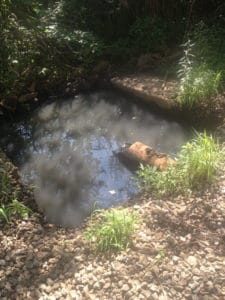 Fortunately, stormwater assessments that are conducted by licensed professional engineers, such as Tata & Howard’s MS4 Compliance Assessments, provide a significant return on investment. As part of the assessment, the entire system is meticulously evaluated for the most budget-conscious ways in which to fully meet compliance. Permit exclusions will also be assessed and all previous stormwater work will be documented to establish proper credit. The assessment also provides a well-planned course of action that is defendable when justifying projects and procuring funding.
 Water utilities today are faced with a unique set of difficulties. Population growth has resulted in unprecedented demand while climate change has caused supply to dwindle. Increased regulations have forced utilities to invest more and more capital into treatment while budgets have shrunk. In addition, our nation’s aging infrastructure has forced water utilities to heavily invest in repair and replacement of the distribution system. Therefore, it has become critical that utilities utilize the most cost-effective and efficient methodologies in order to maintain and improve their water systems.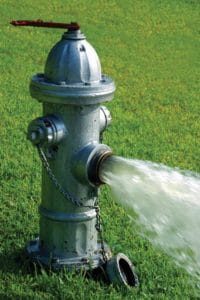
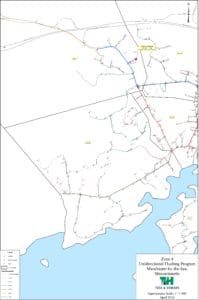 Because demand is highest in summer and would make flushing impractical, and low temperatures in winter would cause unsafe conditions from flushed water freezing on roadways and sidewalks, flushing is typically performed in the spring and fall. Currently, Tata & Howard is assisting the communities of Haverhill and Manchester By The Sea, MA and Norwalk First Taxing District in Norwalk, CT with their annual UDF Programs. Both AWWA and MassDEP recommend that UDF be performed on an annual basis, at a minimum. If a distribution system is too large to perform UDF annually, flushing should instead be scheduled in rotation so that all parts of the distribution system are exercised on a regular basis.
 Despite serious concerns over costs to municipalities and timing of implementation, MassDEP has agreed to co-issue the new MS4 stormwater permit with EPA. According to a March 31, 2016 letter from MassDEP Commissioner Martin Suuberg to US EPA Region 1 Administrator Curt Spalding, MassDEP agreed to co-issue the permit in spite of concerns in order to remain involved with cities and towns on permit implementation. The letter states, “MassDEP would have preferred some time for additional discussion of important issues. Nevertheless, MassDEP needs to be involved with EPA and cities and towns on how this permit is implemented. This is too important an issue for our environment, for our cities and towns and for the Commonwealth.”