Tata & Howard provided engineering services for a comprehensive water distribution system evaluation and study. The work included development of a hydraulic model using WaterCad software. The plan included fire flow tests, review of the water supply agreement with the City of Worcester, preparation of projected water demands based on historical use and population trends, and evaluation of storage. The plan also included an evaluation of potential water supply sources within Town boundaries.
This project included an evaluation of the system prior to design of the tank to determine the best solution. Work included calibrating the model under extended period simulation (EPS). The hydraulic model was used to determine the best hydraulic gradeline elevation of the system to reduce the storage surplus. Additionally, the model was used to track the chlorine residual from the Worcester Pump Station to the extremities. Jar testing was completed to determine the chlorine demand in the water supply while water quality testing results assisted with determining the chlorine demand in the piping system. The model was used to simulate the chlorine degradation. Improvements were input into the hydraulic model and the effects on the chlorine residual in the extremities reported. Improvements such as an elevated tank at Maple Street with a total usable volume, reduction in hydraulic gradeline elevation, and cleaning and lining water mains were evaluated. The analysis determined that a new tank at Maple Street is necessary based on water quality and cost.
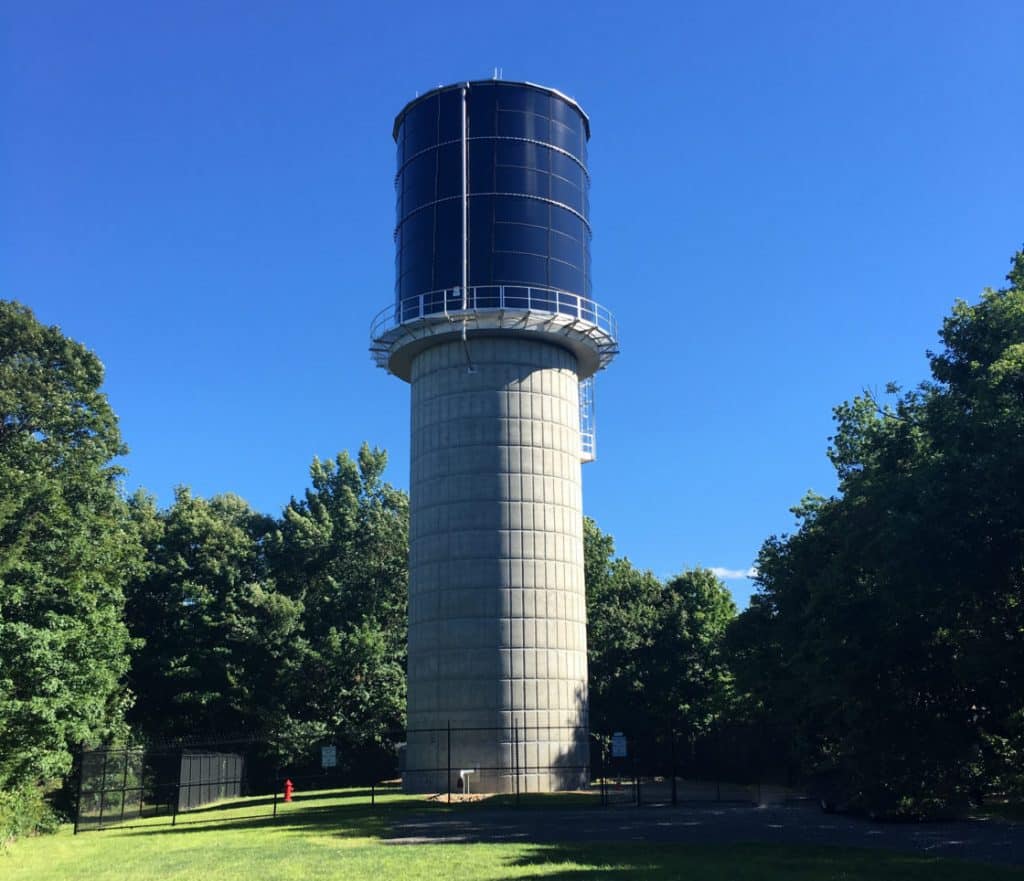
Tata & Howard provided assistance with the preparation and submittal of a Project Evaluation Form to the Massachusetts Department of Environmental Protection for the construction of a new elevated tank with a capacity of 0.2 million gallons. The new tank reduced the water age in the system by replacing the deteriorating ground level tank. Tata & Howard provided construction administration and resident observation services for the new tank, which was completed in 2016.
Whitepaper:
ABSTRACT: In 2012, the Town of Paxton, MA was experiencing significantly reduced chlorine residuals in the extremities of the system along with an aging water tank that required extensive rehabilitation. As a result, the Paxton Department of Public Works (DPW) determined the need to create an extended period simulation (EPS) hydraulic model to evaluate the water age and water quality in the distribution system. The study examined the residual chlorine concentrations and water age throughout the distribution system and presented various options to help mitigate these issues, including replacing the aging tank and adding a chlorine booster pump station at the existing site. Construction of the new tank and pump station was completed in the summer of 2016. Read the complete whitepaper by clicking below:
To download “Town of Paxton, Massachusetts Distribution System Evaluation and Improvements” whitepaper instantly, simply fill out the form below:
Tata & Howard completed a Water/Wastewater and Related Departmental Organizational Plan for the City of Westfield. Prior to the start of work, the organization included a Water Resources Superintendent, a Wastewater Superintendent, and other department heads to provide water, wastewater, stormwater, and highway services. The chief project goal was to seek alignment of people, business processes, and technology.
Tata & Howard reviewed relevant documents, facilitated individual interviews with knowledgeable managers and staff, and conducted on-site workshops as appropriate to evaluate the City’s current organization against desired business goals and industry best practices. We recommended a revised organization to the City which is in the process of being approved through the City Council. Upon acceptance of the new organization, a detailed report will be submitted.
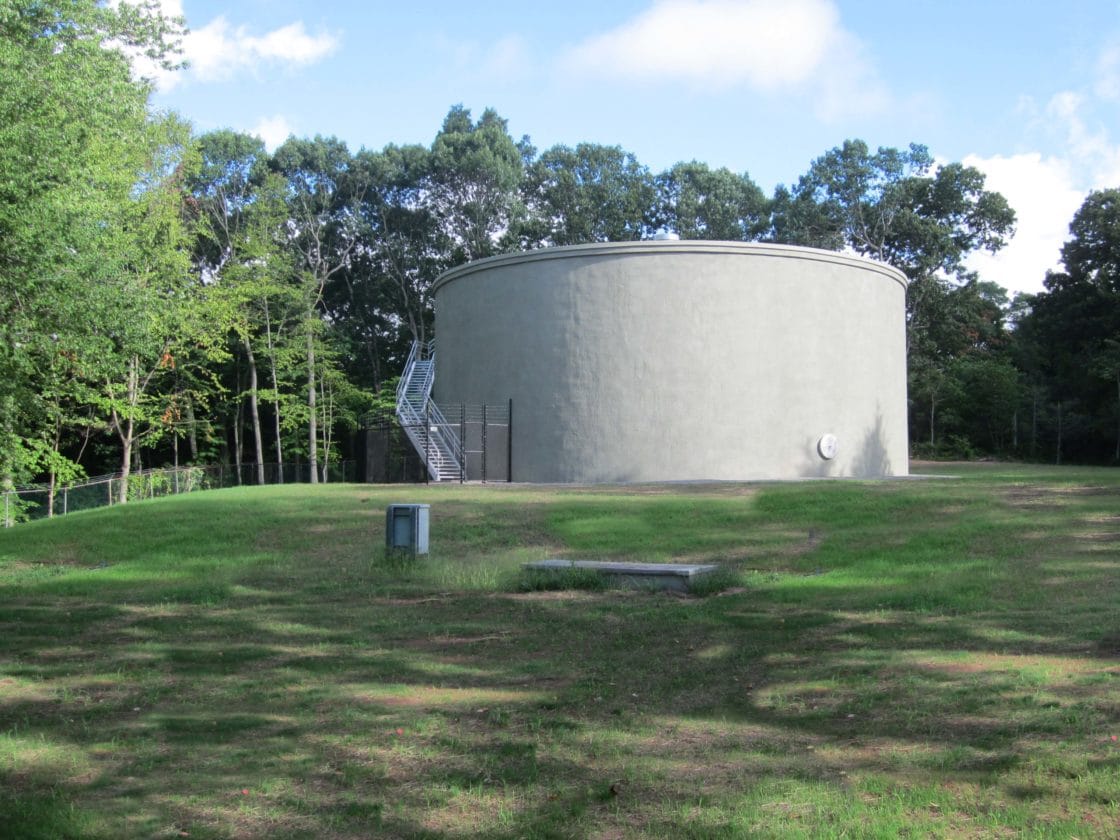
Tata & Howard provided evaluation, design, construction administration, and resident observation services to the South Central Connecticut Regional Water Authority (SCCRWA) for the replacement of the Whitney-Wintergreen water storage tank. The project included an analysis of SCCRWA’s Whitney-Wintergreen service area to determine the appropriate volume of storage needed to serve its customers, and a 1 million gallon concrete tank was constructed to replace the existing 1.5 million gallon steel tank at the same site. The project also included demolition of the existing tank as well as stormwater management at the site. The project was completed in September of 2015.
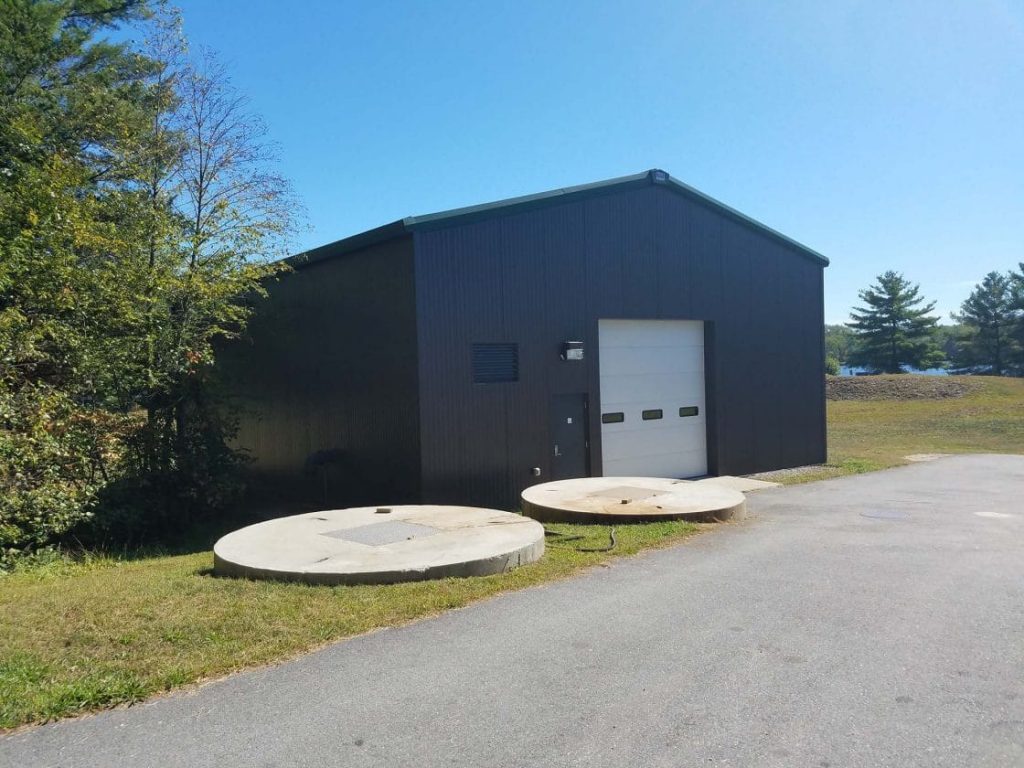
Tata & Howard designed and constructed the improvements to eliminate low and inadequate system pressures, construct a new source, pilot test filtration for manganese removal, design and construct required distribution system piping to connect the plant and storage tank with the system, design a new concrete storage tank, booster pump stations, and the filtration facility for manganese removal. The project was very successful and remains in great condition today.
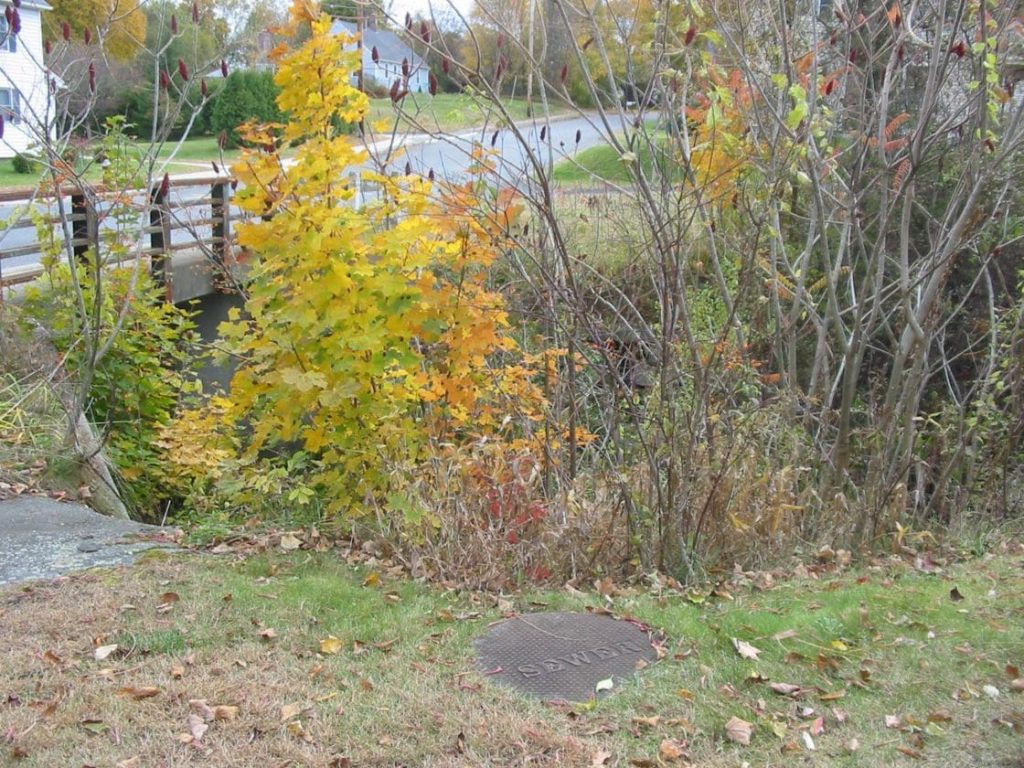
The exposed water main ran under the bridge on Mechanic Street
Tata & Howard provided engineering consulting services to the Town of Monson, Massachusetts for the relocation of the 8-inch diameter water main on Mechanic Street.
The main was originally constructed in 1897 under the streambed; however, after 117 years in this location, the decrease in surface water elevation had exposed the water main. The water level averaged about one inch below the top of pipe, exposing the top portion of the entire section of main that crossed the brook, approximately 15 linear feet of main. Exposure of the water main made it susceptible to freezing during the winter months, which could have resulted in a break and subsequent lost water or contamination from the brook to the Town’s entire water system, potentially resulting in significant costs to residents and to repair, clean, and disinfect the system. The main provides potable water to approximately fifty residents. There were only two gate valves located at the ends of Mechanic Street. As a result, if the main were to fail at the bridge, the entire street would have to be shut down in order to repair the damage, disrupting water service for the 50 serviced residents.
The Mechanic Street Bridge has a history of failure. As a result of a major flood event in 1955, the bridge failed and was completely replaced in 1956. The bridge ran directly over the water main, which posed an additional threat to the main should the failure reoccur. Although the main was unaffected during the previous failure, its weakened condition made it more susceptible to failure in a similar event.
Tata & Howard provided funding assistance and the project qualified for and received a FEMA Hazard Mitigation Grant for 75% of the cost of the project. The work included the preparation of design plans and specifications for the relocation of the 8-inch water main to a self-supporting beam structure attached to the bridge abutments on Mechanic Street. The project also included bidding, permitting, construction administration, and resident observation.
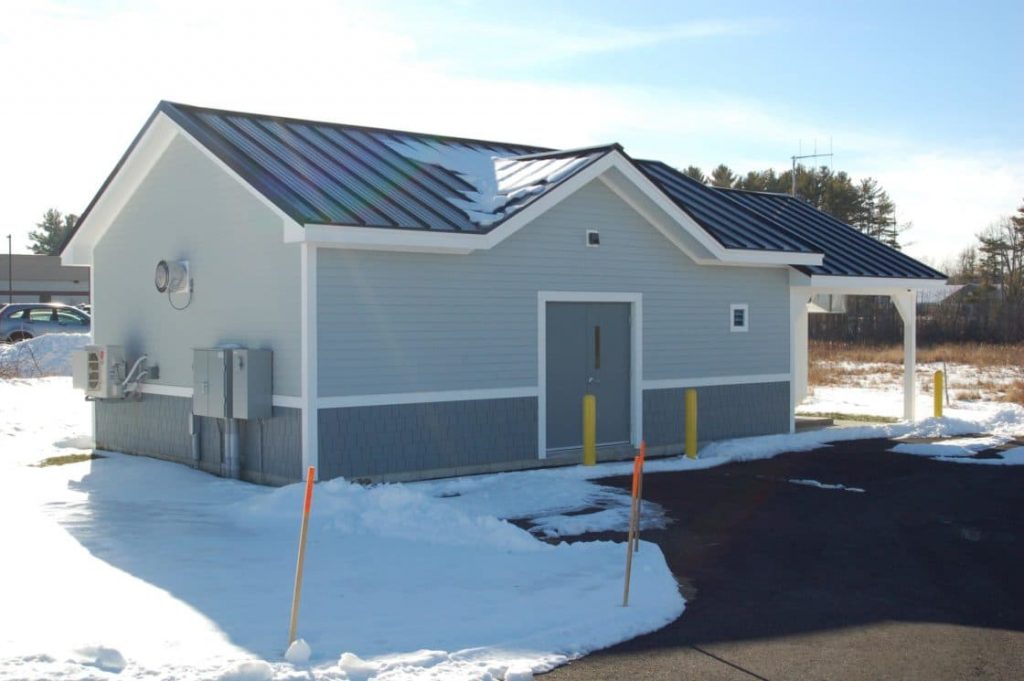
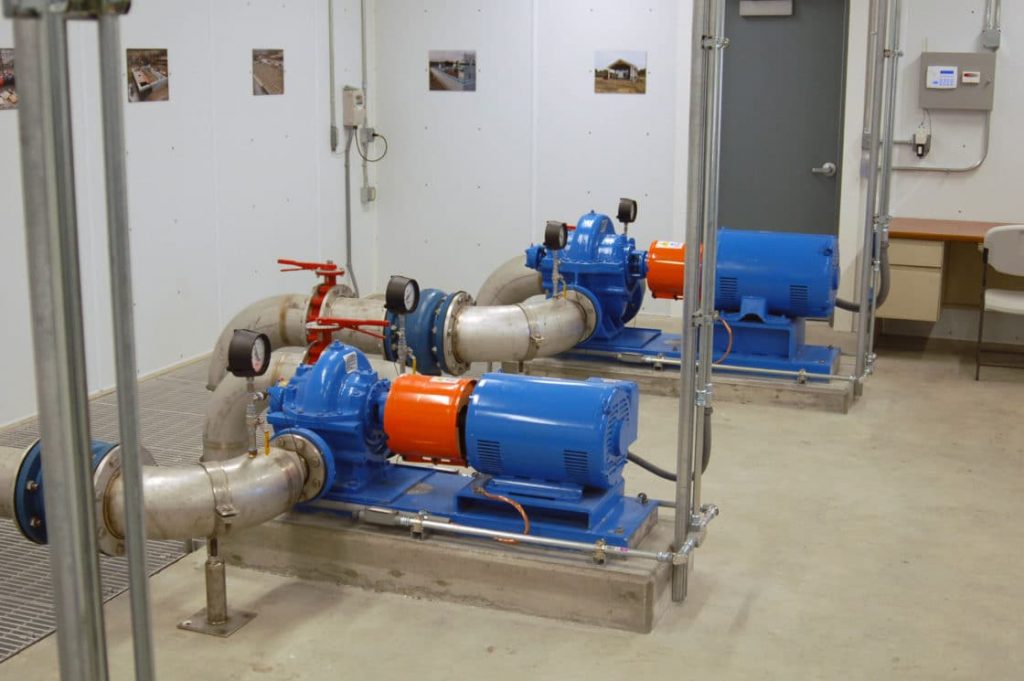
Tata & Howard assisted Maine Water Company with mechanical, structural, and architectural design of a new high service zone booster pump station on Barra Road within the Biddeford-Saco water distribution system. The new pump station replaced the existing Alfred Road station, providing pumping capacity to meet current demands in a majority of the City of Biddeford as well as room for future expansion. Funding for the project was provided in part by the Maine Drinking Water Program State Revolving Fund (DWSRF).
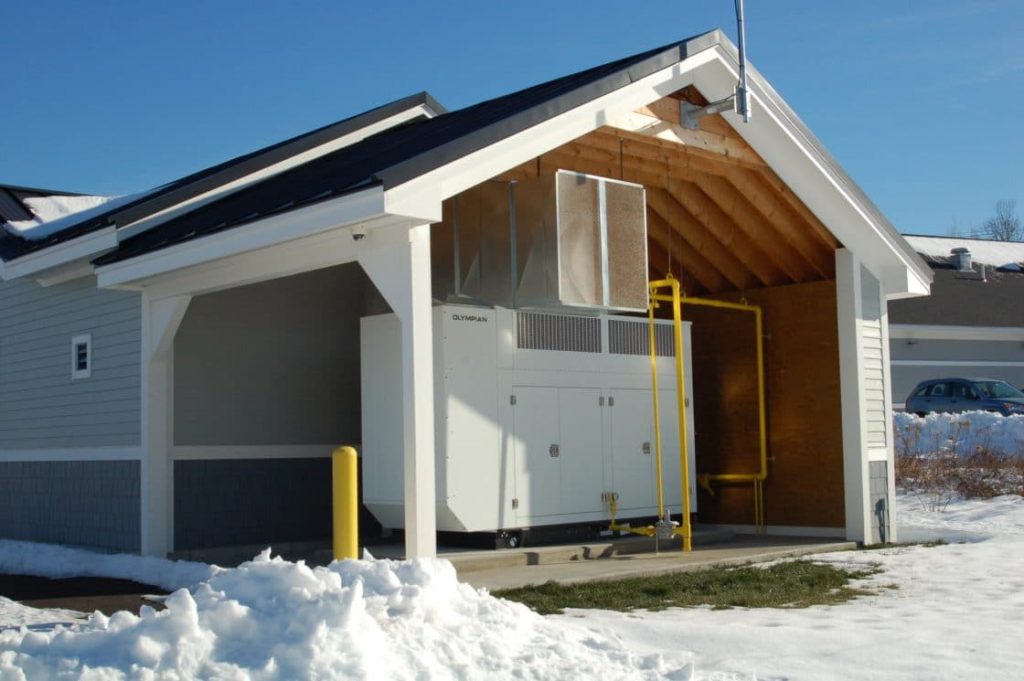
Mechanical design for the project consisted of sizing and selection of three (3) centrifugal booster pumps, associated piping, and appurtenances. The pumps were sized with input from a hydraulic model of the system developed by Tata & Howard, and they were selected to maximize the available flow from a 16” cast iron pipe line that crosses the Maine Turnpike from the water system’s major storage reservoir. A pipe gallery was incorporated into the slab and foundation design as well as insulated concrete form (ICF) foundation walls. Per the Owner’s request, the architectural design used colors and materials similar to the other buildings within the surrounding commercial office park. Also, a gable roof canopy was added to the design (pictured below) to help shield the emergency backup generator from the elements. Precautions were taken to ensure proper air flow and ventilation was achieved to meet the requirements of the generator. Construction of the pump station was completed in 2015.
Tata & Howard provided the design of a 1.44 million gallon per day (mgd) water treatment plant to treat water from the Whitinsville Water Company’s Whitin Wellfield. The existing facilities consisted of a chemical injection facility and pump station, and historical high levels of iron and manganese led to water discoloration issues in the distribution system.
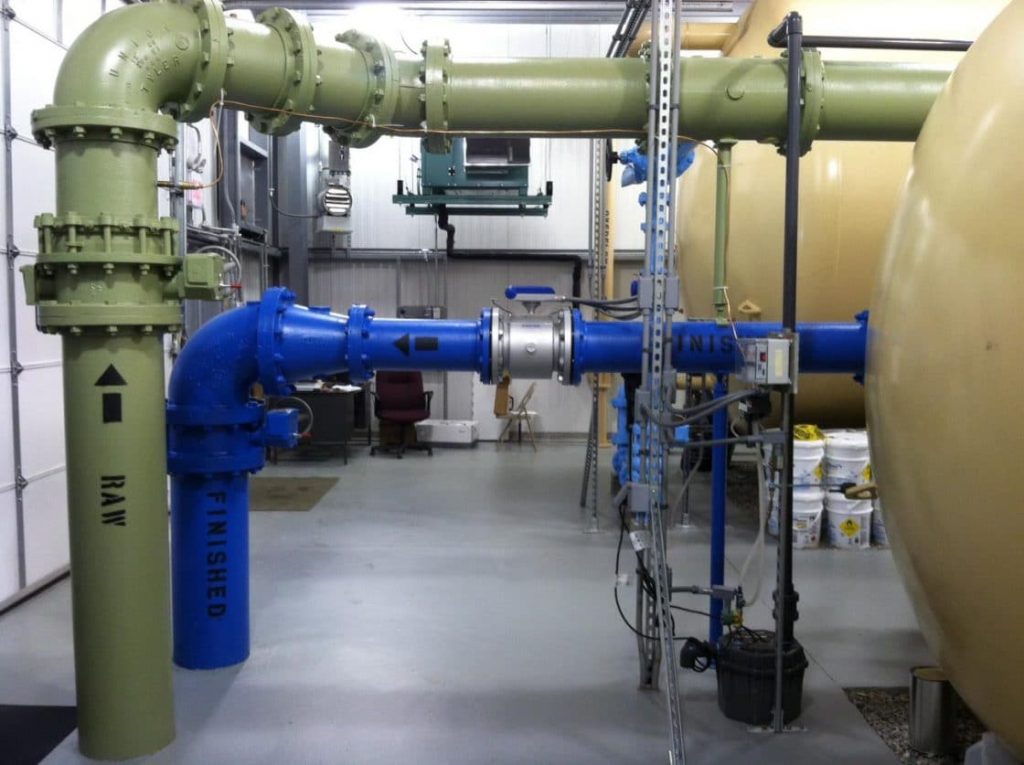
The new treatment facility for the Whitin Wellfield utilizes chlorine oxidation and GreensandPlus™ media filtration to remove iron and manganese from the raw water to concentrations below Secondary Maximum Contaminant Levels. The installation of 16-inch pipe between the existing facility and the water treatment facility is utilized in combination with filtration to provide contact time to achieve log removal of Giardia Lamblia (Giardia), Cryptosporidium, and viruses, if it becomes necessary in the future.
The treatment plant components include a three cell horizontal pressure filter vessel, a backwash water tank, and backwash pumping systems. The design also included a dehumidification system and the installation of crushed stone below the filter vessel and spent backwash tank. This allows for water to infiltrate into the ground and prevent puddling on the concrete floor in the event that condensation does occur on the equipment.
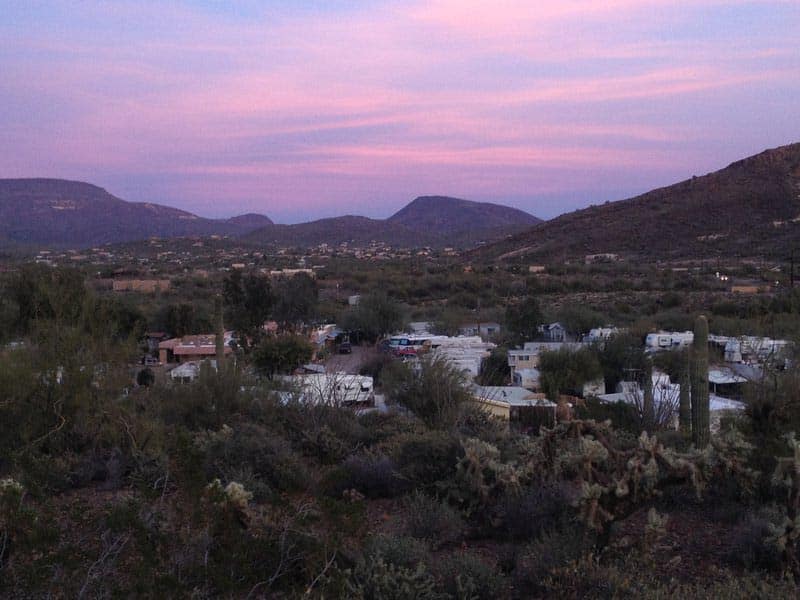
The Shangri La Ranch water supply, located in New River, Arizona, exceeded the running annual average maximum contaminant level (MCL) for arsenic. For the first quarter of 2015, the running annual average (RAA) was 0.0107 mg/L, and the RAA for the second quarter of 2015 was 0.0106 mg/L. The MCL for arsenic is 0.01 mg/L. Arsenic contamination within aquifers is not uncommon and is generally from natural mineral deposits. Arsenic in high enough concentrations can result in skin legions and damage to the circulatory system and cancer; therefore, it is important to monitor and minimize this contaminant from drinking water.
The Shangri La Ranch is a non-transient, non-community water system that services approximately 240 customers. The actual number of customers served varies and is dependent on the number of people that are visiting the resort during a given period of time. Tata & Howard prepared an Arsenic Treatment Report for the Arizona Department of Environmental Quality (ADEQ) to address arsenic levels in the Shangri La Ranch’s water supply. It included a summary of the existing layout and operation of the water supply wells, representative treatment provided, and recommendations for additional treatment to meet the State and Federal MCL for arsenic.
The results of the study indicated that the arsenic concentrations in Well No. 1 was low enough that blending from the existing wells would adequately reduce the arsenic concentration to below the MCL. It was also recommended that the system install two ISOLUX® cartridges, in parallel, to reduce the arsenic level in Well No. 4 to levels below the MCL prior to blending with the remaining water supplies. ISOLUX® utilizes a zirconium adsorption system to remove arsenic from water
Greensboro Fire District No. 1 (GFD#1), situated on the Northern portion of the Green Mountains in Vermont, requested assistance with their water distribution and treatment systems due to deficiencies identified in a sanitary survey conducted by the State of Vermont. This contract addresses these deficiencies and provides the District a more robust covered water storage tank, secure buildings that house controls and chemicals and related equipment, emergency power generation, and water metering.
As part of the project, Tata & Howard helped GFD#1 secure funding that included a 45% USDA Grant for the originally planned project with an estimated budget of $2,900,000. During the design phase, the District lost their primary well source due to an extended drought. Tata & Howard engineers worked with the District to secure a 100% USDA grant for the cost of constructing a new municipal well source and associated emergency generator and related appurtenances.
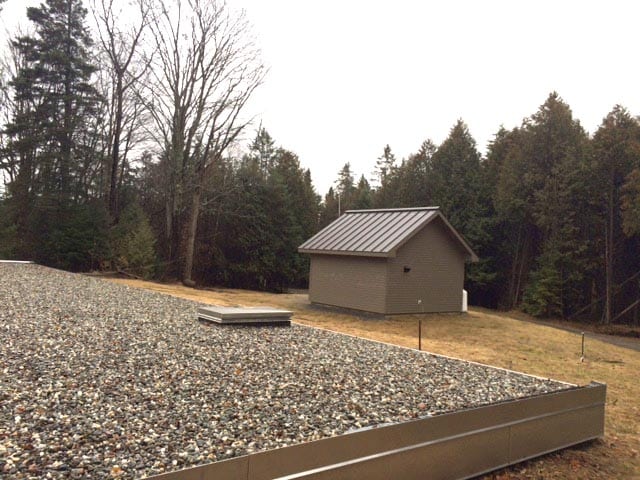
Tata & Howard provided design, construction administration, and resident observation for the water system improvements project. Construction began in the spring of 2015 with the setup of a temporary water storage system and demolition of the existing water storage tank roof structure. Precast planks and a ballasted membrane roof were then installed, providing safe, quality water. Two new small buildings were constructed to house chemicals and water well piping and controls, along with an emergency generator to provide continuous water in case of interruption to electrical power.
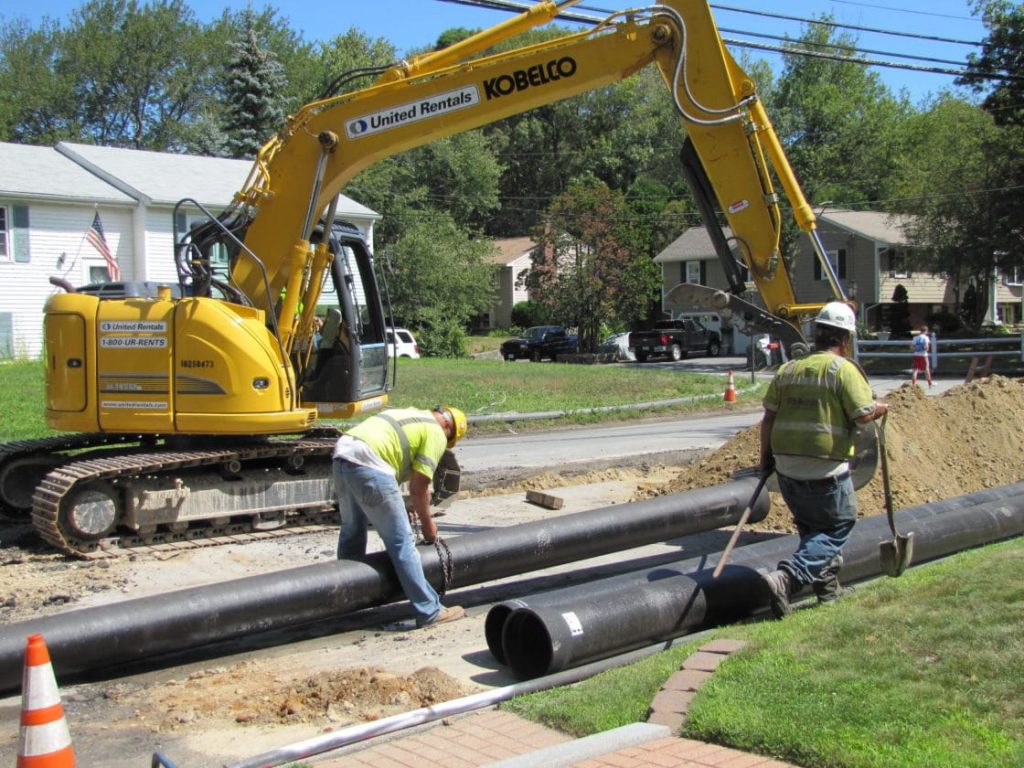
Tata & Howard was contracted to design approximately 2,000 linear feet of new 12-inch diameter ductile iron water main on Congress Street and West Fountain Street (High Service Area). The work included borings, survey, preparation of plans and specifications, and bidding. Construction of the High Service Area Water Mains took place over the summer, and was recently completed. Tata & Howard provided construction administration and resident observation services.
In addition, Tata & Howard was contracted to design approximately 2,400 linear feet of new 12-inch diameter ductile iron water main on East Main Street (Route 16). The work included survey, wetlands delineation, MassDOT permitting, completion of a Notice of Intent, preparation of plans and specifications, bidding, construction administration, and resident observation services.
Let's stay in touch.
Get the latest news, blogs, and insights conveniently in your inbox.

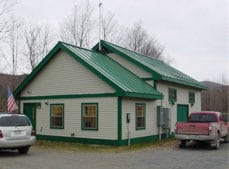 Tata & Howard designed and constructed the improvements to eliminate low and inadequate system pressures, construct a new source, pilot test filtration for manganese removal, design and construct required distribution system piping to connect the plant and storage tank with the system, design a new concrete storage tank, booster pump stations, and the filtration facility for manganese removal. The project was very successful and remains in great condition today.