Water is one of the most critical resources for any community: it sustains public health, supports industries, and maintains local ecosystems. Unfortunately, it is also often taken for granted until there is a shortage or drought. As rapid climate change continues to affect our water supply, municipalities face increasing pressure to manage their water resources efficiently. One highly effective tool for tackling these challenges is the municipal water audit.
Municipal water audits are essential for identifying the causes and costs of water loss within public systems. By pinpointing inefficiencies and offering targeted solutions for repairs and maintenance, these audits help communities enhance drought resilience, improve water conservation, and achieve a higher return on investment through optimized resource management.
 Understanding Water Audits
At its core, a water audit is a thorough examination of a water system and how the water flows throughout. The purpose is to evaluate the current water usage, pinpointing areas where water is being inefficiently used or wasted, such as in the case of non-revenue water. The auditing process starts by collecting water consumption data from a range of sources. The data is then examined to detect effects of climate and population changes or other patterns and abnormalities.
Next is a close inspection of the physicality of municipal water infrastructure systems to identify potential leaks, inefficiencies, and areas for improvement. This process includes a detailed analysis of how water is managed and distributed — no stone is left unturned during the water audit process.
Based on the examination’s findings, recommendations for water-saving tactics are provided in the form of an action plan. The action plan details steps to fix leaks, upgrade outdated municipal equipment, and implement water conservation measures, such as reducing water loss from aging infrastructure. The impact of these changes is then closely monitored to ensure that they are delivering the necessary results.
A lot can be learned by examining municipal water consumption data, revealing inefficiencies, waste, and opportunities for improvement. By evaluating patterns in water distribution, audits can detect leaks in infrastructure, reduce unnecessary losses, and optimize water usage across entire municipalities. This level of evaluation then results in more streamlined and stringent resource management, which is crucial not only in the day-to-day but also during emergency situations such as drought.
Strengthening Drought Resiliency
A drought or shortage in water can wreak havoc on an area, leaving both civilians and wildlife suffering severely from the negative impacts. To prepare for future droughts, communities have to build up what is called drought resiliency.
Drought resilience is a system, community, or environment’s ability to withstand and adapt to droughts without falling victim to their negative impacts. By building drought resilience, regions can maintain their essential services, support agricultural productivity, and protect their natural resources during extended dry periods. In areas that are more susceptible to drought, managing their water usage efficiently is no longer just a good practice — it’s a necessity.
Communities can take the first steps towards building their resilience by conducting a water audit and subsequently implementing the strategies and best practices provided. Audits are designed to identify inefficiencies in municipal water use, detect leaks in public systems, and provide local governments with recommendations for optimization. Implementing these strategies strengthens a water system’s ability to manage water resources during droughts or other natural disasters that disrupt water supply. In turn, this proactive approach not only supports sustainable water management but also protects vital resources and strengthens the ability to withstand future drought conditions without significant economic or social impact.
 A Smart Investment
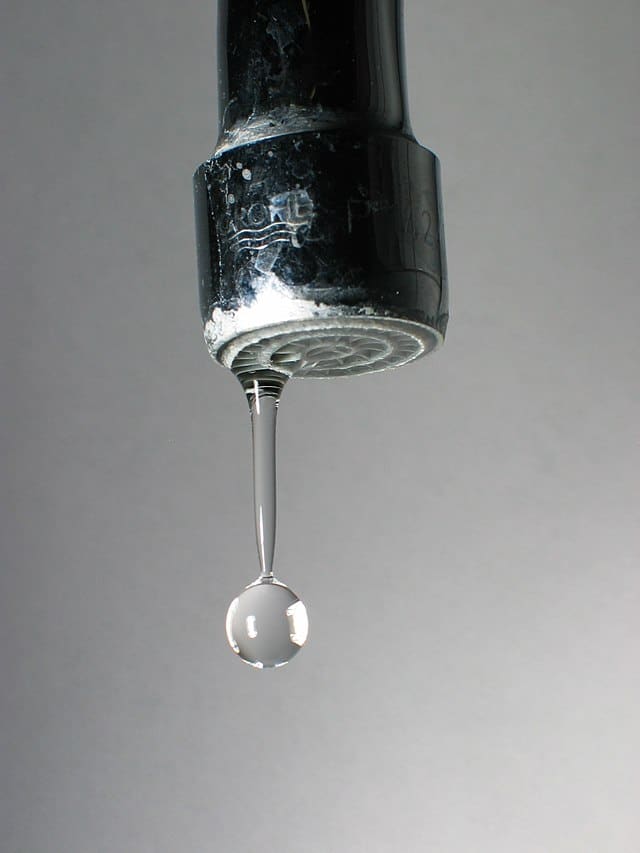
One of the most immediate impacts of a water audit is the potential to cut costs. By identifying inefficiencies in water usage — such as hidden leaks, overuse in certain processes, or outdated infrastructure — a water audit allows communities to tackle wasteful practices head-on. An audit can identify if leaks are present and pave the way for swift upgrading or repairing. That fix often leads to substantial improvements in quality and availability as well as recaptured revenue from lost water, making them worth the investment.
It’s incredibly common to find that the return on investment (ROI) from a water audit is swift. Once inefficiencies are identified and corrected, the savings can be immediate and long-lasting. A water audit helps municipalities streamline their water management processes and quickly recapture lost revenue, leading to long-term sustainability. Municipalities and local water districts, often operating with limited budgets, can use the findings of a water audit to reallocate savings to essential infrastructure improvements.
 Resource Conservation
Beyond the drought resilience and financial benefits, water audits leave long-term, positive impacts on resource conservation. According to UNICEF, approximately 700 million people could be displaced by intense water scarcity by 2030. With water continuing to be an increasingly scarce resource for so many communities across the world, optimizing water use practices and limiting non-revenue water is key.
The insights gained from an audit can inform long-term water management strategies, helping municipalities design systems that are more adaptable to changing water conditions. Whether it’s upgrading infrastructure, investing in water-efficient technologies, or developing contingency plans for droughts, water audits lay the foundation for smarter, more sustainable water management in the years to come.
Conclusion
Water audits are instrumental in helping everyone — from individuals and businesses to organizations and municipalities alike. As we continue to experience rapid climate change and droughts become more frequent and severe, the importance of water audits will only continue to grow. By identifying inefficiencies and optimizing usage, audits provide communities with the power to reduce their water usage, lower costs, and contribute to environmental sustainability by making the most of the water available to them.
More information on Tata & Howard’s water audit projects can be found here.
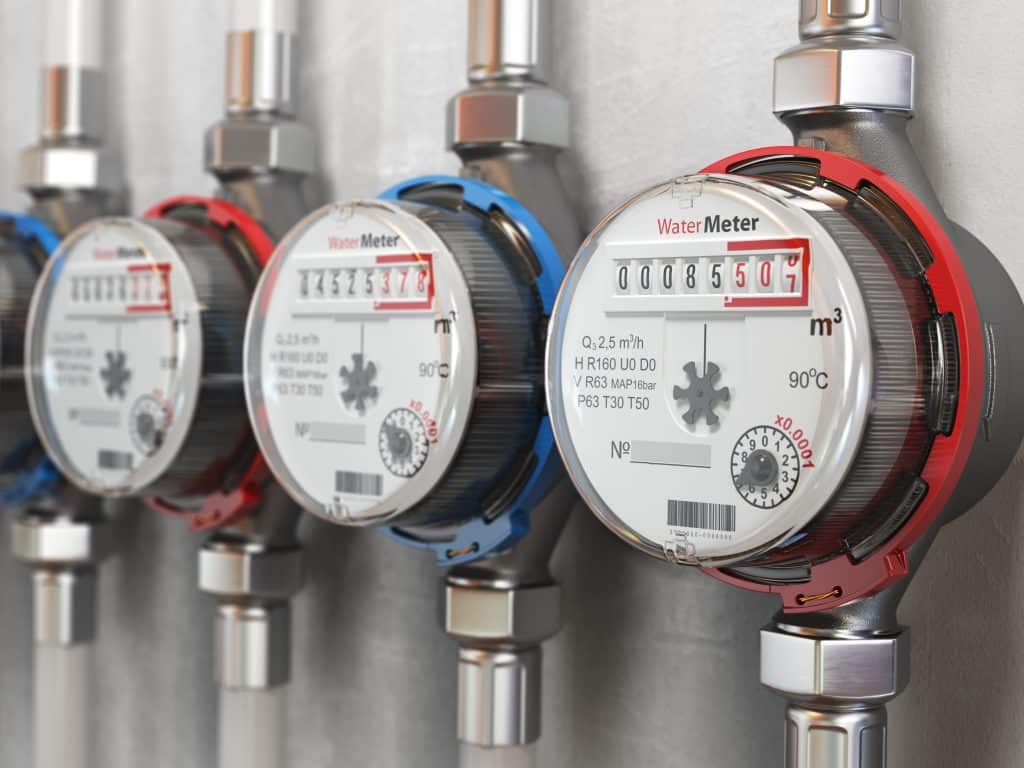
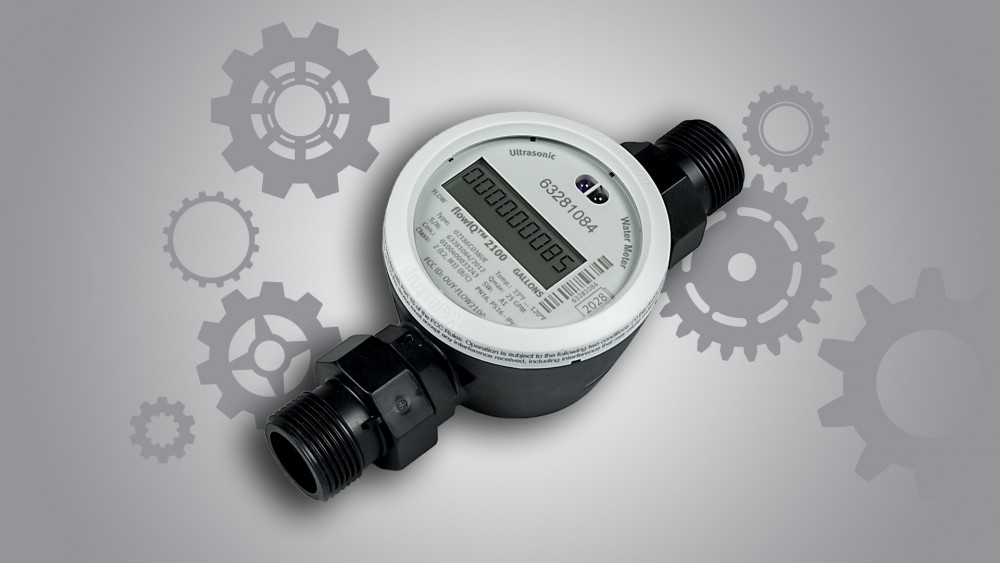 AMR and AMI: What’s the Difference?
 World Water Week is an annual event organized by the Stockholm International Water Institute (SIWI) that focuses on global water issues, and this year’s theme is “Water and Waste: Reduce and Reuse.” The main event takes place in Stockholm, Sweden where experts, innovators, stakeholders, and young professionals from various sectors around the globe will come together to share ideas, foster relationships, and develop innovative solutions to the world’s most urgent water-related problems. In 2016, over 3,300 individuals and over 330 organizations from 130 countries around the world participated in World Water Week, and the expectation is that 2017 will see at least those numbers. Through this year’s theme, World Water Week is focusing on two targets addressed by the Sustainable Development Goals (SDGs) of the UN’s 2030 Agenda for Sustainable Development including improving water quality and reducing waste by 2030 in order to help achieve sustainable development in a rapidly changing world.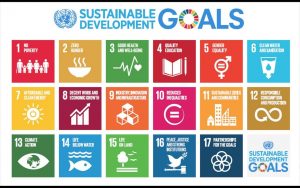
 Communities lose millions of gallons of water
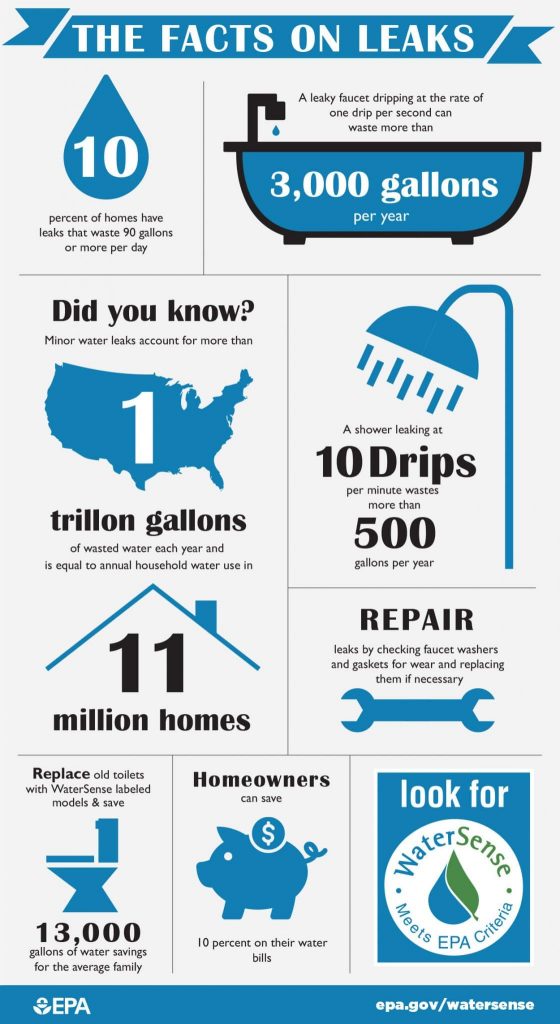
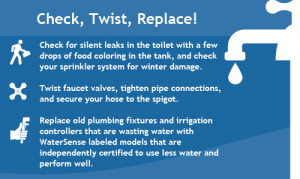 A good method to check for leaks is to examine your winter water usage. It’s likely that a family of four has a serious leak problem if its winter water use exceeds 12,000 gallons per month.
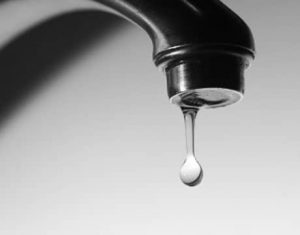 A leaky faucet that drips at the rate of one drip per second can waste more than 3,000 gallons per year. That’s the amount of water needed to take more than 180 showers!
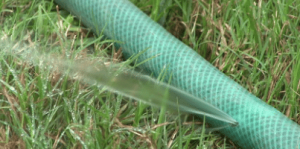 An irrigation system should be checked each spring before use to make sure it was not damaged by frost or freezing.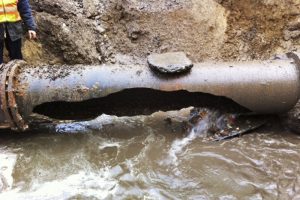
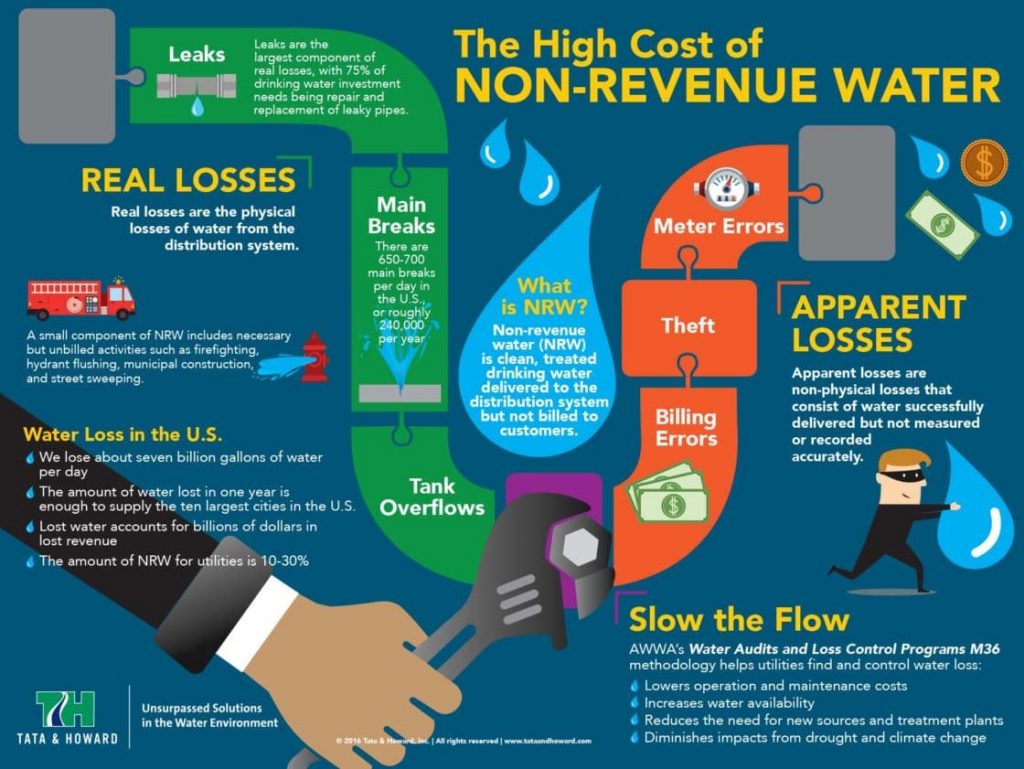
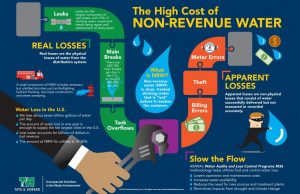
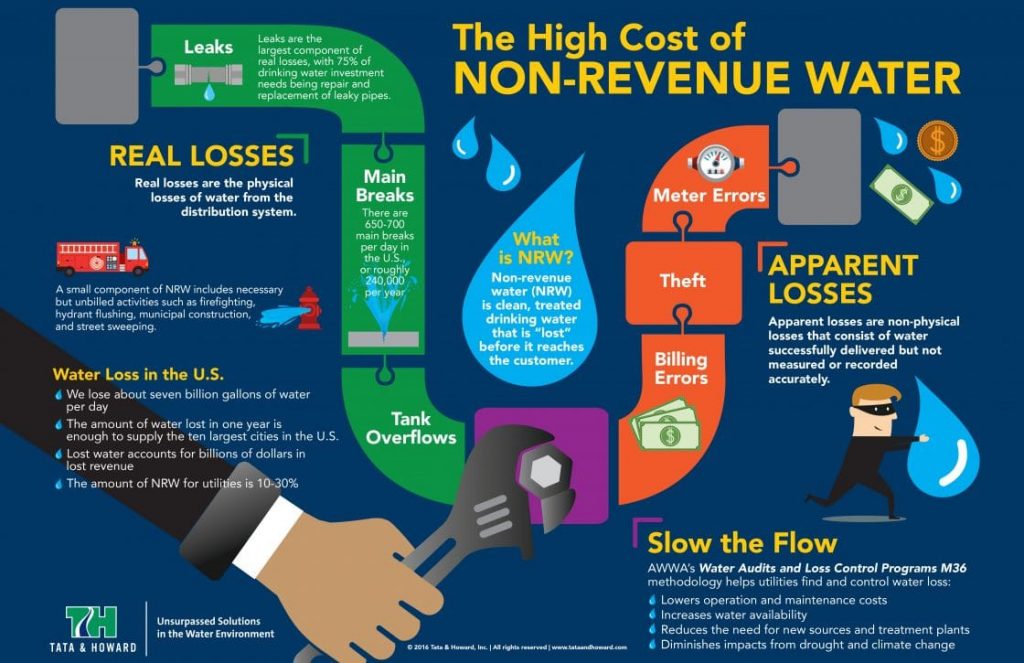 Feel free to share the above infographic (with attribution),
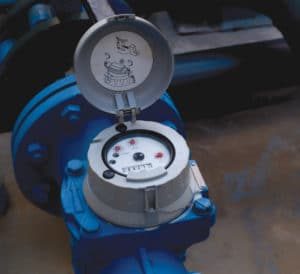
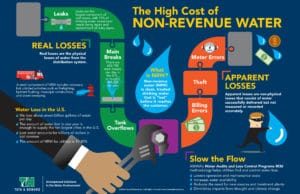
 distribution systems. Water audits are a vital step toward reducing lost water while improving water infrastructure. We lose billions of dollars every year to NRW — money that could be used to improve our infrastructure or to support other clean water initiatives. Water lost is water and money wasted, and the less NRW a utility has, the better off it — and its customers — will be.