Tata & Howard is pleased to be a sponsor of Connecticut’s premier water supply event, the Connecticut Section AWWA Annual Technical Conference and Vendor Exposition (ATCAVE). ATCAVE celebrates 25 years on Tuesday, February 23-Thursday, February 25, 2021!
Employee Spotlight #3: We are excited to shine this week’s employee spotlight on Chrissie Beliveau. Chrissie has been with Tata & Howard for more than ten years and serves as the company’s Marketing Coordinator. Wearing many hats, Chrissie assists in all request for proposals/qualifications, and a variety of marketing tasks, including tradeshow planning, collateral design, advertising, and more.
In her free time she enjoys mountain biking, hiking, traveling, and spending time with her two grandchildren, Max and Luna, and her soon-to-be-born twin grandchildren. In addition, Chrissie has started experimenting with stained glass, and is looking forward to taking classes to further expand her knowledge in the art.
Her most memorable travel experience was a family trip she took to Italy, where she traveled from Milan to Rome. Exploring her true Italian roots from her father who was born and raised in the mountains of Parma (where parmesan cheese was created) – the trip provided a special opportunity to visit relatives and view pieces of her natural heritage.
Chrissie’s favorite part about working for Tata & Howard is having the opportunity to work with each team member. She truly loves being a part of the team and enjoys working with all levels and personalities, while learning more about engineering in the water industry.
Employee Spotlight #2: Today we are shining our employee spotlight on Peter Goodwin. Peter joined Tata & Howard as an Associate in the fall of 2019 and has enjoyed his time thus far helping clients to solve problems successfully.
With Civil Engineering degrees from the University of Maine – Orono and Northeastern University, Peter’s passion for infrastructure planning, design, construction, and system operation/maintenance has spanned across nearly four decades and four firms/organizations. Peter is Past-President of the New Hampshire Water Pollution Control Association along with being State Director for the Maine Water Environment Association (2012-2015). He is involved in several NEWEA, NHWWA, NHWPCA, MWUA, and MEWEA committees and has developed many professional relationships through the experience.
Since joining T&H, Peter’s favorite project has been the construction of the New Hampton Road Water Main Improvements for the City of Franklin, NH. While challenges presented themselves in the face of a pandemic, it was great to see the project completed under budget with two miles of additional roadway reconstruction negotiated with the general contractor and NHDES SRF Program.
When he’s not completing water, sewer, stormwater, and environmental consulting projects, Peter enjoys golfing, playing hockey, skiing and traveling. Some of his favorite trips include a post college cross-country trek in a conversion van with his best friend that allowed for visiting family and touring National Parks, as well as skiing in Austria, and exploring Italy.
A rise in COVID-19 cases across the United States has forced some utilities to reconsider staffing plans and to reevaluate past preparedness strategies in order to continue to provide clean, safe drinking water and sanitary services to the customers. While utilities may be more prepared now than at the start of the pandemic, additional work is needed on documenting plans and procedures. By preparing written plans, a utility can be stronger and more prepared for any emergency.
When should a staggered workforce be implemented?
Does the utility have the proper written protocols in place?
Has the utility defined all critical positions?
Have back-ups been identified for each critical position?
How do we keep staff safe?
By answering these and other questions, a plan can be developed and easily followed by all staff members. A well thought out plan leaves little room for interpretation and clearly defines the roles and responsibilities as well as the hierarchy of authority. Development of a pandemic response plan can be incorporated into the overall emergency response plan required by EPA for all public water systems serving more than 3,300 people.
Tata & Howard is offering multiple levels of assistance with pandemic preparedness. Whether it is a 4-hour virtual workshop with key staff (3.5 TCH offered) or a 2-hour virtual discussion to outline the framework for a pandemic response plan. Our emergency preparedness experts are available to assist your utility navigate these uncertain times.
For more information, or to schedule your virtual meeting, please contact Karen Gracey, P.E. at 508.219.4021 or kgracey@tataandhoward.com.
ACEC/MA Announces Tata & Howard, Inc. as a winner of Bronze Engineering Excellence Award for their work on the Home Farm Water Treatment Plant
The American Council of Engineering Companies of Massachusetts (ACEC/MA) has named Tata & Howard, Inc. as a winner of their 2020 Bronze Engineering Excellence Award for their work on the new Home Farm Water Treatment Plant in Shrewsbury, MA.
The 2020 Engineering Excellence Awards were recently announced and will be celebrated at the 2021 ACEC/MA Engineering Excellence and Awards Gala. The awards celebrate innovation, ingenuity, and excellence in engineering achievement.
Tata & Howard, Inc. provided lead engineering services for the design and construction administration of the new 7.0 mgd Home Farm Water Treatment Plant in Shrewsbury, MA. The new plant, which replaced an aging facility built in 1989, provides the Town with the ability to treat more water, remove elevated levels of manganese, and produce stable water quality. The project reached Substantial Completion on schedule and was completed within budget. The plant is the largest biological pressure filtration facility in the northeast United States.
Founded in 1992, Tata & Howard, Inc. is a 100% employee-owned water, wastewater, and stormwater consulting engineering firm dedicated to consistently delivering innovative, cost-effective solutions in the water environment. Tata & Howard has gained a solid reputation as an industry leader in the Northeast by bringing knowledge, integrity, and dedicated service to all-sized markets, both public and private. The firm has offices in Massachusetts, Connecticut, New Hampshire, Vermont and Arizona. For more information, visit http://www.tataandhoward.com.
“The Engineering Excellence Awards program recognizes engineering firms for projects that demonstrate a high degree of achievement, value and ingenuity,” said Jenn Howe, President of the American Council of Engineering Companies of Massachusetts and Principal and Vice President at SMMA, Symmes Maini & McKee Associates. “Entrants are rated by an independent panel of judges from the architectural community, the construction industry, academia, the media, and the public sector on the basis of uniqueness and originality; future value to the profession and perception by the public; social, economic and sustainable development considerations; complexity; and successful fulfillment of the client/owner’s need, including schedule and budget. We congratulate them and thank them for their contributions to improving the quality of our everyday lives.”
About ACEC/MA The American Council of Engineering Companies of Massachusetts (ACEC/MA) is the business association of the Massachusetts and Rhode Island engineering industry, representing over 120 independent engineering companies engaged in the development of transportation, environmental, industrial, and other infrastructure. Founded in 1960 and headquartered in Boston, MA, ACEC/MA is a member organization of the American Council of Engineering Companies (ACEC) based in Washington, DC. ACEC is a national federation of 51 state and regional organizations. For more information on ACEC/MA, visit their website at www.acecma.org. ACEC/MA is undertaking an awareness campaign to educate the public on the many contributions engineers make (or the engineering innovations) in everyday life through their hash tag#EngineeringGoFigure. To Follow us on Twitter: @ACECMA
On May 31, 1889, the South Fork Dam near Johnstown, Pennsylvania collapsed during a large storm. The failure of this dam claimed 2,209 lives as 20 million tons of water flooded the town. Prior to the dam failure, dam safety awareness was minimal and was not widely recognized. Now, 131 years later, strong dam safety programs, investment in America’s critical infrastructure, and dedication to public-private partnerships are just as crucial. The importance of Dam Safety Awareness must continue growing to assure America’s dams are safe, resilient, and operational.
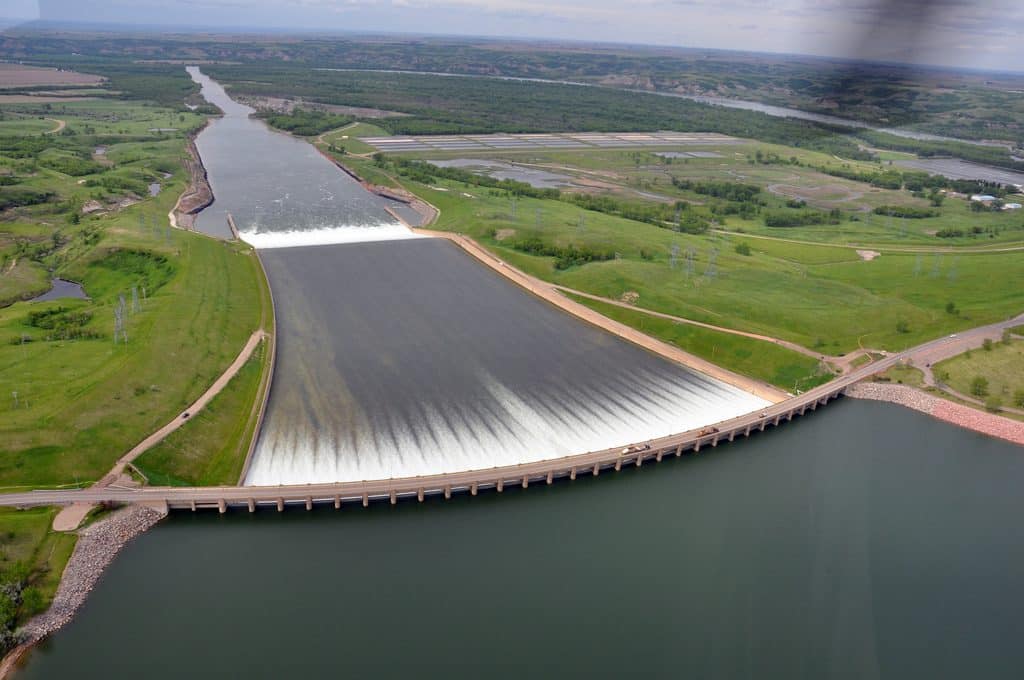
Garrison Dam – ND
Dams in America
There are more than 90,000 dams in the United States that have been built to maximize the use of our most valuable resource – water. They serve several functions including water supply for agricultural, community, domestic, and industrial use; flood control; recreation; and renewable energy.
Water Storage – Dams create reservoirs that supply water for irrigation, domestic and commercial water supply, recreation, fire control, and more.
Flood Control – Damns aid in reduced flooding and erosion.
Irrigation – Ten percent of the water used by American cropland is stored behind dams.
Renewable Energy – Dams produce 8-12 percent of the nation’s power needs via hydropower. Without hydropower, the United States would have to burn an additional 121 million tons of coal, 27 billion barrels of oil, and 741 billion cubic feet of natural gas.
Recreation – Boating, fishing, swimming, and camping are just some of the recreational activities that take place as a result of hydropower created by dams.
Dam Safety Issues in America
Safe operation and maintenance of dams are critical when it comes to avoiding potential dam failure and disaster. With tens of thousands of dams across the country, many of which are approaching their life expectancy, it’s important to be on the lookout for dams with high-hazard potential. High-hazard potential dams climbed to more than 15,000 in 2018, and only continue to grow due to growing populations. This increase is known as ‘hazard creep’. Hazard creep describes the growth of development such as people, buildings, and businesses, that moves closer to dams.
Investing in Dams
Dams are a major piece of our country’s critical infrastructure, and investment is needed to rehabilitate those that are deficient.
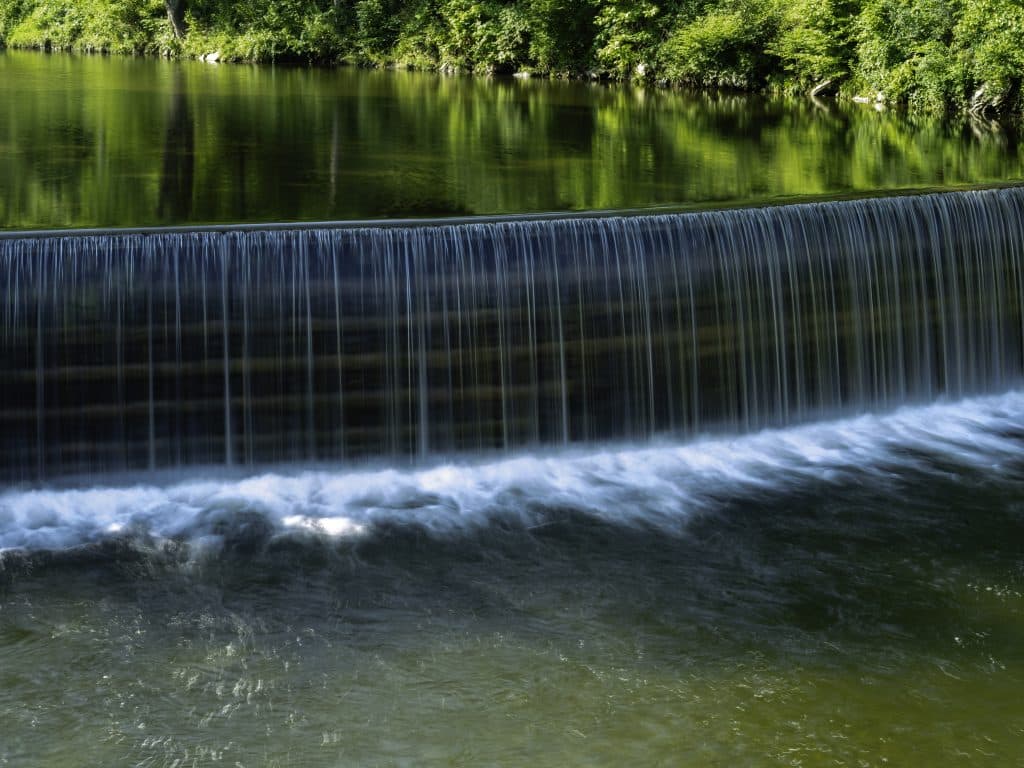
Dam on the Green River, upstream from the Green River Covered Bridge, near Brattleboro, Vermont.
Why do dams need upgrading?
Deterioration
Changing technical standards over time
Improved techniques for building
Increases in population
Better understanding of precipitation patterns in areas
Changing land use
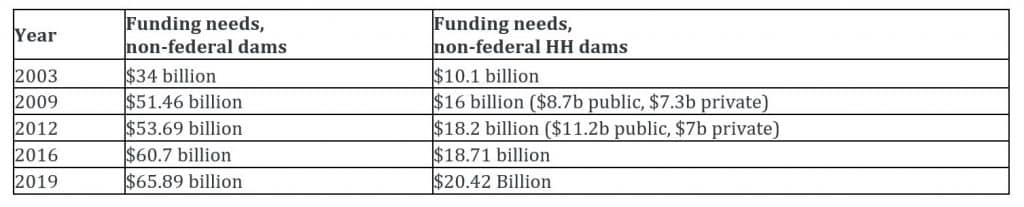
Upgrading a dam when it reaches an increased hazard potential is critical for the integrity of the dam structure as well as the safety of those living in the vicinity. The problem that dam owners have (especially on the private side) is the difficulty in funding the upgrades.
The Association of State Dam Safety Officials have tracked dam rehabilitation costs for non high-hazard and high-hazard dams since 2004.
Recreational Dam Safety Awareness
Outside of critical infrastructure, dams provide recreational opportunities for boaters, swimmers, kayakers and more. Unfortunately, there are dozens of deaths on American waterways each year that take place at structures called ‘low-head’ dams.
Low-head dams are low in height and typically have a 1-15 foot drop off, allowing water to flow off the dam. Below the drop off, water falling from the dam can create circulating currents that can trap people and objects underwater against the face of the dam. The force of the water is extremely strong, and these structures have earned the title of ‘drowning machines.’
Many people are unaware of the dangers associated with dams which is why it is so important to educate communities of dam safety.
Click here to learn more about public safety around dams.
With shelter in place orders in effect throughout the country due to COVID-19, more people are at home now than ever before. For the last eight weeks, 90 percent of individuals and families have occupied much of their time inside, and residential water usage has spiked across many parts of the nation.
Why Be Mindful?
During a time of economic uncertainty, it is important to be mindful of how much water we use, specifically to keep utility bills low and to reduce waste. While it is inevitable that our water usage will go up while being at home, we should be consciously aware of where and how we use water.
What Products Use the Most Water?
Before you begin thinking about your water usage, it’s important to understand which household items use it the most.
Outdoor Irrigation Systems – with spring in bloom, many people are landscaping their yards. Planting grass and flowers, and even dealing with weeds requires a lot of water. In fact, 30 percent of water consumption within the home comes from water irrigation systems. Check out a previous blog post on saving water in your yard.
Toilets -Toilets account for about 20 percent of water usage in the home. Many newer toilets are designed with water conservation in mind, but if you live in an older home with original fixtures, you could be using up to 50 gallons (or more) a day just by flushing the toilet.
Washing Machines – Washing machines make up roughly 15 percent of in-home water usage. Newer machines use 15-30 gallons per wash, but older machines can use up to 45 gallons.
Showers – Showers account for about 12 percent of household water usage. For families of two or more, this number can increase.
Faucets – Sinks and bathroom faucets make up another 11 percent of water usage, with an additional 13 percent come from leaks.
Reducing Wasted Water
With the above water usages in mind, learn how you can stop wasting water while you’re home due to COVID-19.
Watch out for leaks – check your sinks, faucets, toilets, and other pipes to assure that there are no leaks. Leaky pipes can seem harmless, but over time, hundreds of gallons of water go to waste.
Take shorter showers – Did you know that by cutting your shower time by just two minutes a day can save nearly 2,000 gallons of water each year?
Turn off water when brushing teeth – When you start your teeth brushing, be sure to only use the faucet when it’s time to rinse.
Hand wash your dishes – If you can avoid using your dishwasher daily, you can save up to 3 gallons of water per day.
Be mindful with lawn care – Watering your grass in the early morning or late evening will avoid the chance of it evaporating during the middle of the day.
While we may not have all the answers when it comes to COVID-19, these simple strategies will save water and money during the pandemic.
Water is the common denominator for every living thing on earth. Without it, we simply cannot survive.
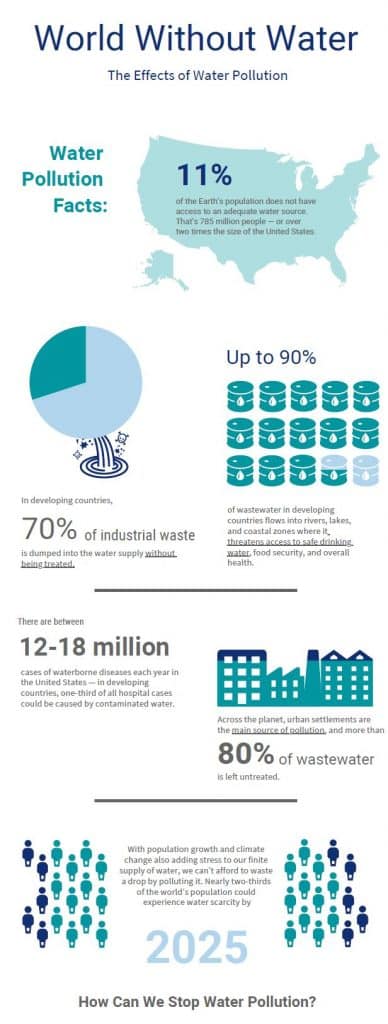
But even though this resource is so critical, 785 million people around the world lack access to safe water. According to a report by the World Economic Forum, the water crisis is the #4 global risk in terms of impact to society.
Learn more about the water crisis in the water crisis infographic below as well as ways in which you can help.
Click here to download the full, PDF version of the Water Crisis Infographic.
The Water Environment Federation (WEF) and the Centers for Disease Control (CDC) have been making updates to keep citizens abreast of all information concerning coronavirus and its effects on drinking water and wastewater.
The Facts from WEF
To date, there is no epidemiological evidence of viable COVID-19 virus in wastewater systems.
It appears that contracting COVID-19 through exposure to wastewater is unlikely.
WEF is working to keep wastewater workers protected from disease causing microorganisms and pathogens by forming a Blue Ribbon Panel to address the issue of required PPE as well as protective work and hygiene practices.
The Facts from CDC
There is no evidence that coronavirus survives the disinfection process for drinking water and wastewater.
The virus has not been detected in drinking water
Risk of transmission through feces is expected to be low based on data from previous outbreaks of related coronaviruses including SARS and MERS
Risk of transmission through sewerage systems is thought to be low
No coronavirus-specific protections are required for employees involved in wastewater management operations, including those working at wastewater treatment facilities.
Workers should follow their routine practices to prevent exposure to wastewater as they normally would. This includes using engineering and administrative controls, safe work practices, and PPE that is typically required when handling untreated wastewater.
Water workers should continue:
Wearing appropriate protective gear including gloves, boots, goggles, or face shield masks
Washing hands frequently
Avoiding touching of the nose, eyes, and mouth
For more information specifically related to the water sector during the pandemic, visit the WEF website here.
The following resources are also available to the public:
WEF Executive Round Table Series – Round table discussions (on video) on how the virus is affecting operations, business, and people, as well as the impacts and future changes on the workforce, productivity, projects, communication, and more. Each round table will be hosted by Walt Marlowe, WEF Executive Director.
Biological Hazards Resource – Access Water, powered by WEF, has a manual on the Safety, Health and Security of Wastewater Systems. The chapter “Biological Hazards at Wastewater Treatment Facilities” is available for free, and the whole manual is being offered at 50 percent off its original price.
Assistance for Worker Safety – Several water sector partners have offered their assistance to WEF to provide products to protect and maintain the health of water sector workers. Interested in helping? Click here to get in touch with WEF to learn how you can assist.
Webinars – there are several webinars available surrounding coronavirus subjects and the effect on the water sector. View them all here.
Please keep in mind that as the nature of the virus evolves, so too does the information and resources. Be sure to check back on the WEF website for daily updates.
From the moment a project opens, to the day it reaches completion, communication between the engineering project manager and client is critical. In fact, the success or failure of the project is hinged on efficient, effective, and timely communication. With so many moving pieces involved, communication is key for understanding project scope, demands, and expectations. Continue reading and dive into five critical communication skills for the successful completion of engineering projects.
1 – Communicate Often
Frequent communication, whether verbal or written, is a key element to a successful project. Communication is now in the form of telephone calls, emails, and video conferencing. Keeping everyone informed and updated on the progress and status of their job needs to continue despite not being able to physically meet.
2 – Listen
Often when thinking about communicating, speaking is typically what comes to mind. But perhaps more important is what happens on the other end – listening. Listening (and listening well) is crucial during all phases of a project. From the get-go, gather questions, requests, concerns, ideas, and goals before doing anything else. The entire team, engineer and owner, need to be on the same page through every phase. Train yourself to listen to hear, rather than listen to respond. Should you need additional insights or direction, continue keeping the line of communication open.
3 – Master Public Speaking and Presenting
We strive to make our clients’ jobs easier. With that, we need to master both public speaking and expressing our professional opinion in an easily understood manner. As a project manager in the water industry, we work a lot with municipalities and/or private companies. This could mean presenting to boards, councils, or departments, in big groups or small. Mastering the art of public speaking and presenting is critical for conveying our message. This entails knowing the audience and tailoring our language, tone and presentation to that particular group. Are they well versed in the industry? If the group is not as familiar with certain terminology or project elements, complex ideas need to be simplified for better understanding.
4 – Check-In During Non-Project Times
Checking in with clients during times when there are no projects is equally as important as when there are projects in progress. The down time in between projects can serve as an excellent opportunity to stay informed about client projects coming down the pipeline, as well as provide updates on similar projects your firm is working on.
5 – Be Clear, Concise, and Confident
With so much going on throughout a project, being able to communicate clearly and concisely is critical. While communication is certainly valuable, so too is time. Brevity is recommended, when possible. The following tendencies that keep most people from being brief are:
The tendency to over-explain
The tendency to be unprepared
The tendency to miss the point
If you come prepared with your main focus in mind, you will be successful in communicating a clear and concise message. Do that by:
Mapping out your message
Leading with the headline/main point
Trimming away the excess
Let's stay in touch.
Get the latest news, blogs, and insights conveniently in your inbox.