Raw Water Transmission Main Replacement in Stamford, CT

awc-laurel-street-raw-water-main

Owner: Aquarion Water Company, Shelton, Connecticut

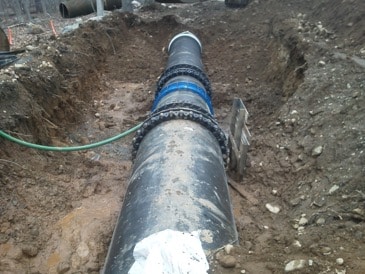
Tata & Howard provided professional engineering services for surveys and mapping; subsurface explorations; preliminary and final design; bidding; and construction phase services, including resident project representation, for the partial replacement of Laurel Reservoir Raw Water Transmission Main located on Lakeside Drive in Stamford, CT. The main was replaced after a history of multiple pipe failures.

This project included replacing approximately 3,670 feet of an existing 13,540 feet of 42-inch diameter prestressed concrete cylinder pipe (PCCP) used to transfer raw water by gravity from Laurel Reservoir to the Stamford Water Treatment Plant (WTP). The pipe was replaced with 48-inch Class 52 ductile iron pipe.  Three existing 8-inch blowoffs and two existing 4-inch diameter automatic air release valves in this section of main were replaced and upsized with new 12-inch diameter blowoffs and 12-inch diameter valves. The main was encased in concrete at three culvert crossings. Additionally, two 24-inch diameter access openings were installed in the existing 42-inch diameter main that was not being replaced to allow for inspections while the pipe was drained and out of service.  The project also included replacement of four existing automatic air release valves on the existing 42-inch diameter PCCP that was to remain in service.

Interceptor Sewer, Danbury, CT

interceptor_sewer
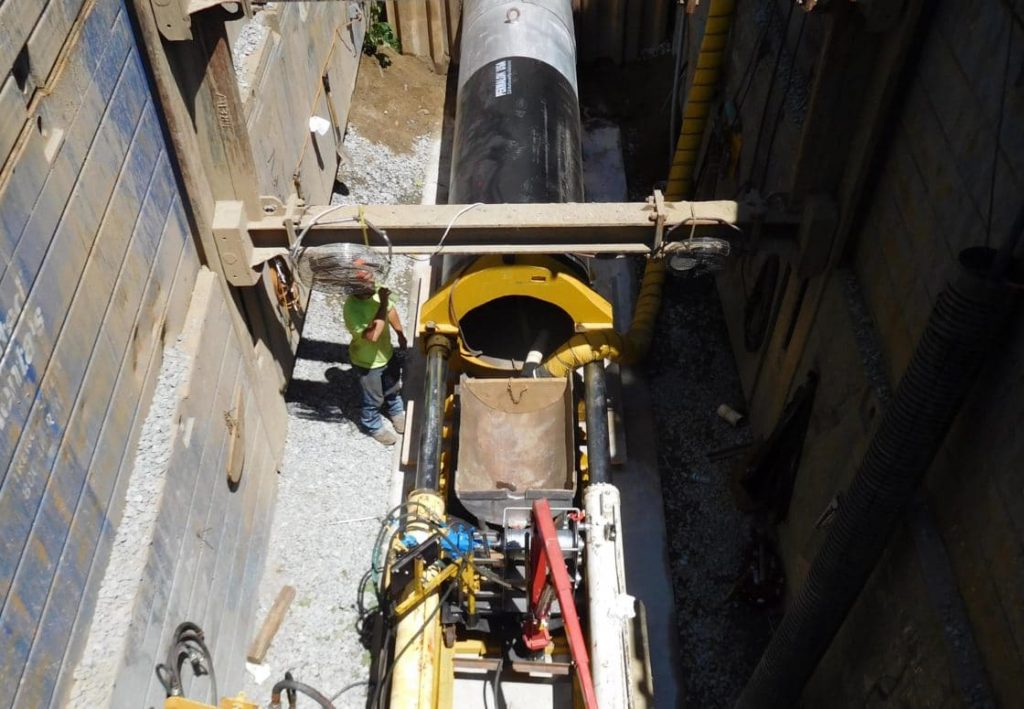
Jacking a 48-inch steel casing under I-84 in Danbury, CT

The Oakland Avenue sanitary sewer project consisted of jacking a 48-inch steel casing pipe through the Interstate-84 embankment in Danbury, CT and installing a new 24-inch sanitary sewer to replace the existing 16-inch sewer that is undersized. The project alleviated the restriction that is causing sewer overflows. Services included surveys and mapping, review of easements, review and updating of original design, preparation of plans and specifications, bidding, construction administration, and resident observation. The new sewer line installation will complete an interceptor project that was constructed in 1994.

Construction was completed in 2016.

Water Distribution System Evaluation and Tank Design, Paxton, MA

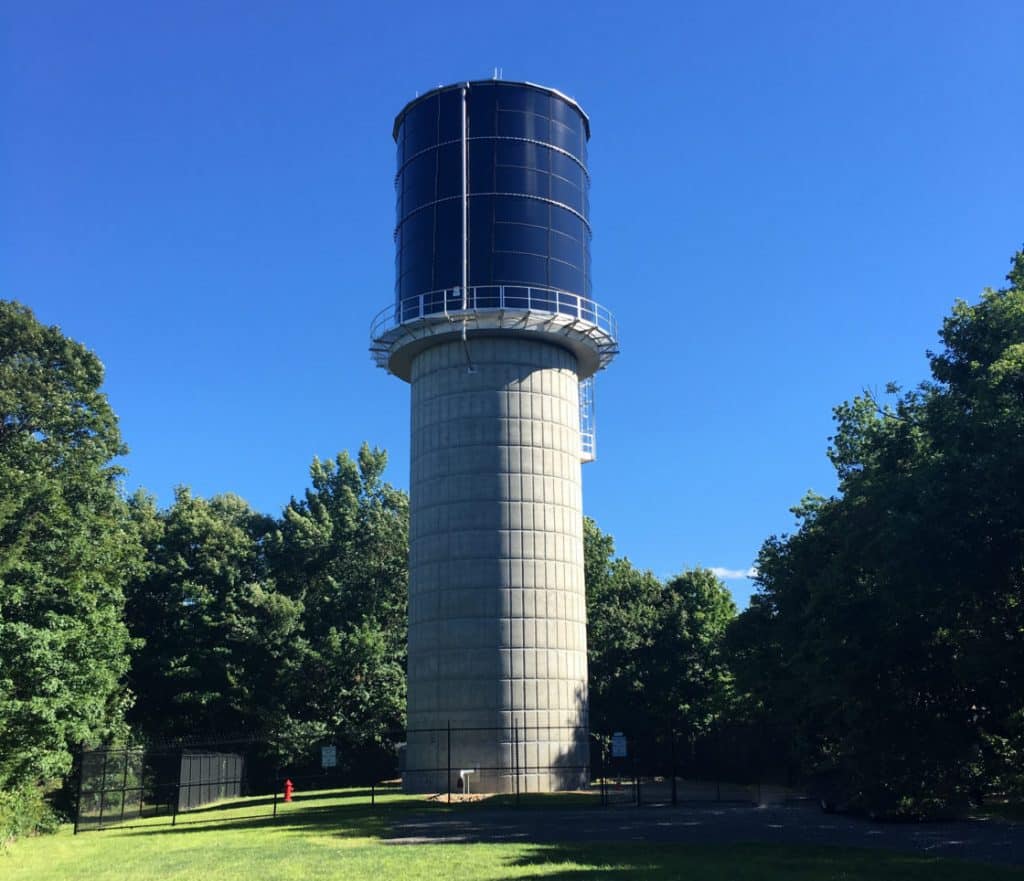
The new tank was completed in 2015
The new tank was completed in 2016.

Town of Paxton, MA

Tata & Howard provided engineering services for a comprehensive water distribution system evaluation and study. The work included development of a hydraulic model using WaterCad software. The plan included fire flow tests, review of the water supply agreement with the City of Worcester, preparation of projected water demands based on historical use and population trends, and evaluation of storage. The plan also included an evaluation of potential water supply sources within Town boundaries.

This project included an evaluation of the system prior to design of the tank to determine the best solution.  Work included calibrating the model under extended period simulation (EPS).  The hydraulic model was used to determine the best hydraulic gradeline elevation of the system to reduce the storage surplus.  Additionally, the model was used to track the chlorine residual from the Worcester Pump Station to the extremities.  Jar testing was completed to determine the chlorine demand in the water supply while water quality testing results assisted with determining the chlorine demand in the piping system.  The model was used to simulate the chlorine degradation.  Improvements were input into the hydraulic model and the effects on the chlorine residual in the extremities reported.  Improvements such as an elevated tank at Maple Street with a total usable volume, reduction in hydraulic gradeline elevation, and cleaning and lining water mains were evaluated.  The analysis determined that a new tank at Maple Street is necessary based on water quality and cost.

Tata & Howard provided assistance with the preparation and submittal of a Project Evaluation Form to the Massachusetts Department of Environmental Protection for the construction of a new elevated tank with a capacity of 0.2 million gallons. The new tank reduced the water age in the system by replacing the deteriorating ground level tank. Tata & Howard provided construction administration and resident observation services for the new tank, which was completed in 2016.


Whitepaper:

ABSTRACT: In 2012, the Town of Paxton, MA was experiencing significantly reduced chlorine residuals in the extremities of the system along with an aging water tank that required extensive rehabilitation. As a result, the Paxton Department of Public Works (DPW) determined the need to create an extended period simulation (EPS) hydraulic model to evaluate the water age and water quality in the distribution system. The study examined the residual chlorine concentrations and water age throughout the distribution system and presented various options to help mitigate these issues, including replacing the aging tank and adding a chlorine booster pump station at the existing site. Construction of the new tank and pump station was completed in the summer of 2016.  Read the complete whitepaper by clicking below:

To download “Town of Paxton, Massachusetts Distribution System  Evaluation and Improvements” whitepaper instantly, simply fill out the form below:

Dam Reconstruction, Meriden, CT

dam_reconstruction_ct

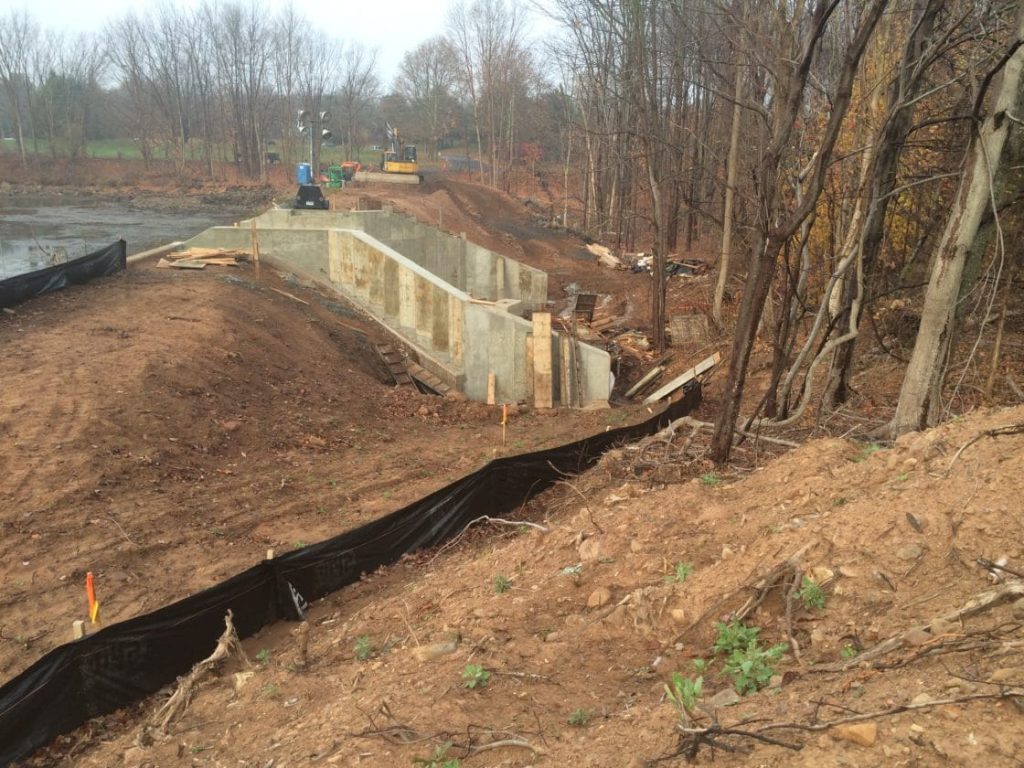
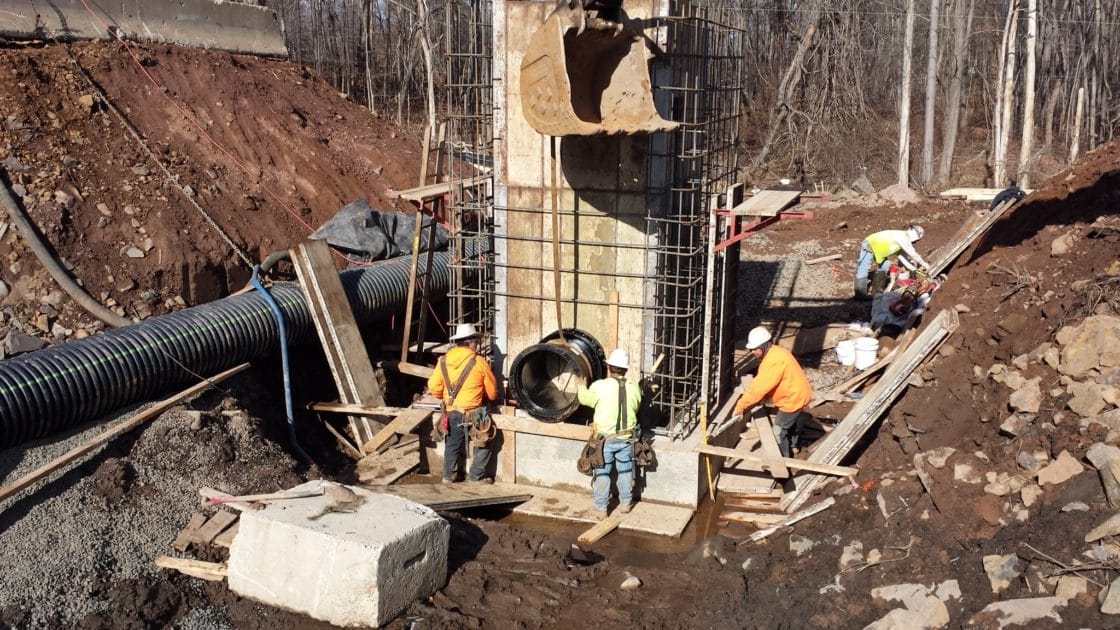
The Fosters Pond Dam reconstruction project presented several challenges. The existing spillway was inadequate to discharge the 100-year spillway design flood, and the existing dam was in extremely poor condition. The embankments lacked erosion protection and were very steep, the crest was narrow, and the outlet had fallen into disrepair, rendering it inoperable. Therefore, it was imperative that the reconstruction design of Fosters Pond Dam be designed to improve both safety and reliability, provide a functional and operable outlet, and provide ease of maintenance.

fosters_pond_dam_reconstruction_ct

The reconstruction included the construction of new and higher reinforced concrete spillway training walls, upstream riprap erosion protection, a new reinforced concrete gate structure with 24″ inlet and outlet pipes and sluice gate, widened embankment crests to 12′, flattened slopes for ease of maintenance, and a gravel road to allow access to the embankment and gate structure. Riprap erosion protection is now provided on the upstream slopes as well as in the discharge channel. Because of these improvements, the dam can safely pass the 100-year spillway design flood with over a foot of freeboard. The length and level of the spillway weir remains unchanged.

Water System Improvements and Funding Assistance, VT

150K-gal-storage-tank-and-house

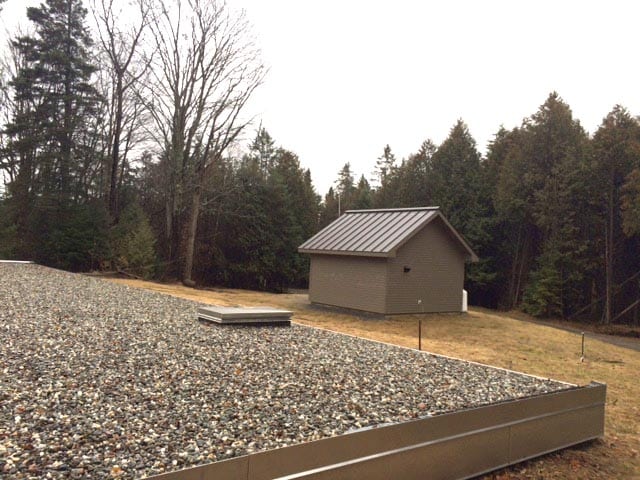
Greensboro Fire District No. 1 (GFD#1), situated on the Northern portion of the Green Mountains in Vermont, requested assistance with their water distribution and treatment systems due to deficiencies identified in a sanitary survey conducted by the State of Vermont. This contract addresses these deficiencies and provides the District a more robust covered water storage tank, secure buildings that house controls and chemicals and related equipment, emergency power generation, and water metering.

As part of the project, Tata & Howard helped GFD#1 secure funding that included a 45% USDA Grant for the originally planned project with an estimated budget of $2,900,000. During the design phase, the District lost their primary well source due to an extended drought. Tata & Howard engineers worked with the District to secure a 100% USDA grant for the cost of constructing a new municipal well source and associated emergency generator and related appurtenances.

Tata & Howard provided design, construction administration, and resident observation for the water system improvements project. Construction began in the spring of 2015 with the setup of a temporary water storage system and demolition of the existing water storage tank roof structure. Precast planks and a ballasted membrane roof were then installed, providing safe, quality water. Two new small buildings were constructed to house chemicals and water well piping and controls, along with an emergency generator to provide continuous water in case of interruption to electrical power.

Water Mains, Milford Water Company, MA

water_main_construction

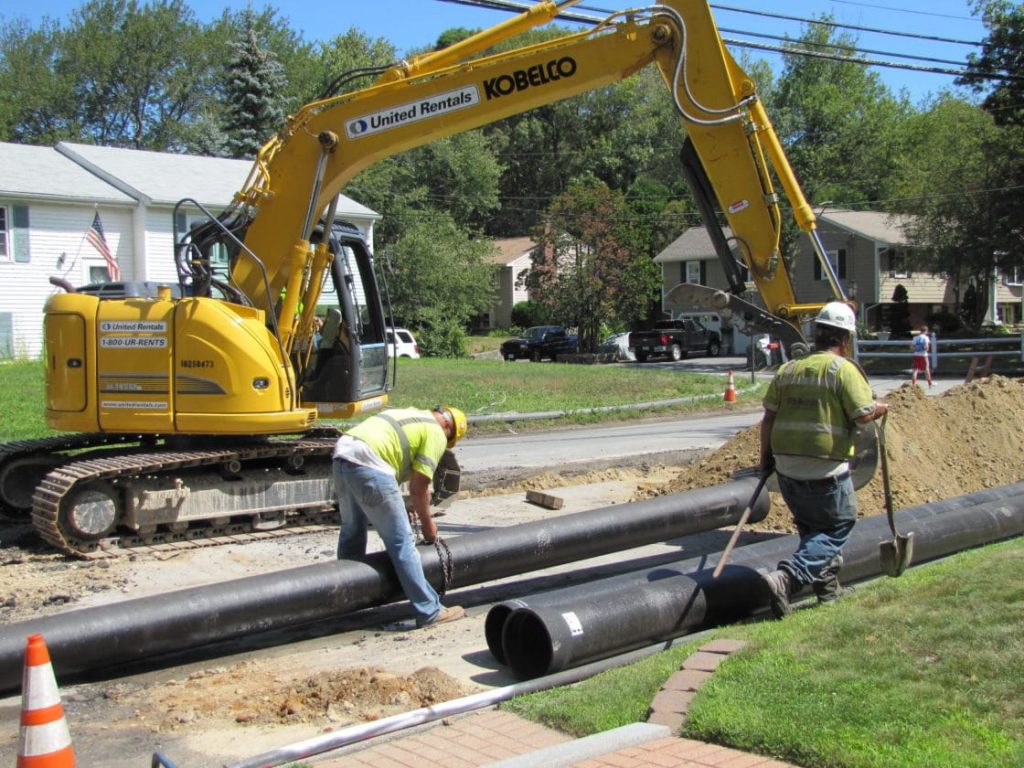
Tata & Howard was contracted to design approximately 2,000 linear feet of new 12-inch diameter ductile iron water main on Congress Street and West Fountain Street (High Service Area). The work included borings, survey, preparation of plans and specifications, and bidding. Construction of the High Service Area Water Mains took place over the summer, and was recently completed. Tata & Howard provided construction administration and resident observation services.

In addition, Tata & Howard was contracted to design approximately 2,400 linear feet of new 12-inch diameter ductile iron water main on East Main Street (Route 16). The work included survey, wetlands delineation, MassDOT permitting, completion of a Notice of Intent, preparation of plans and specifications, bidding, construction administration, and resident observation services.

Great Hill Water Tank Construction, Marion, Massachusetts

This project included construction of a 1.0 million gallon, precast, pre-stressed, wire wound, concrete water storage tank in Marion, Massachusetts, with associated piping and appurtenances, a Tideflex mixing system, and site work. Other work included the decommissioning and demolition of the existing 2.0 million gallon pre-stressed concrete water storage tank at the project site. All work was completed ahead of the August 30, 2015 deadline.

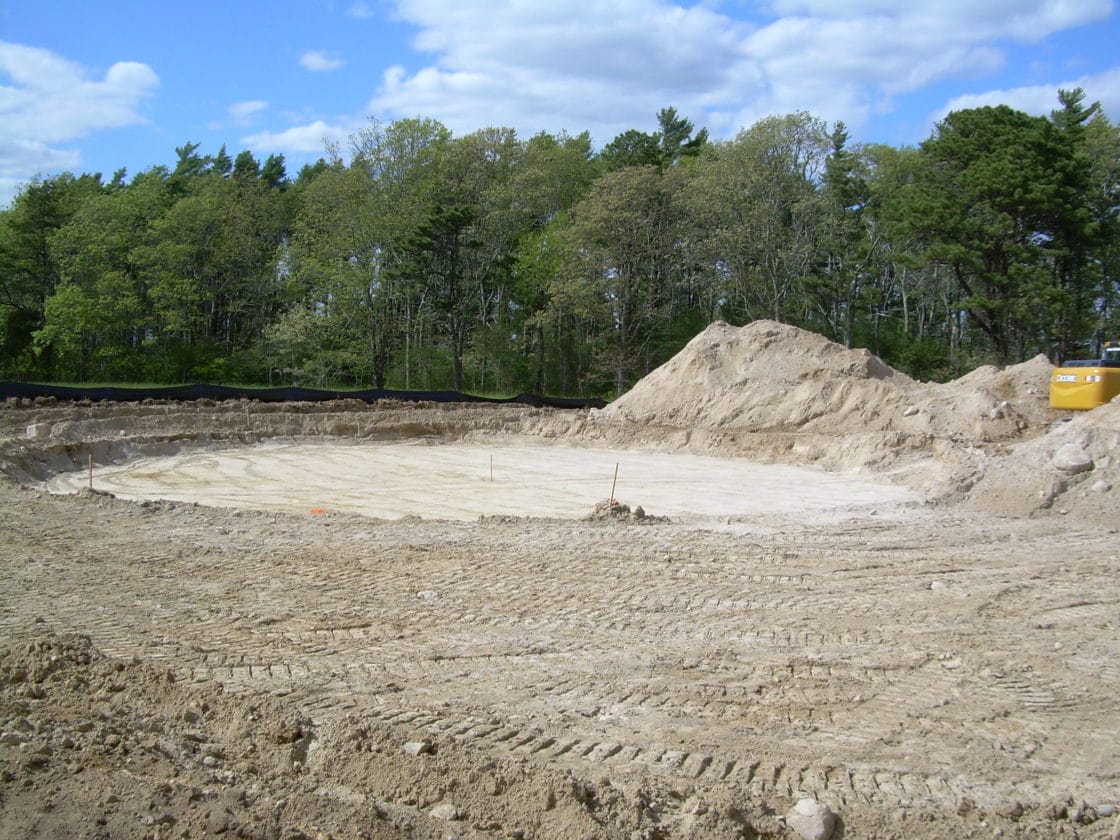
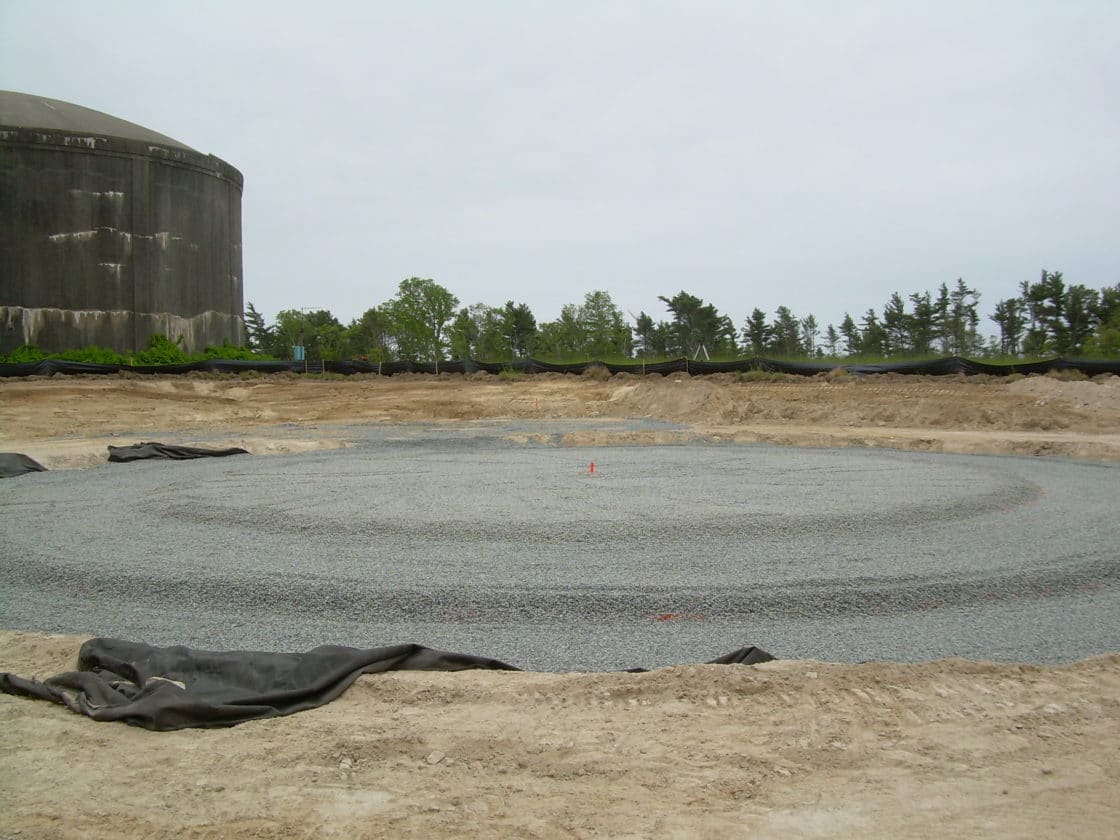
Prepared tank sub-grade
Completed leveling base for tank
Tank floor/footing reinforcing steel and seismic cables prior to concrete pour
Completed tank floor/footing
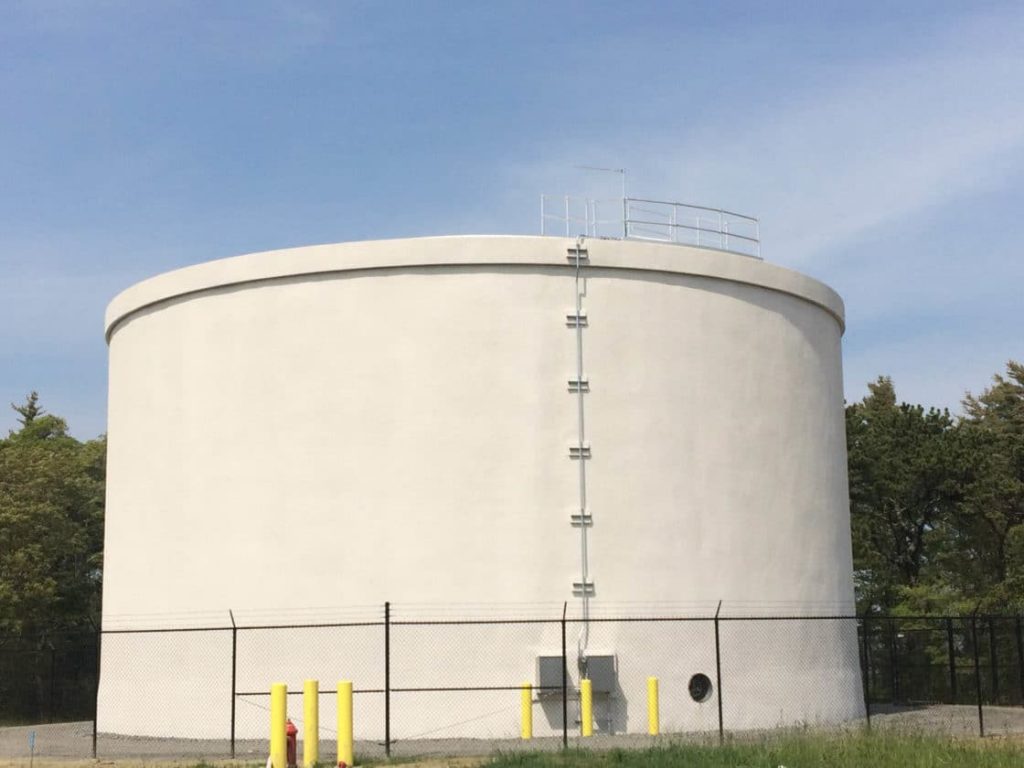
Finished tank
Finished tank

Mission Critical Storage Tanks, SLVHCS, New Orleans, LA

CLIENT: NBBJ, Columbus, Ohio

PROJECT: Mission critical storage tank systems for Southeast Louisiana Veterans Health Care System (SLVHCS)

hospital new orleans
SLVHCS in New Orleans, LA

THE CHALLENGE: SLVHCS is the successor to the VA Medical Center, which was decimated by Hurricane Katrina in 2005. The new hospital requirements included green building practices and resiliency during natural disasters, including the ability to remain operational for at least five days with enough provisions and accommodations for up to 1,000 staff and patients in case of a major disaster.

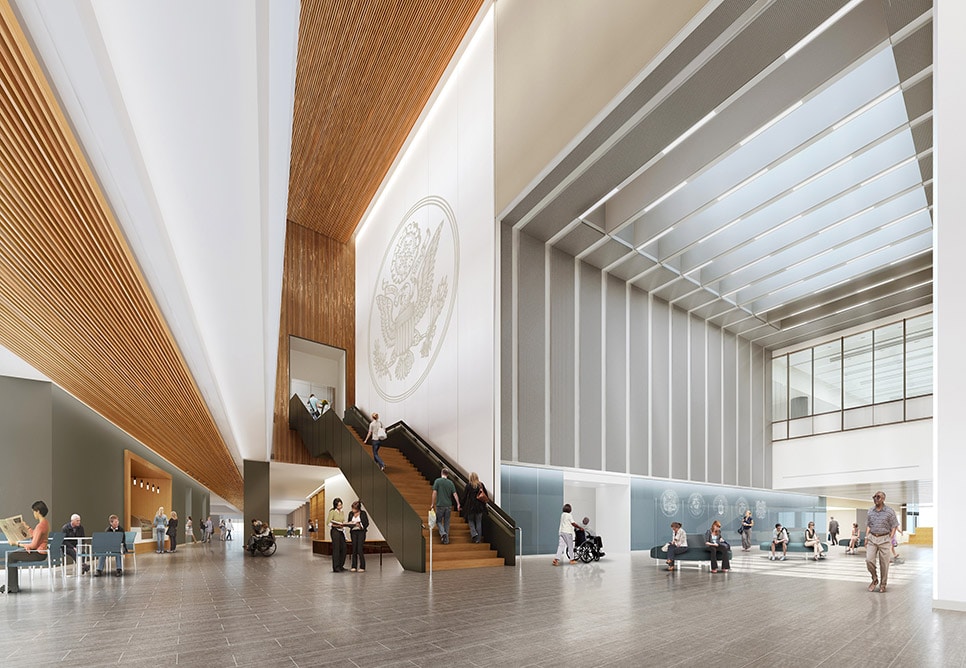
The atrium of Southeast Louisiana Veterans Health Care System
The atrium of SLVHCS

THE SOLUTION: Tata & Howard provided design and construction administration services on specific components of the mission critical storage tanks, which include a domestic water tank, sewage holding tank, cooling tower process and bleed water tank, and fire protection water tank. Our design of specific components of the mission critical tanks included coating, waterproofing, mixing, pumping, bacteria control, odor control, venting, piping to five feet outside the tanks, and instrumentation and control. Specific design elements for resiliency and green design included the following:

  • Domestic Water Tank system instrumentation/controls include storage tank level measurement and control of inlet/outlet valves. The system also includes ultraviolet disinfection of all potable water pumped from the storage tank into the hospital.
  • Sewage Holding Tank is waterproof and its control system to provide automated response to an event using electrically actuated valves that direct the sewage from the gravity system to the holding tank. After the event, the system will turn the pumps on and transfer the sewage to the City’s system. A water spray system will automatically wash down the empty tank.
  • Cooling Tower Make-up Water Tank is waterproof and its control system design provides electrically actuated valves to receive rainwater from the building roof drains, condensate from the buildings, and potable water from the City’s water system. The Cooling Tower Make-up system instrumentation/controls include tank level measurement and control of inlet/outlet valves.
  • Cooling Tower Bleedwater Tank is waterproof and its control systems design provides electrically actuated valves to accept water from the cooling towers, recycles water to the cooling towers, and pumps it into the municipal sewer system. The Cooling Tower Bleedwater Tank system instrumentation/controls will include tank level measurement and control of inlet/outlet valves.
  • Fire Protection Water Tank is waterproof and its control system design provides electrically actuated valves to automate control of receipt of water from the CEP/Warehouse roof drains and the City’s water system.
  • The instrumentation and controls for all of the above elements are capable of communicating with the facility ‘s SCADA system.

PROGRESS: The new state-of-the-art facility opened on August 1, 2015, and the building is on track to receive LEED silver certification. For comprehensive information on the new hospital, please click here.

Wastewater Pump Stations, Auburn, MA

CLIENT: Town of Auburn, Massachusetts Department of Public Works

PROJECT: Replacement of three existing wastewater pump stations

wastewater pump station
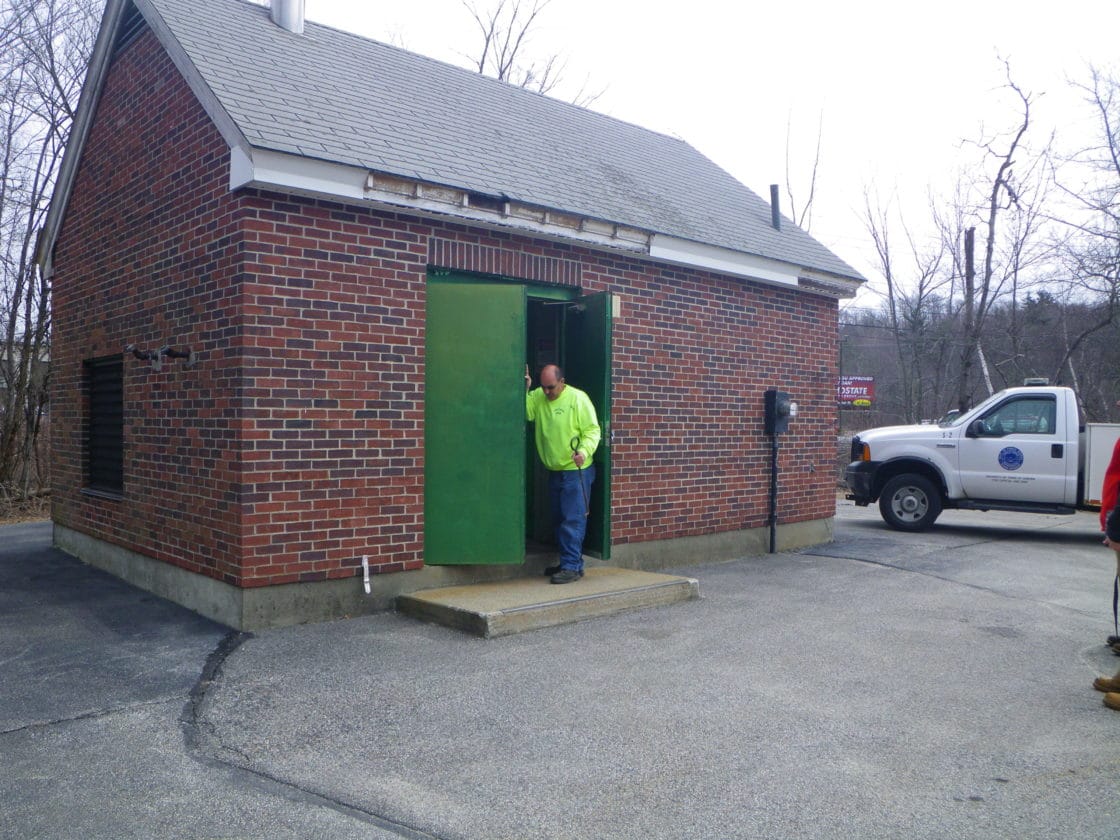
The buildings are situated on very small sites

THE CHALLENGE: The sites were very small and restricted with high groundwater levels, and there were adjacent wetlands and private property. All three buildings were also very small and had other issues such as asbestos.

THE SOLUTION: We determined that the best course of action would be to demolish the buildings and convert the concrete dry pit that housed the pumping equipment into a wetwell for new, submersible pumps. The solution saved the Town hundreds of thousands of dollars.

wastewater pump stations
An existing building is inspected during the design phase

PROGRESS: Tata & Howard provided the project design and will be putting the project out to bid this summer. We will also provide construction administration when construction begins in the fall.

8.4 mgd Water Treatment Plant Design, Permitting, Construction Administration, Falmouth, MA

DAF water treatment plant

THE CHALLENGE: More stringent USEPA and MassDEP regulations, including Stage 2 Disinfectants/Disinfection-by-Product Rule (S2 D/DBPR) and the Long Term 2 Enhanced Surface Water Treatment Rule (LT2ESWTR), resulted in the Town of Falmouth needing to make a decision on whether to construct a filtration facility in compliance with the SWTR or to upgrade disinfection processes only at the existing Long Pond Water Treatment Facility (LPWTF) to maintain the existing Filtration Waiver.

THE SOLUTION: Because the existing LPWTF utilized no filtration to remove bacteria, organics, and particulates, the water quality entering the distribution system was an ongoing concern with elevated turbidity and organics leading to seasonal color, taste, and odor complaints; elevated bacteria and concentrations; and elevated algae counts. In addition, the high doses of chlorine needed to maintain the disinfection residuals required for an unfiltered supply reacted with the organics in the raw water to form disinfection by-products. Therefore, the only viable option for the Town of Falmouth was a new water treatment plant. After evaluating 22 treatment processes and developing eight treatment alternatives for pilot testing, only one treatment process met all goals: Dissolved Air Flotation (DAF) clarification, intermediate ozone followed by filtration. This alternative also scored favorably on the benefit/cost analysis.

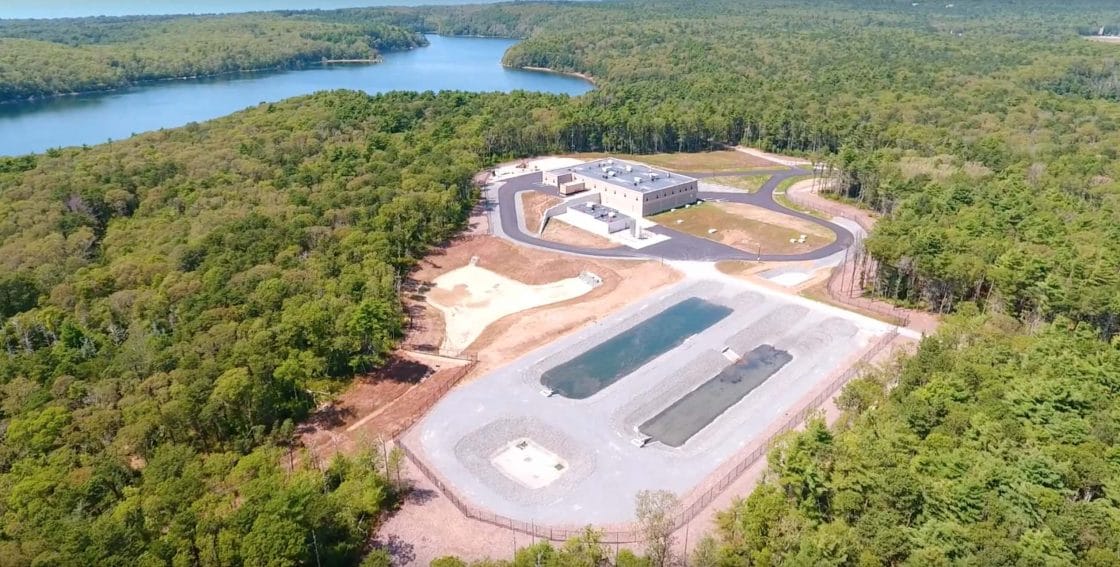
Tata & Howard provided design and construction services for the new Dissolved Air Flotation (DAF) facility with a design capacity of 8.4 million gallons per day (mgd) for the Long Pond surface water supply for the Town of Falmouth, MA. The water treatment plant (WTP) utilizes coagulation, mixing, flocculation, dissolved air flotation (DAF), dual media filtration including granular activated carbon (GAC) above sand, chemical feed systems, and an intermediate ozone feed. Building components include HVAC, plumbing, fire sprinkler, gas and electrical services. Other work included site work with exterior piping systems, exterior above and below ground tanks, sludge holding lagoons, construction of a garage, new raw water intake and pump station, directional drilling of raw water mains, and demolition of equipment and site piping at the existing water treatment facility.

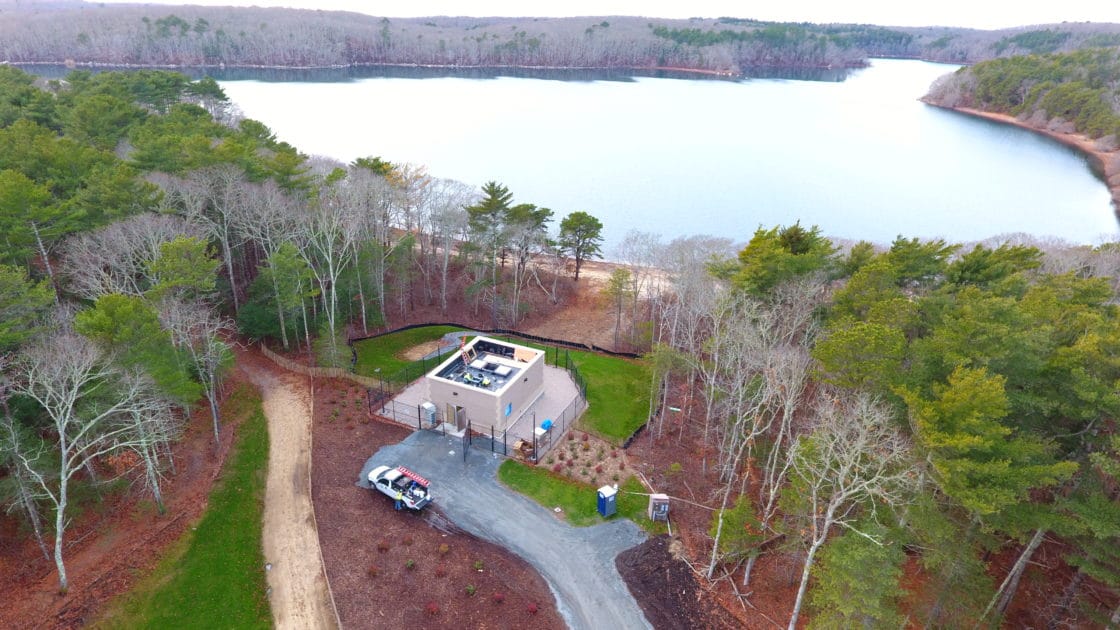
As part of the project, Tata & Howard provided design and permitting of a new 8.4 mgd intake and raw water pump station (RWPS) for the WTP.  The new intake and RWPS were constructed along the eastern shore of Long Pond and replaces the existing intake and Low Lift Pump Station.  The new intake and RWPS includes a two-level intake consisting of two 8.4 mgd rated intake screens installed at elevations -3 feet below mean sea level (MSL) and -13 feet below MSL.  The 36-inch HDPE intake pipeline connects the intake screens to the new RWPS located approximately 150 feet from the eastern shore of Long Pond.  An air burst system was designed in the RWPS to provide a means for routine cleaning of the new intake screens.

An accelerated 11 month design and permitting schedule, followed by contractor prequalification, bidding, and award, were completed in time to qualify the Town for >$3M in principal forgiveness.

Design included the following:
• 300 Drawings
• 1,200 pages of Specifications
• SRF PEF application
• Monthly project meetings
• Coordination with Building Department
• Coordination with Board of Health
• Coordination with Town IT Department
• Coordination with Police and Fire Departments
• Coordination with Gas and Electric Utilities

Permits included the following:
• Wetlands Protection Act-Local Conservation Commission
• Board of Health
• Remediation General Permit (NPDES)
• Massachusetts General Permit
• Environmental Notification Form
• Massachusetts Historical Commission: Intensive Archaeological Survey including 200 test holes
• MassDEP Approval to Construct WTP: BRP WS 24
• DWSRF PAC
• 401 Water Quality Certification
• NHESP – Turtle Protection Plan
• Chapter 91 Waterways License
• U.S. Army Corps of Engineers General Permitdji_0051The construction of the Long Pond Water Treatment Plant progressed on schedule and was completed in 2017. The plant included numerous sustainability and energy efficiency initiatives including the following:
  • Recycling spent backwash water to head of plant and back into the treatment process, after it passes through a plate settler to remove solids.
  • Recycling laboratory analyzer and filter influent piping gallery analyzer discharges back into the treatment process.
  • Using filter-to-waste water after a filter backwash sequence as supply water for the next backwash, instead of using finished water for backwashing.
  • Discharging cleaner supernatant water off the top of the lined lagoons to an unlined infiltration lagoon and back into the ground to minimize residuals.
  • Use of local/native plants for landscaping, including an irrigation system using collected rainwater from roof drainage.
  • Interior and exterior LED lighting fixtures.
  • Variable Frequency Drives (VFDs) on HVAC equipment and process equipment motors.

The plant went online on October 18, 2017. The work was funded under the SRF program. The Long Pond Water Treatment Plant received an ENR New England 2017 Best Project Award in the Water/Environment category, and an Associated Builders & Contractors of Massachusetts Eagle Award in the Public Works – Environmental category.

For a drone video of the new water treatment plant taken by the general contractor, Methuen Construction, please see below:

SaveSave

SaveSave

SaveSave