Canaan, VT and Stewartstown, NH Energy Efficient Wastewater Treatment Plant Upgrades

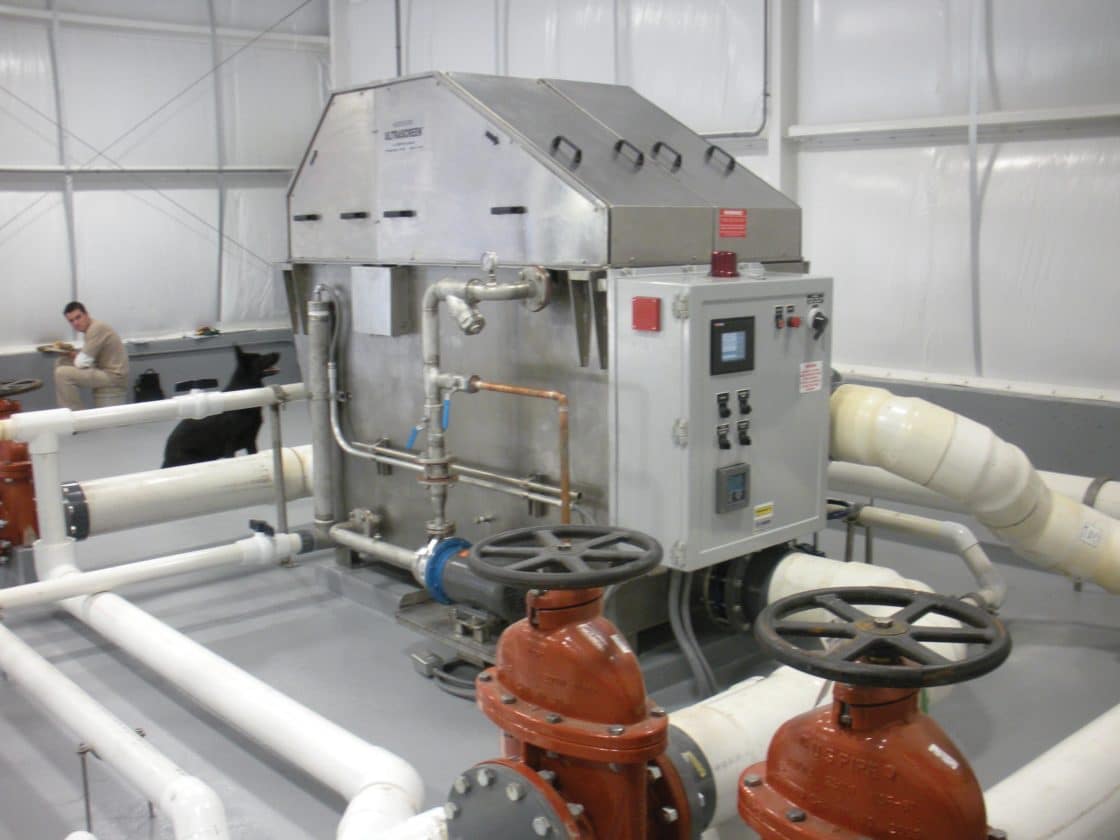
The Towns of Canaan, Vermont and Stewartstown, New Hampshire operate a shared wastewater treatment facility, which required significant upgrades. The existing facilities were 40 years old and although a few upgrades were performed in the 90s, the facilities were not performing well, did not meet Life Safety codes, and required significant maintenance. The upgrade met all of the goals of the Client by providing for simple operation and maintenance requirements, meeting the Life Safety codes, eliminating confined spaces, lowering of electrical power costs, and meeting discharge parameters through production of high quality effluent. The solutions developed for the upgrade to this facility were also economical.
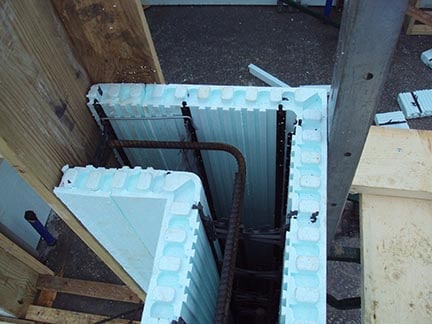
Control building insulated concrete forms

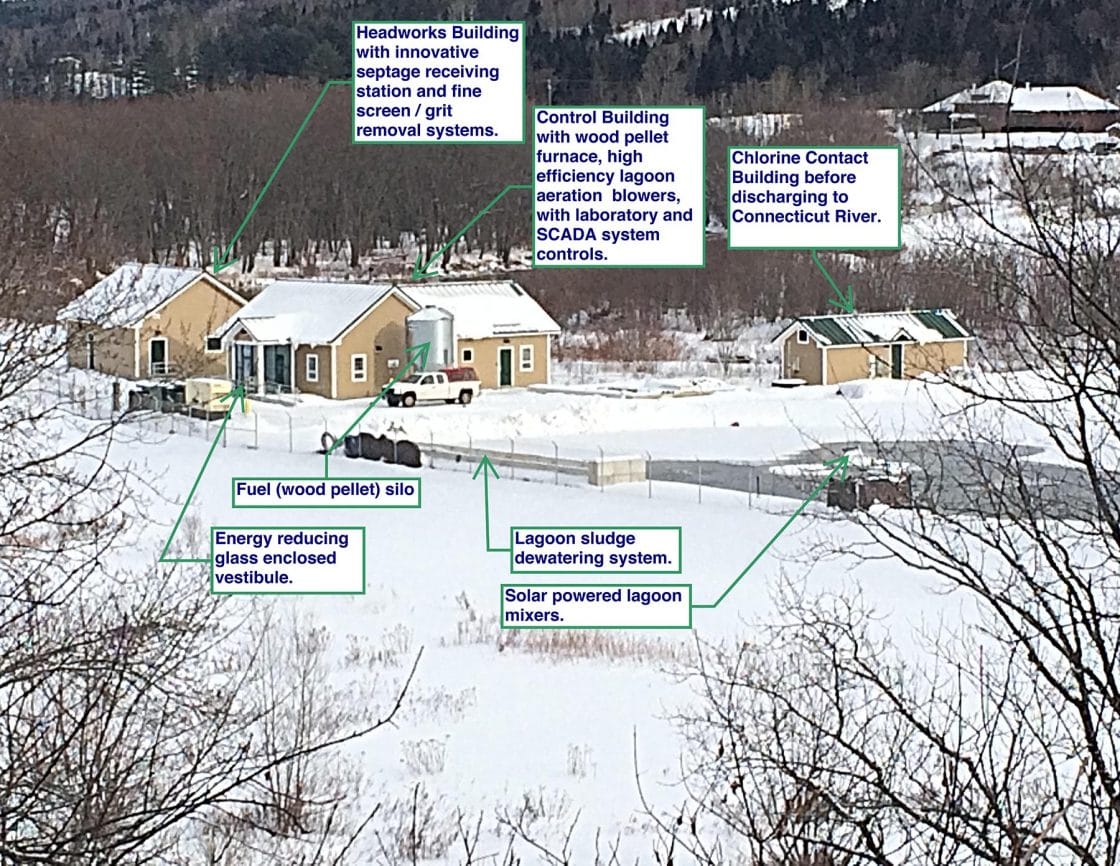
One of the primary elements of the design was the consideration of the economics of energy reduction. The design incorporated insulated concrete form construction for the building walls with R-49 insulation rating in the ceilings.  The design also included a wood pellet boiler with a pellet silo and hot water heating system, which allowed for reduction of explosion proof heaters in the headworks building. All of the windows were low-E and highly insulated, and an outer glassed-in entry way increased the solar gain retention of the building and reduced heat loss.  he process headworks and operations buildings were constructed as single story structures, increasing operator safety.

The lagoon aeration system is now a fine bubble, highly efficient process with additional mixing provided by solar powered mixers that help reduce aeration requirements, improve treatment, and allows for the addition of septage, all at no cost due to solar power. The pump station upgrades were designed to eliminate daily confined space entry by the operator by the conversion to submersible pumps. For sludge removal, a unique and simple “Sludge Sled” system was incorporated, which allows the operators to easily remove the sludge at their convenience. Sludge treatment is accomplished with a geo-bag system that allows the sludge to be freeze dried, reducing the volume by almost 50% with no energy consumption.

The influent pump station was designed with three pumps instead of the normal two-pump system in order to meet both present and future design flows, allow for lower horsepower pumps, improve flexibility, reduce replacement costs, and reduce energy costs. The other four deep dry pit pump stations were converted to wet wells and submersible pumps, eliminating confined spaces, and are equipped with emergency generators, eliminating the need for operator attention when power is lost.
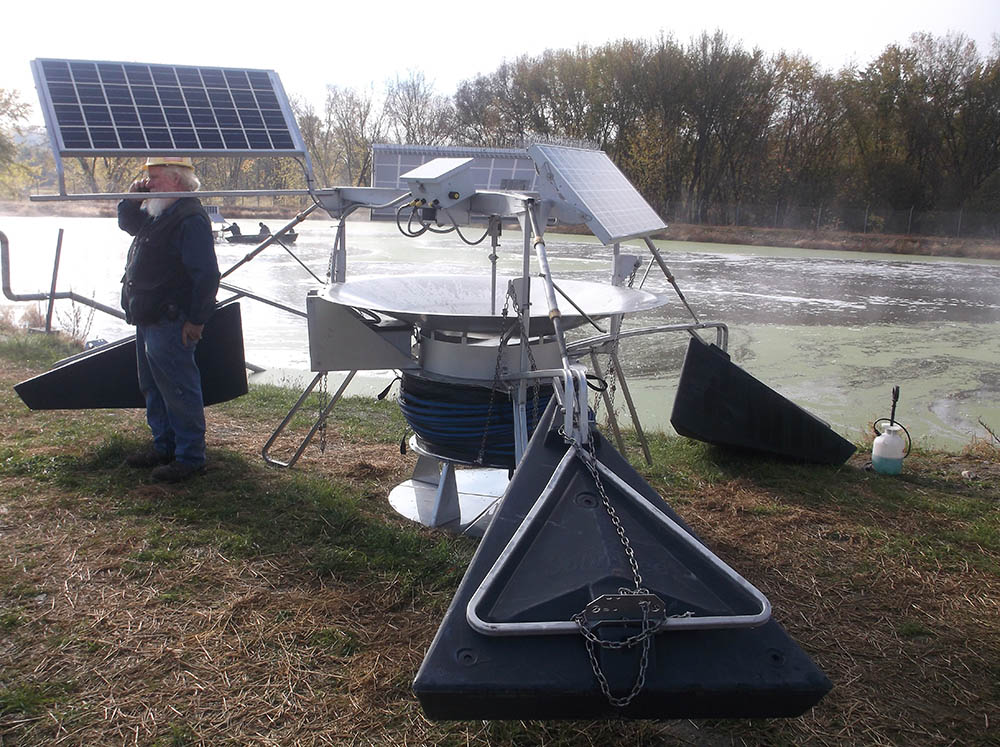
Solar mixers for lagoons

The incorporation of highly energy efficient building components resulted in reducing annual operation and maintenance costs, which resulted in lower user rates and a more sustainable facility. All building components are virtually maintenance free.  All of the equipment and processes were selected to reduce both annual and future replacement costs.

The treatment system is a 3-cell aerated lagoon system, and the solar powered mixers were installed to enable reduction of the aeration needs and horsepower during the summer months when septage is added.  The aeration blowers, which are housed in insulated enclosures, reduce noise and were sized to allow for the addition of septage to the lagoons, which is not common in Vermont. The aeration blowers are controlled with Variable Frequency Drives (VFDs), which allow for greater operator control of aeration and provide energy cost savings. The operation is simple and safe for operators and others who need to maintain the facility and equipment. The design has provided flexibility to the operators and has resulted in an energy efficient, sustainable solution for this community.


Read the whitepaper here.


SaveSave

SaveSave

SaveSave

Odor Control at Wastewater Treatment Plant, Lyndon, VT

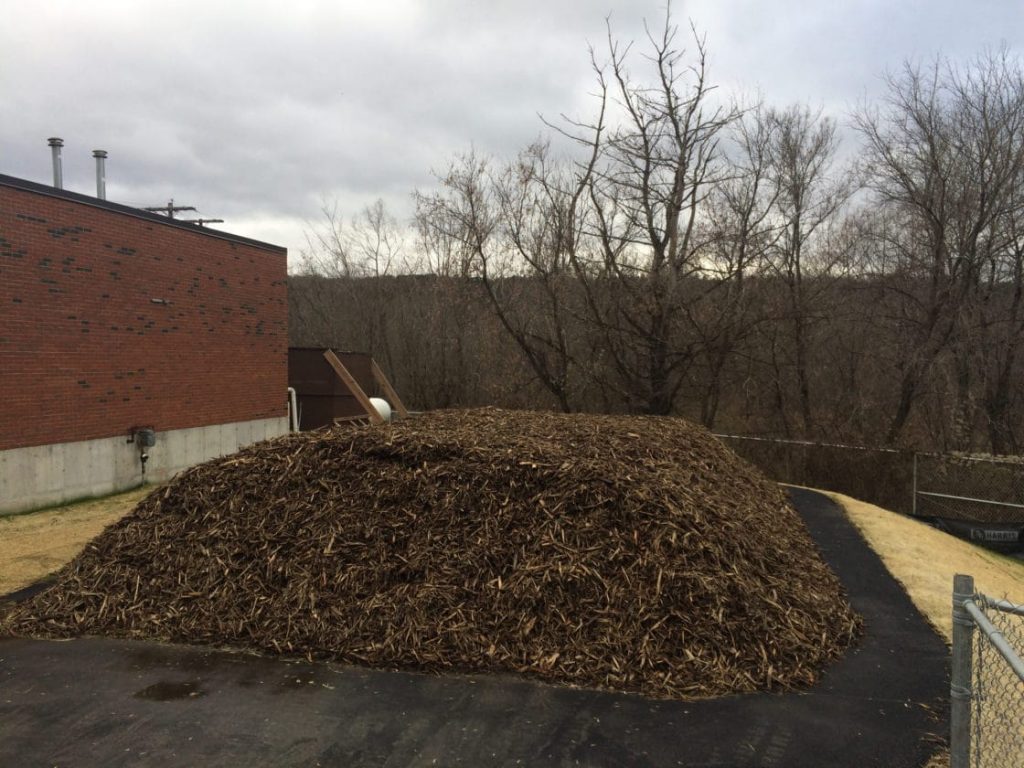
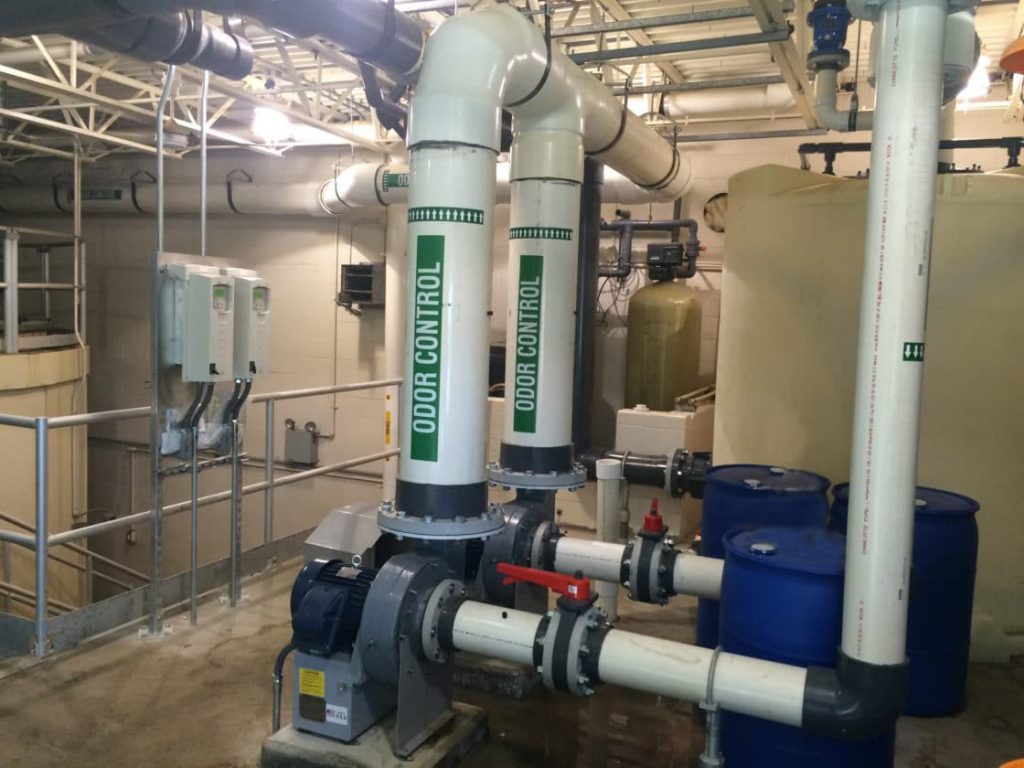
The wastewater treatment plant in Lyndon, Vermont was experiencing excessive odor issues. The existing odor control system relied primarily on chemical treatment, which was difficult for the operators to manage. Tata & Howard’s project design consisted of a bio-filter with root mulch to remove the odors, which are primarily ammonia, that are generated from the Auto Thermophilic Aerobic Digestion (ATAD) sludge treatment vessels. The ATAD system is a system that results in class A sludge that can be spread anywhere as a fertilizer, and it reduced the annual volume of sludge produced at this facility by 65%. The new system includes fans that pull the air off the top of the ATAD unit vessels through a cool down water wash tank, which knocks down the ammonia, and then pushes the air through PVC piping up through the root bio-filter shown in the picture. The total cost was under $300,000, for which Tata & Howard procured the Town a 100% grant.

The second part of the design project included a nitrogen reduction system for the secondary aeration process that may be necessary in the near future.  The design includes a recirculation pump system from the Anoxic zone back to the Oxic zone. The Contractor was T. Buck Construction of Maine.

lyndonvt_odorcontrol_wwtf_interior

Means Brook Reservoir Dam and Gatehouse Rehabilitation, Shelton, CT — Aquarion Water Company of Connecticut

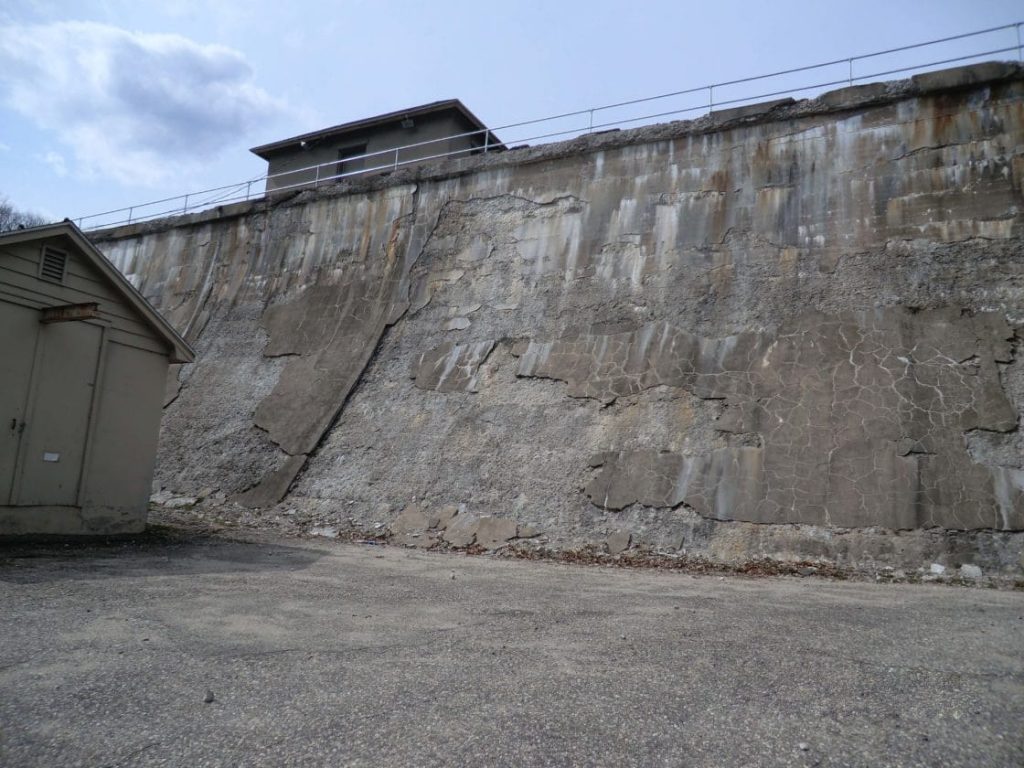
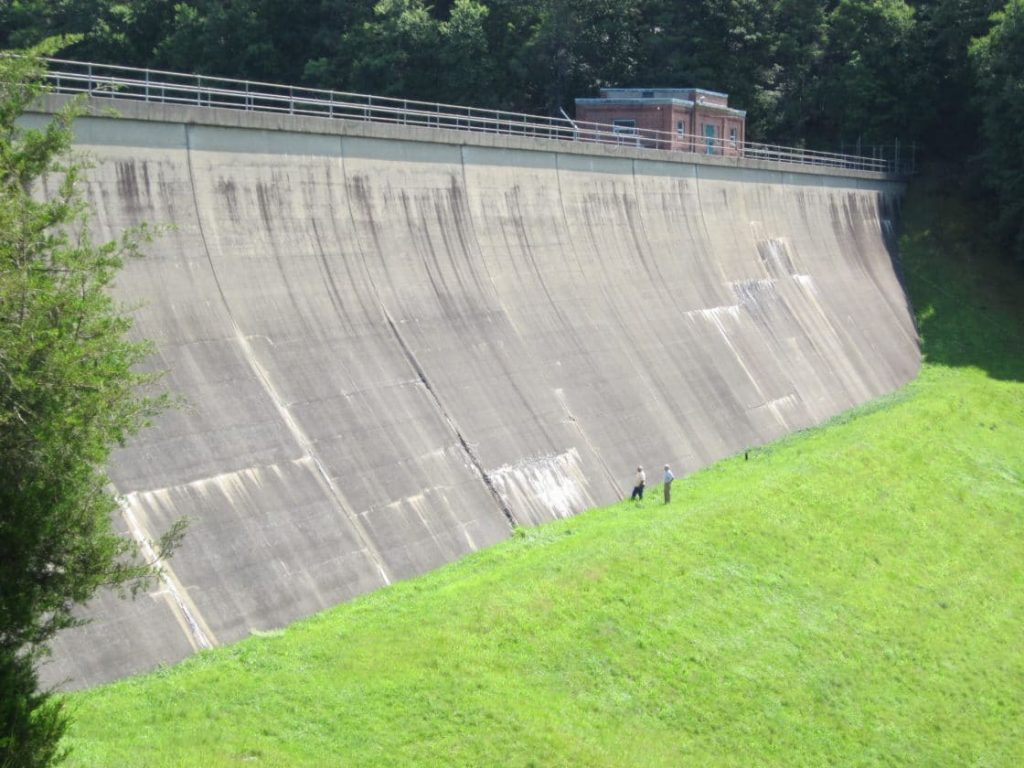
Means Brook Dam before rehabilitation, April 2011

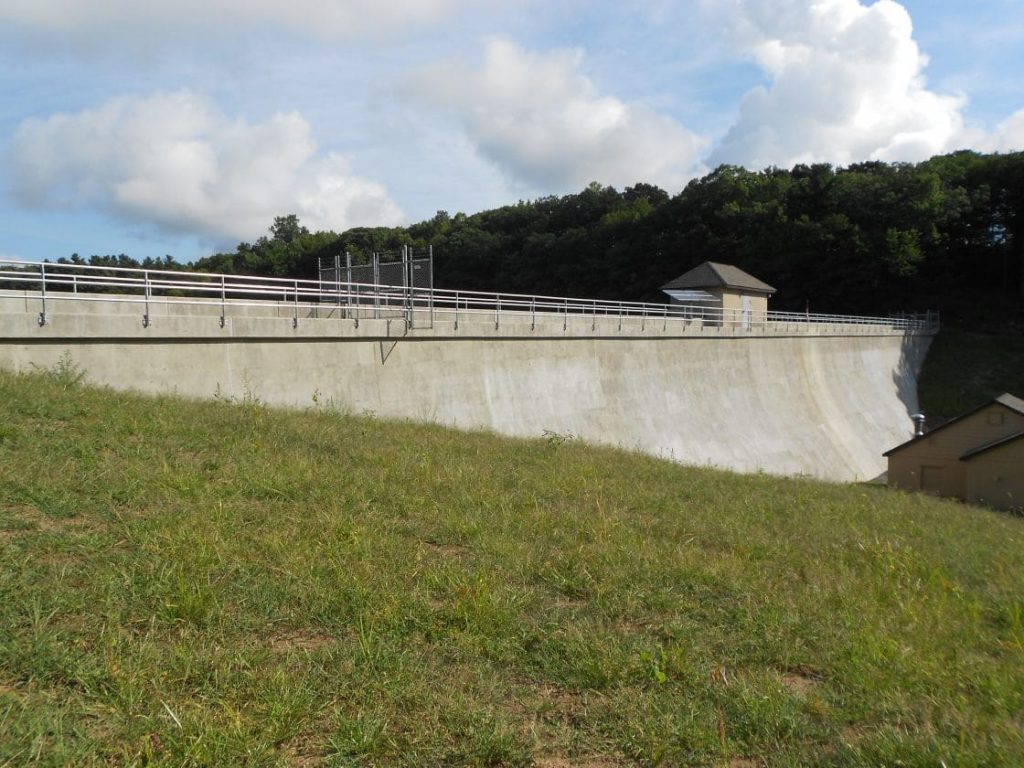
The Means Brook Reservoir Dam is a concrete gravity dam that was constructed on rock in 1916 in Shelton, Connecticut. The aging dam required repairs in to improve reliability and safety, modernization and rehabilitation of the gate chambers, and replacement of the deteriorated upstream and downstream faces of the dam and the crest, which were severely spalled and delaminated. Hydraulic, hydrologic, and structural studies had indicated that the dam would be overtopped by about 3.9 feet by the Probable Maximum Flood, and that the dam did not have sufficient stability factors of safety for this extreme loading condition. The dam reportedly overtopped by about four inches during the 1955 flood. In 1977, modifications were made to the dam including extension of the spillway to its current length of 100 feet, and construction of a 2.1-foot high concrete parapet wall along the upstream crest of the dam.

Means Brook Dam after rehabilitation, August 2015

Tata & Howard provided design and construction administration for the rehabilitation of the dam that included the following:

  • Concrete repairs to the crest and both faces of the dam:
    • Deteriorated and delaminated shotcrete and concrete removed to sound concrete;
    • Anchor dowels and reinforcing installed, and new concrete surfaces poured;
    • Upstream face was resurfaced to a depth of about six feet below spillway, and the downstream face to two feet below grade;
    • New concrete surface designed with a nominal thickness of 12 inches on the downstream face and six inches on the upstream face.
    • Installation of rock anchors post-tensioned in holes drilled through the dam into the rock foundation to improve stability and provide adequate factors of safety for overtopping by the Probable Maximum Flood.
    • Removal and replacement of one section of the spillway training wall, and removal and resurfacing of concrete on remaining walls.
  • Repairs and improvements to the gatehouse and chambers:
    • Reshingling of gatehouse roof;
    • New steel plate exterior door for additional security;
    • Blocking up the existing windows;
    • Replacement of antiquated electrical system;
    • Replacement of both of the inoperable sluice gates and their appurtenances in the upstream gate chamber;
    • Replacement of the former vertical brass ladders in the intake gate chambers with new fiberglass ladders, including a base for fall protection and retrieval system;
    • Replacement of wooden stairs in the lower gatehouse with new aluminum ships ladder;
    • Replacement of the pneumatically operated butterfly valve on the 30-inch service main in the basement of the lower gatehouse with an electrically operated butterfly valve that can be remotely controlled;
    • Installation of an extension stem and electric operator;
    • Replacement of the 8-inch chamber drain and 10-inch auxiliary outlet gate valves;
    • Replacement of wooden hatches over floor openings within the gatehouse with aluminum grating with cover plates;
    • Installation of chain link fence along portions of the spillway training wall for safety; and at both ends of the dam for security;
    • Installation of galvanized steel pipe railings along the upstream and downstream crest of the dam for safety; steel pipe rails were chosen for the dam crest instead of chain link fence because the dam crest is subject to overtopping.

The project received a 2017 Excellence in Engineering Merit Award from the American Council of Engineering Companies, Connecticut. Read more here.

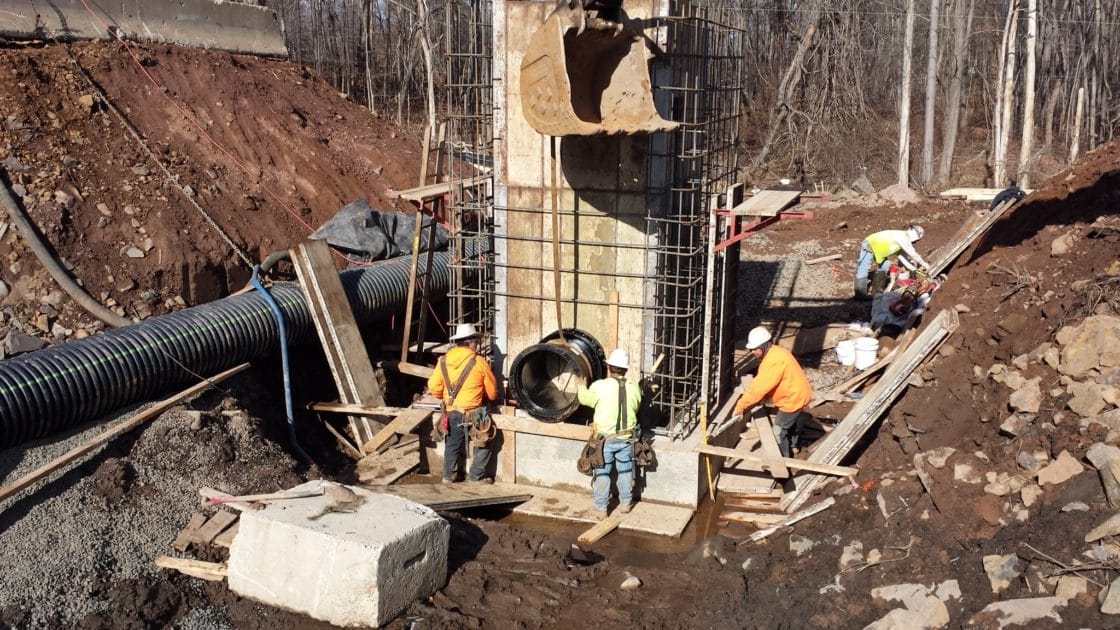
Dam Rehabilitation, Meriden, CT

dam_rehabilitation_ct
Baldwins Pond Dam, Meriden, CT

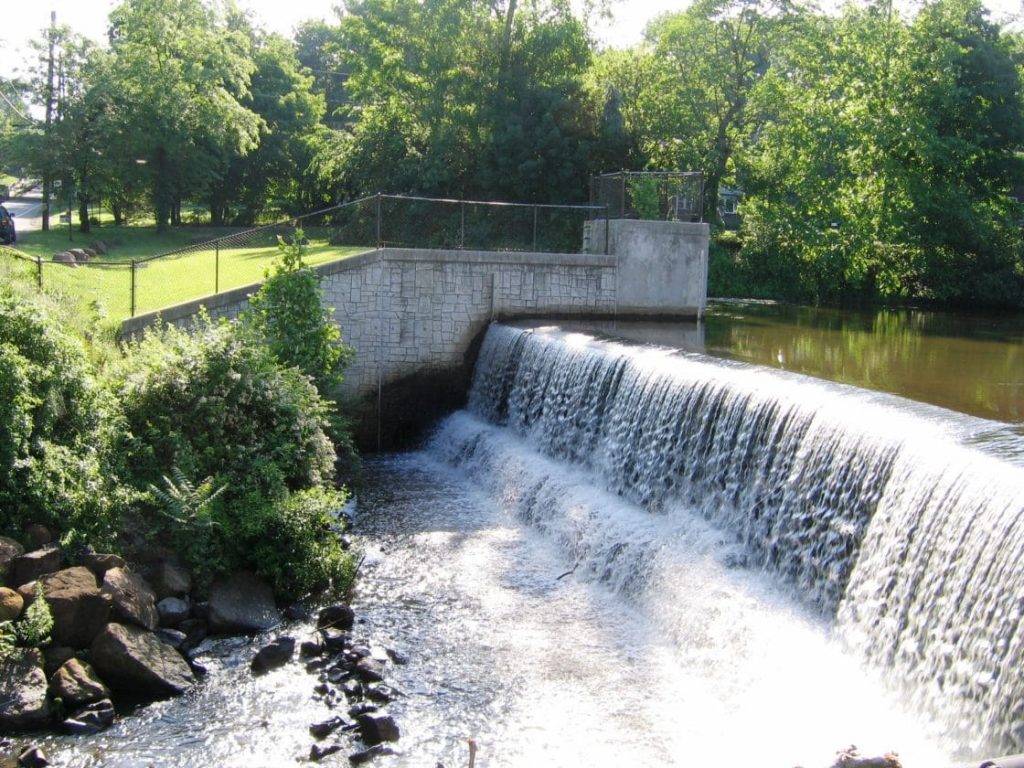
Baldwins Pond Dam is a stone masonry and earthen embankment dam located on Harbor Brook just upstream of Westfield Road. The dam has a length of about 200 feet and a maximum height of about 17 feet. A concrete gate chamber at the right (looking downstream) end of the spillway provides controls for the 30-inch low level outlet, which discharges through the right training wall. Access to the operator is provided through a hatch in the top of the chamber. The spillway has an overflow length of 85 feet and a stepped concrete apron at the downstream toe. The upstream embankment slope and the area downstream of the apron are protected with riprap. Baldwins Pond has a surface area of 6 acres and a tributary watershed of 8.34 square miles.

The dam was rehabilitated in 1998, designed by Tata & Howard’s Waterbury, CT office.

Dam Reconstruction, Meriden, CT

dam_reconstruction_ct

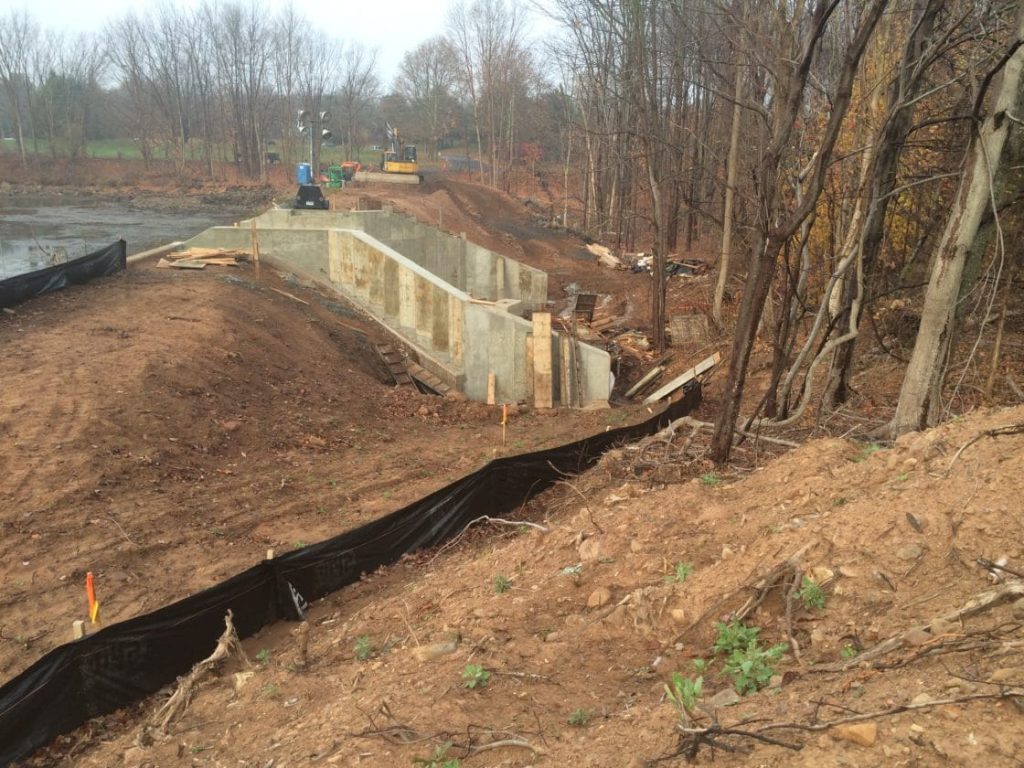
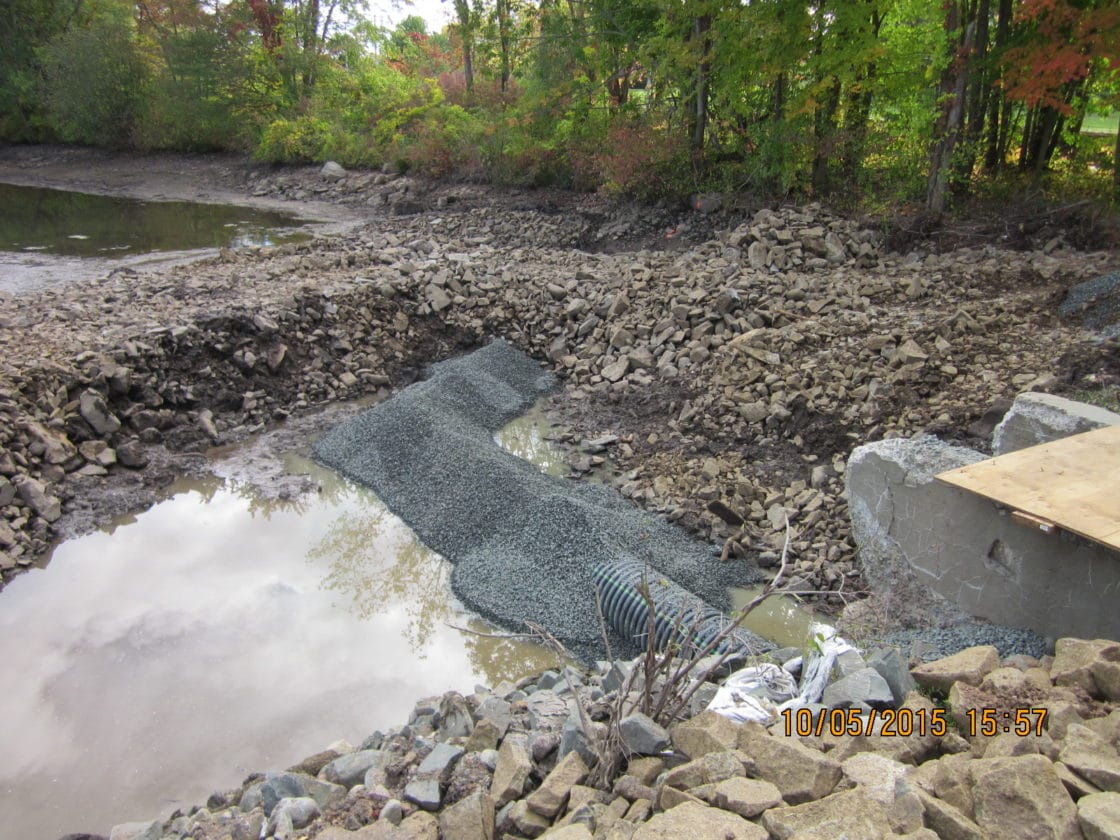
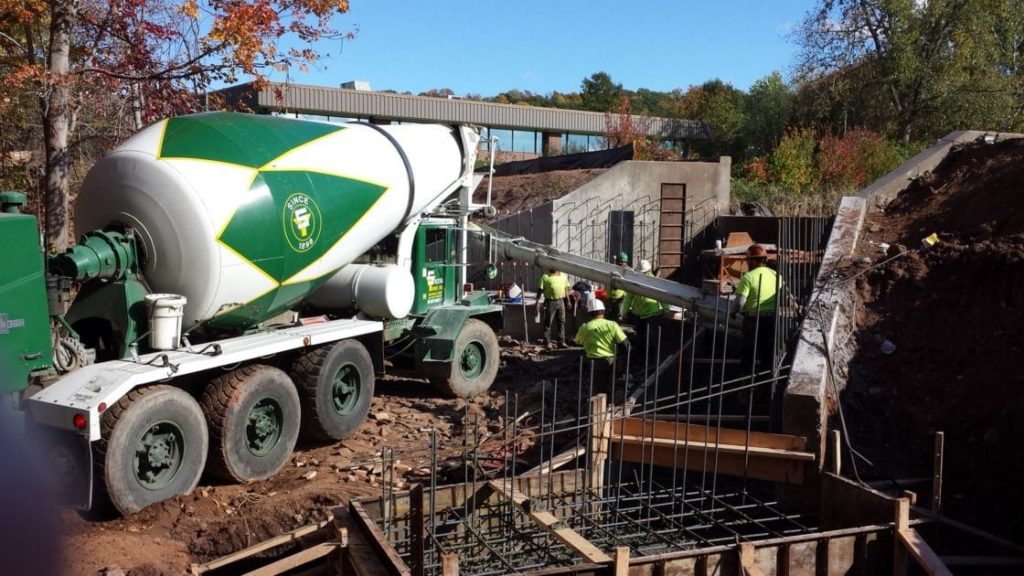
The Fosters Pond Dam reconstruction project presented several challenges. The existing spillway was inadequate to discharge the 100-year spillway design flood, and the existing dam was in extremely poor condition. The embankments lacked erosion protection and were very steep, the crest was narrow, and the outlet had fallen into disrepair, rendering it inoperable. Therefore, it was imperative that the reconstruction design of Fosters Pond Dam be designed to improve both safety and reliability, provide a functional and operable outlet, and provide ease of maintenance.

fosters_pond_dam_reconstruction_ct

The reconstruction included the construction of new and higher reinforced concrete spillway training walls, upstream riprap erosion protection, a new reinforced concrete gate structure with 24″ inlet and outlet pipes and sluice gate, widened embankment crests to 12′, flattened slopes for ease of maintenance, and a gravel road to allow access to the embankment and gate structure. Riprap erosion protection is now provided on the upstream slopes as well as in the discharge channel. Because of these improvements, the dam can safely pass the 100-year spillway design flood with over a foot of freeboard. The length and level of the spillway weir remains unchanged.

Dam Gate Chamber Repairs, Weston, CT

Saugatuck Dam is a concrete water supply dam in Weston, CT built in 1940, now owned by Aquarion Water Company. The majority of this project included repairs and modification to the gatehouse and gate chambers at the dam. Repairs included rebuilding the gatehouse walls, cleaning and painting the intake and outlet valves, and removing and replacing the stems and valve operators. Modifications included installing platforms made of steel beams and fiberglass in the gate chambers to provide safer access the valves in the chambers, and the interconnection of the 36” supply main and the 48” diversion main at the toe of the dam to provide greater flexibility for releasing water from the reservoir.

dam_reconstruction

Fosters Pond Dam Reconstruction

CLIENT: City of Meriden, CT

PROJECT: Fosters Pond Dam Reconstruction

dam_reconstruction

THE CHALLENGE: The existing spillway is inadequate to discharge the 100-year spillway design flood, and the existing, aging dam is in very poor condition. The embankments are steep and lack erosion protection, the crest is narrow, and the outlet is in disrepair and inoperable. The reconstruction of Fosters Pond Dam needs to be designed to improve the safety and reliability of the structure, provide an operable outlet, and make the structure easier to maintain.

dam_rehabilitation

THE SOLUTION: The reconstruction includes constructing new, higher reinforced concrete spillway training walls, providing upstream riprap erosion protection, constructing a new reinforced concrete gate structure with 24-inch inlet and outlet pipes and sluice gate, widening the embankment crests to 12 feet, flattening the slopes for ease of maintenance, and providing a gravel road to allow access to the left (looking downstream) embankment and gate structure. Riprap erosion protection will be provided on the upstream slopes and in the discharge channel. With these improvements, the dam will be able to safely pass the 100-year spillway design flood with 1.1 feet of freeboard. The level and length of the spillway weir will remain unchanged.

Standpipe Rehabilitation, University of Southern Maine

USM standpipe rehabilitationTata & Howard provided engineering services to the University of Southern Maine related to the interior and exterior rehabilitation of a welded steel water storage tank. The standpipe was constructed in the 1950’s and is approximately 30 feet in diameter and 105 feet tall with a capacity of 0.55 million gallons. The scope of services included preparing Contract Documents for the cleaning, interior abrasive blasting, exterior pressure washing, and interior and exterior coating application.

The project also included coordination with two cellular companies and incorporation of corresponding design considerations into the Contract Documents. Additional design considerations included providing the USM logo on the tank exterior, repairing foundation cracks and gaps, extending the overflow pipe and installing a flapper, screen, and concrete splash pad, providing safety climb system for exterior access ladder, replacing the roof vent, and installing a new roof access hatch. Tata & Howard provided bid assistance, construction administration services, and full time construction observation. Since the standpipe is located on a college campus, the time frame for completion was limited to summer break, but the standpipe rehabilitation project was completed within budget and on schedule.

Main Wastewater Pump Station Rehabilitation, Ayer, MA

Ayer_wastewater_pump_station_rehabilitation

Tata & Howard prepared a wastewater treatment and disposal alternative analysis for the Town of Ayer. The analysis evaluated alternative plans for treatment and disposal of wastewater utilizing the Town’s existing wastewater treatment facility, a proposed regional wastewater treatment facility, or a combination of both facilities.

The alternative analysis estimated the wastewater flows and loadings, assessed the condition and capacity of the existing plant unit processes, and recommended improvements to meet the future service needs over the next 20 years. Tata & Howard designed upgrades to the existing main wastewater pump station which pumps the entire volume of wastewater generated in Ayer.

In addition to the overall rehabilitation of the pump station, Tata & Howard designed the addition of new pumping facilities to divert wastewater to the nearby regional wastewater treatment facility at the former Fort Devens, now managed by Mass Development. The main wastewater pump station has a peak capacity of 4.0 mgd and includes four wastewater pumps with a capacity of 2,800 gpm. The upgrades included new variable frequency drives for the pumps and new SCADA.

Wastewater Treatment Facility, Hopedale, MA

HopedaleMA_wastewater treatment facility disk filter

Tata & Howard has been working with the Town of Hopedale, Massachusetts for a number of years on a variety of wastewater collection and treatment projects.  When the Town received an administrative order to address copper and ammonia violations at the plant, they turned to Tata & Howard for assistance. We completed the design and construction of a Wastewater Treatment Facility Upgrade project which included the installation of an automated soda ash feed system and an integrated fixed film activated sludge system (IFAS). The IFAS system is an innovative biological treatment process using thousands of special carriers designed to increase total surface area for biofilm growth without expanding the plant’s footprint.  The blowers were also modified to provide better control over the aeration process.

A pilot study was conducted to test the ability of various reagents to facilitate the removal of copper from the waste stream.  An automated chemical addition system was designed to improve coagulation.  Additionally, a dynamic tangential filter was incorporated into the upgrade project.  These improvements have allowed the Town to now meet its discharge limits for ammonia and copper.